Hospital Play in Iceland

imgres

IMG_1422

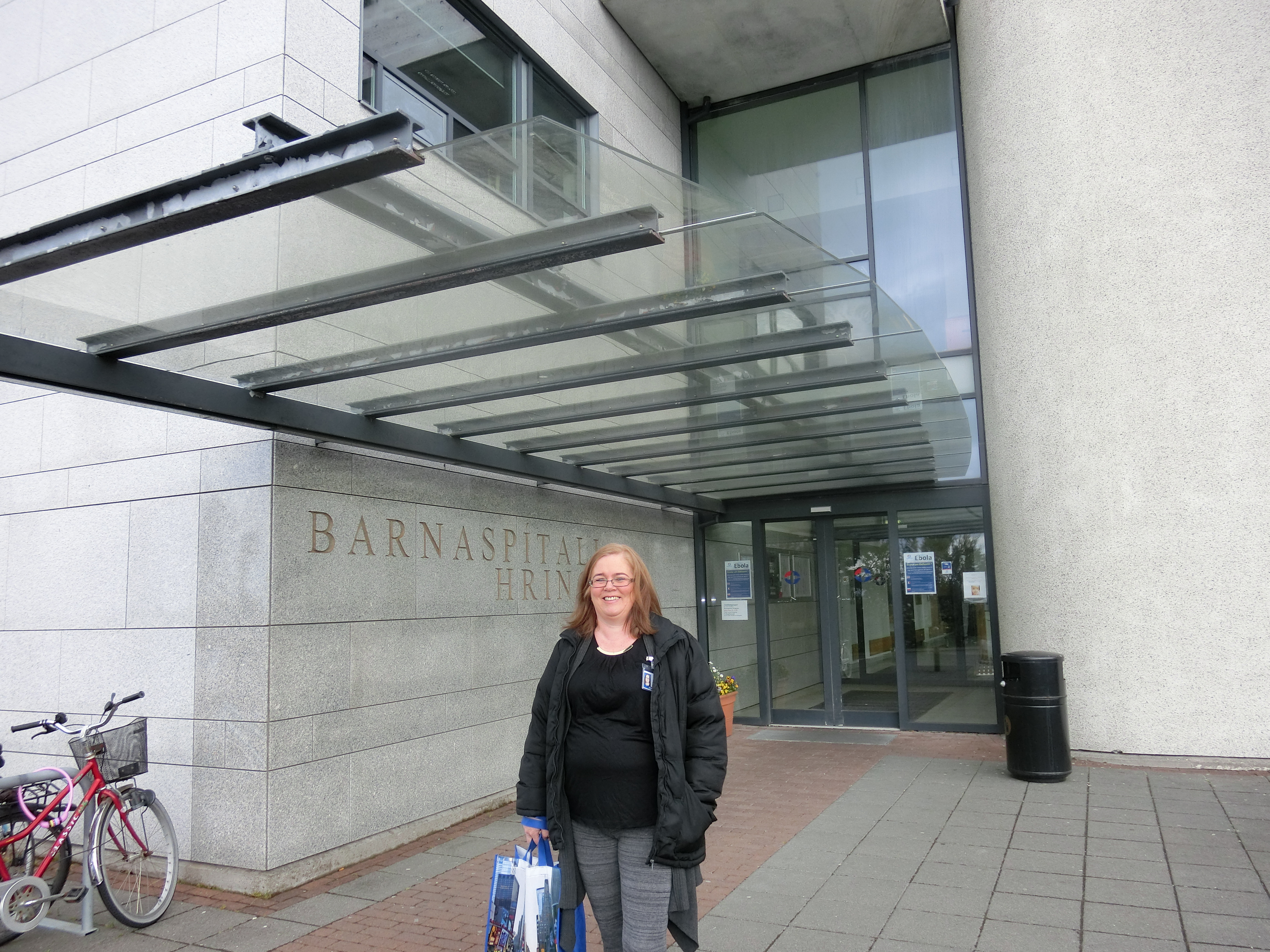
After the 99 degree weather in Japan, travel to Iceland called for wooly socks and a winter hat. During my first day in Reykjavik, I met with Dr. Drífa Björk Guðmundsdóttir, a psychologist who served as her country’s delegate at the first global summit on psychosocial pediatric care in 2014. She hosted me at Landspitali, the National University Hospital of Iceland.

CIMG0171

Our morning together included a tour of the pediatric inpatient unit, physical therapy department, clinic and NICU, and  an hour spent in conversation with some of Dr. Drifa’s colleagues, a physical therapist, hospital play specialist, nurse, nurse manager and social worker from a non-profit agency that serves hospitalized children and their families. We discussed best practice for helping parents support and prepare their children for hospitalization. It was clear to me that these professionals held many of the same values and goals for supporting children that we have in the US.

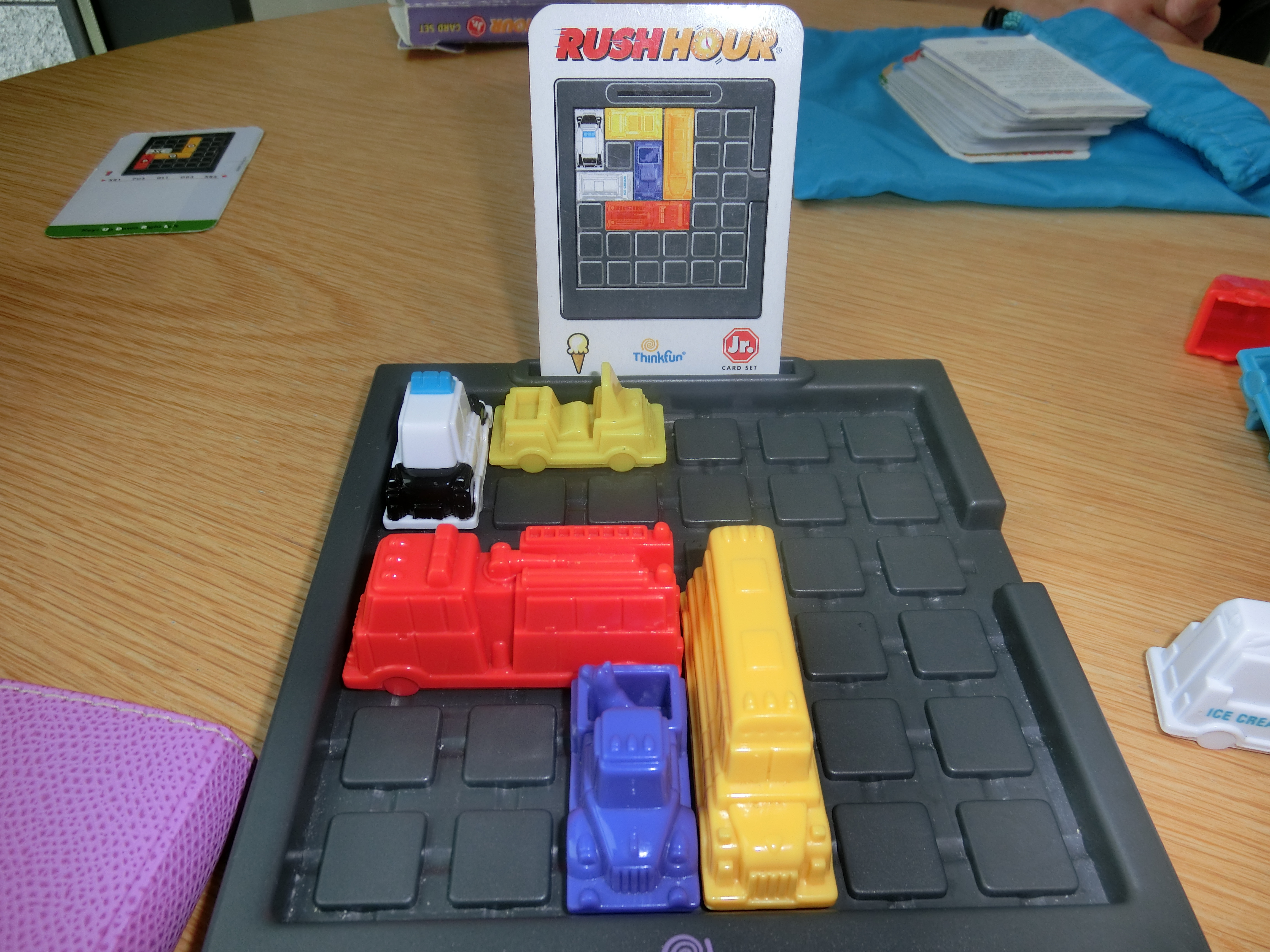
I enjoyed our conversation tremendously, but I must admit, I treasured my time with Sigurbjörg Guttormsdóttir (thankfully nicknamed Sibba, but pronounced “Sippa”!).  Sibba is one of the two hospital play specialists, and she has worked at the hospital for 25 years. A kindergarten teacher who received training in Sweden and Oregon, she wrote a thesis on play materials to use with children.  Sibba welcomed me to her playroom and proudly shared its history and resources, inviting me to sit down and play almost immediately.

Here is the game of choice, Rush Hour.

CIMG0180

Continue reading

Learning from Hospital Play Specialist Hideko Konagaya in Japan

IMG_4587

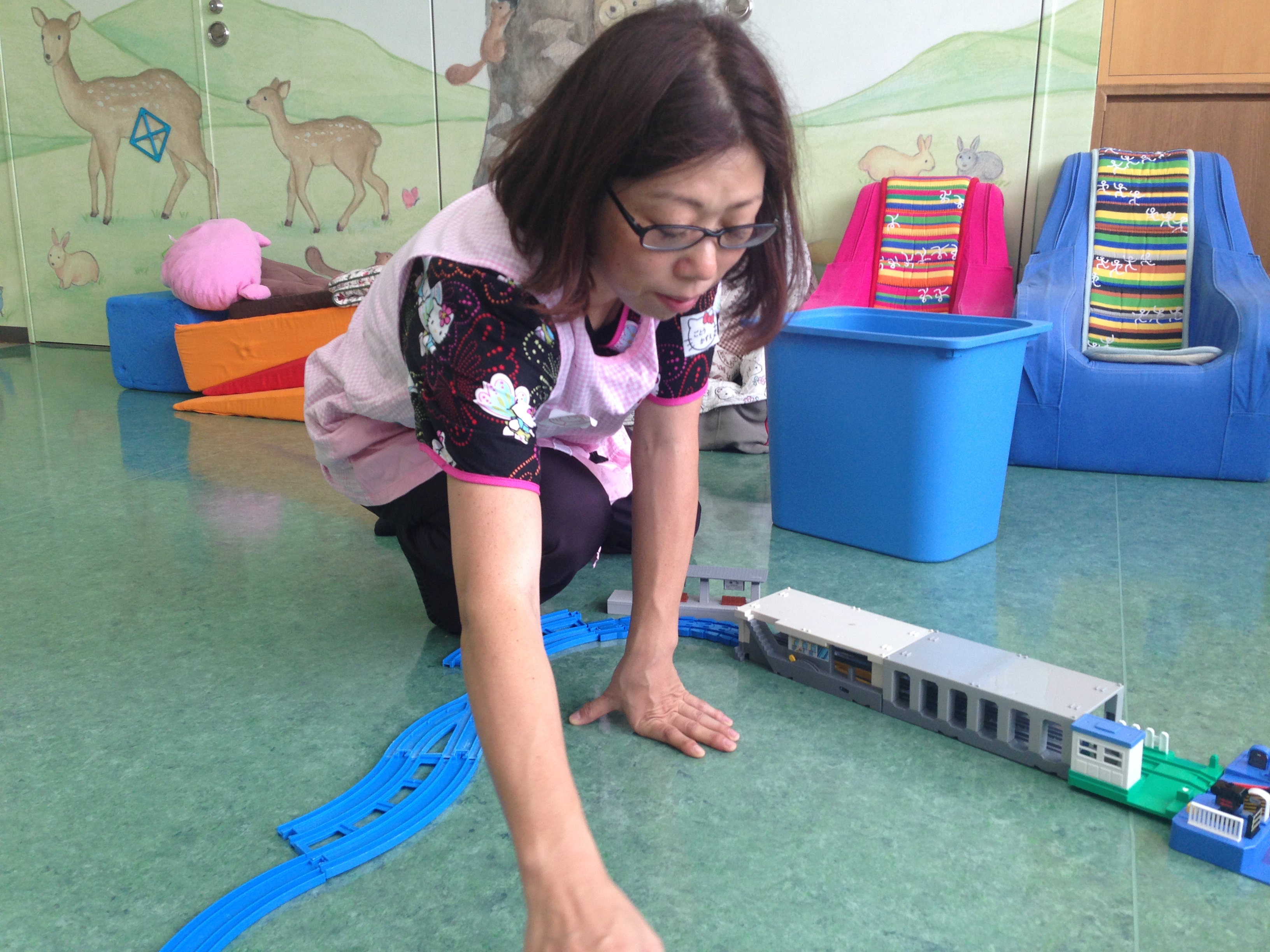
While teaching in Shizuoka, Japan, I had the pleasure of spending a morning with Hideko Konagaya, a hospital play specialist, at Shizuoka General Hospital.

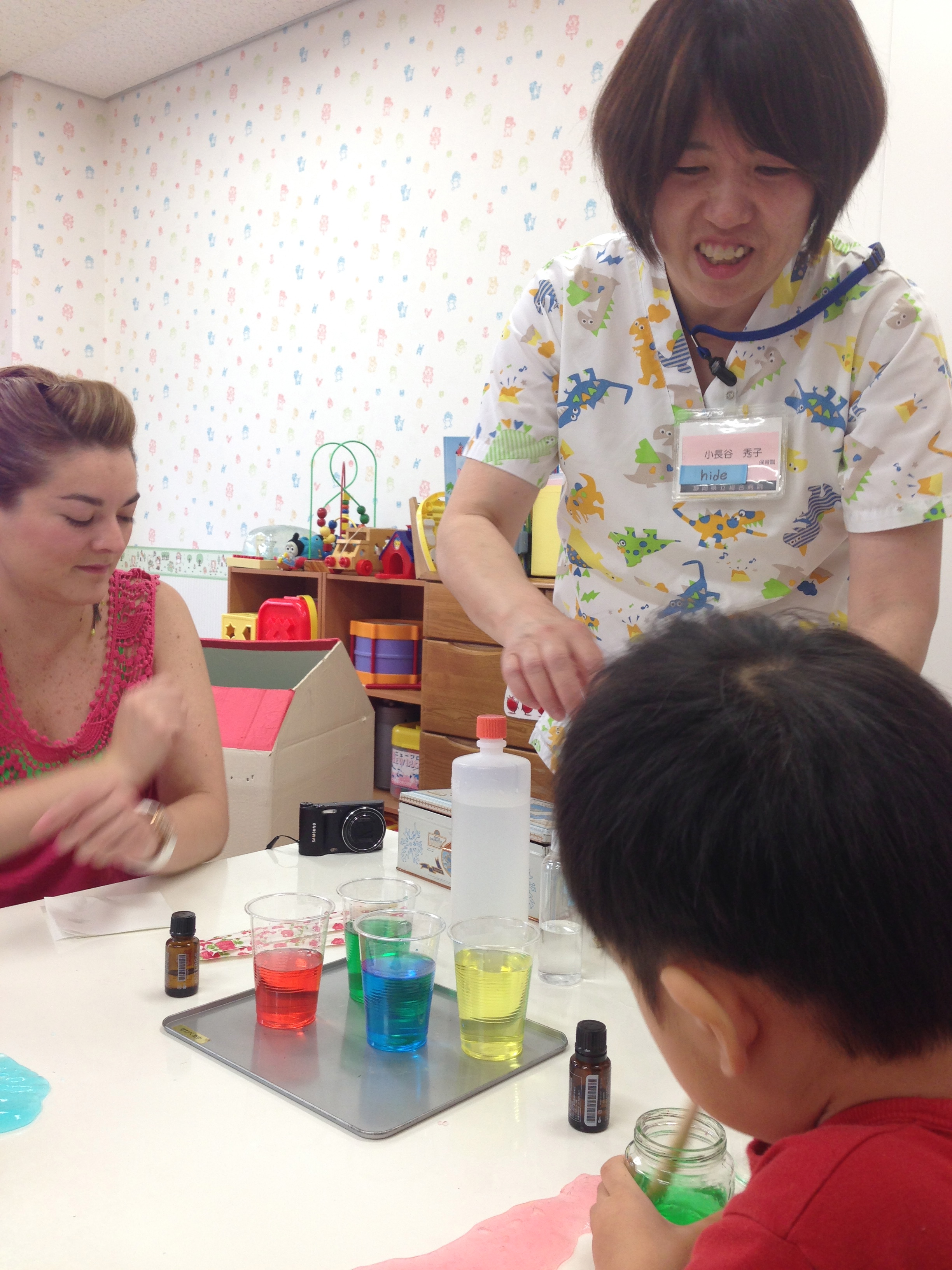
Hideko hosted Maria Busqueta  (a child life specialist and psychologist from Mexico City) and me in her bright and cheery playroom. Professor Chika Matsudaira of Shizuoka University assisted us by translating so that we could all communicate.

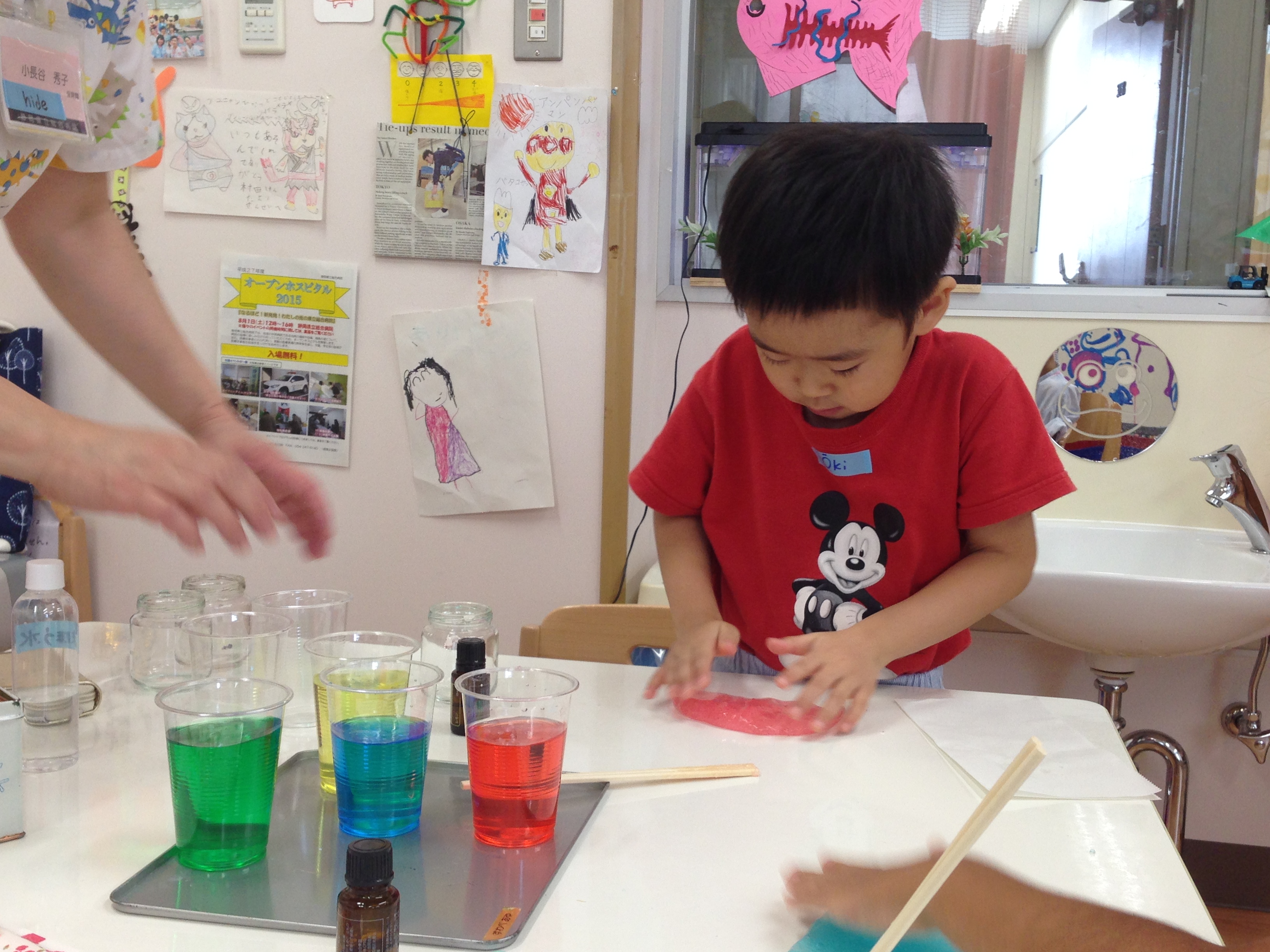
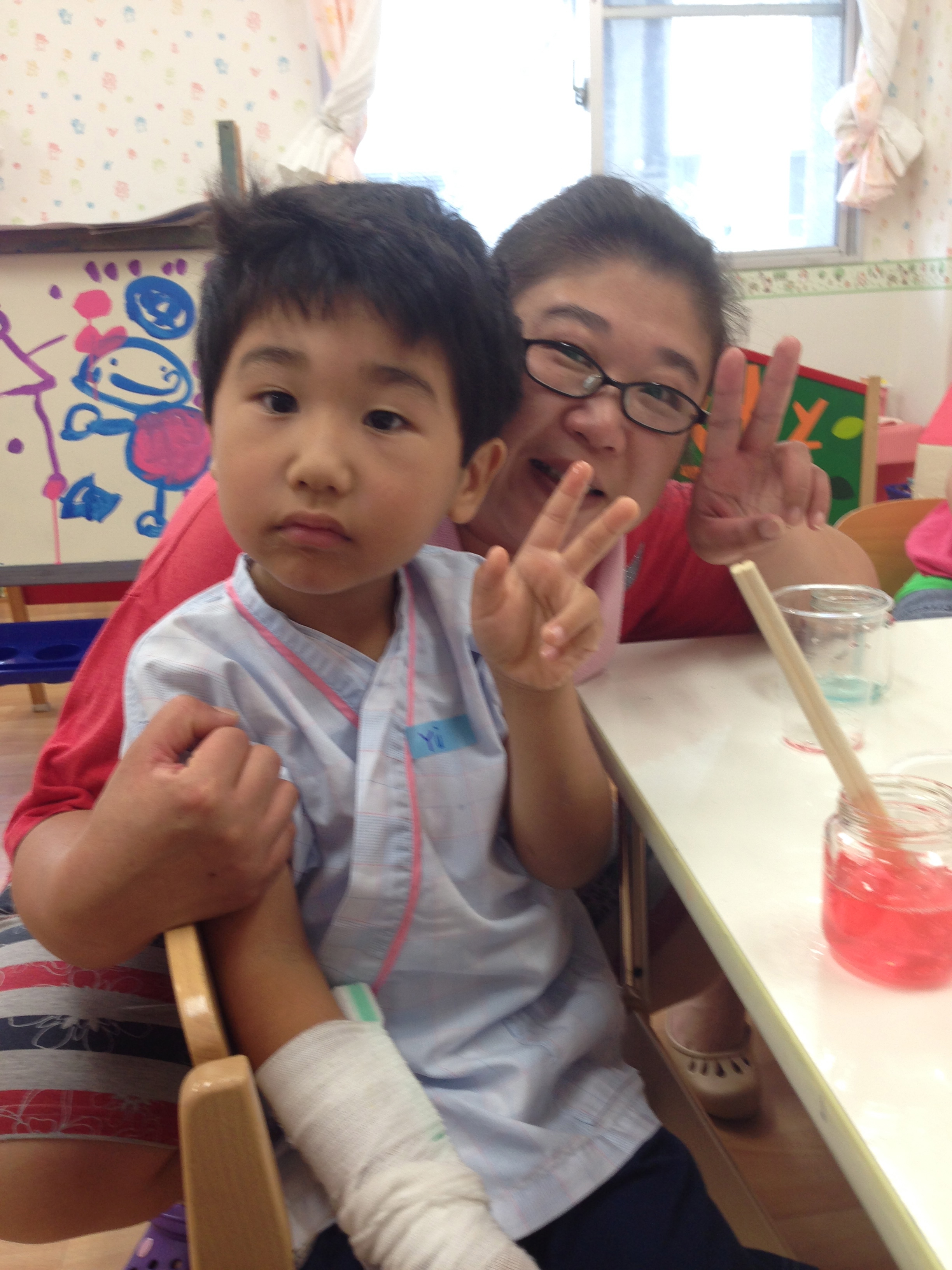
When we entered the playroom, two preschoolers already sat at a small table busily making slime. The children and their mothers gave us permission to photograph them.

IMG_4584 IMG_4588

Now I have made slime in my play course, but never slime as lovely as this! Hideko had set out brightly colored water in several plastic cups. She provided the boys with small glass jars (recycled baby food jars) and chopsticks for stirring. One at a time, Hideko and the children added rice glue, orange or lime essential oil for fragrance, sodium borate, and  a magical touch of glitter. The mixture came together to create a wonderful substance that smelled amazing and was positively addictive – no one could put it down or stop playing. The boys stirred like mad, and then ran the slime through their fingers until it hardened enough to hold shape. They used cookie cutters and plastic tools to manipulate it. I broke a cardinal rule of mine and touched one of the boy’s slime without asking. I just couldn’t help myself! He was a very good sport. Continue reading

NEWSFLASH! VIPAR Playroom Assessment Rubric now in fillable form

Screen shot 2015-08-22 at 2.26.19 PM

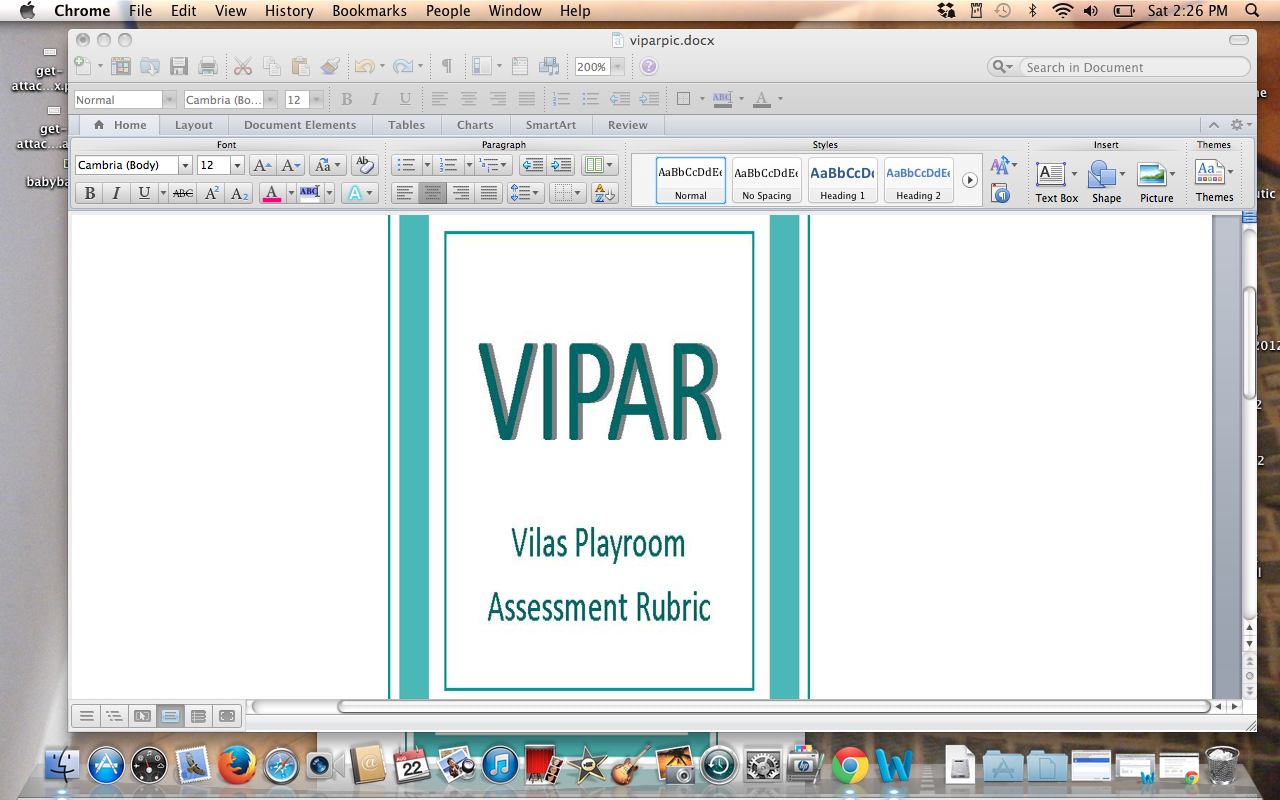
I am excited to announce the release of a fillable pdf format for the VIPAR, a new tool for your child life/hospital play toolkit. You can now fill out the VILAS Playroom Assessment Rubric (VIPAR) on your computer and print it out. The VIPAR is an assessment form to help you make your playroom the best it can be. There is a dream playroom in all of our imaginations. Time, space, budget constraints and infection control guidelines aside, we all know what we would provide children and families if we were able to do so. The  VIPAR (Vilas Playroom Assessment Rubric) (click on bold green type to access) is intended to present the best possible scenario, and to measure how your playroom is meeting the needs of all pediatric patients and families at your hospital. Child life specialists, hospital play specialists, and administrators can use this rubric as a quality checklist to assess playroom design and operation.

This rubric is several years in the making and has been test driven by many Bank Street College alumni. They kindly tried it out in their playrooms and provided me with feedback to improve the document, making it as accessible and flexible as possible.

Tara Horan reports that the rubric gave her staff  “feelings of empowerment to make positive changes.”

Kelsey Frawley shared, “Another AHA moment was the cultural competency piece. I think as specialist’s we are taught to BE culturally competent, not judge, ask questions, be aware of differences, but incorporating it into a room is something I have not thought of. The developmental appropriate piece really stuck out. It is something we have struggled with as a site and recently have committed to revamping. Kate Shamzad states “In fact, it inspired us to order a wall mirror to be installed in the infant/toddler section of the hem/onc room.”

I owe them and others many thanks for their input. But the VIPAR is and should be a work in progress. So please give me feedback if you use it at debvilasconsult@gmail.com. The form will soon be available on the Child Life Council’s website at the Play Center located in the Resource Library.

A Day with Hospital Play Specialist Kazue Goto in Japan

IMG_4403

One of the best parts of my trip to Japan was the fact that I  learned more than I taught. Yes, I traveled there as a child life professor to teach play techniques to hospital play specialists (HPS). But they had just as many wonderful techniques to share with me, and I cannot wait to incorporate them into my teaching repertoire here in the States.

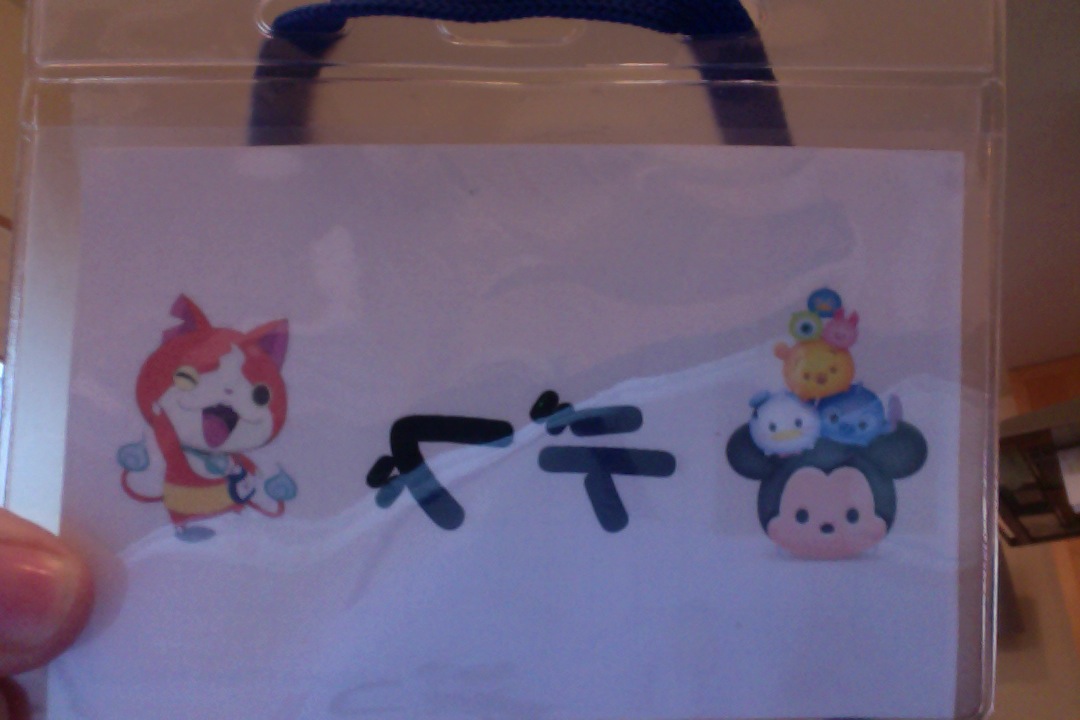
On our first day in Tokyo, Kazue Goto hosted Maria Busqueta and me at the National Rehabilitation Center for Children with Disabilities for a day of play with the inpatients on their orthopedic ward. She had prepared the children for our visit, and one by one, they approached us, shook our hands Western style, and introduced themselves by name. Kazue presented us with handmade name tags written in Japanese.

Photo on 8-12-15 at 5.34 PM

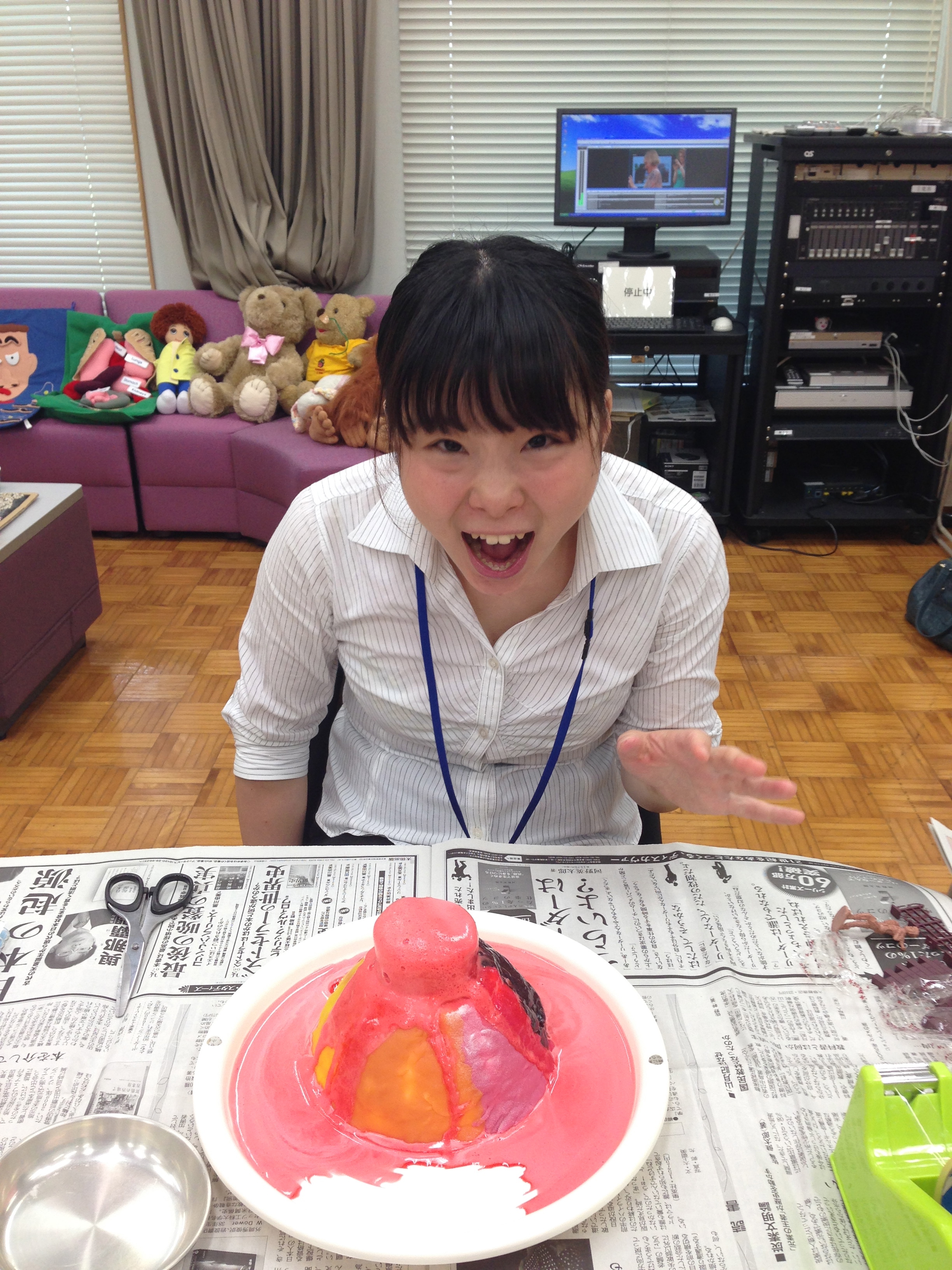
I taught the kids how to play the American game “Spot It!”, and Maria taught them how to play Mexican Lotteria. We all made volcanoes together, and then the fun REALLY began. Kazue taught us all how to make poop.

Yes, you heard it right — we all made poop out of bran cereal. The activity is designed to teach kids about their digestive systems. Many hospitalized children have issues with constipation or diarrhea, and this activity brings up helpful discussion about self care and gives children a chance to normalize something that can cause great pain and embarrassment. Continue reading

Play the Japanese Way

IMG_4451

Trepidation was the word of the day as I prepared to teach play techniques in Japan. How would I  cope with teaching in eight hour increments to students and professionals whose primary language was Japanese?  How would the participants respond to me? I barely ever lecture at Bank Street College, but here it would be the expected modality of teaching. I worried for my students who would have to listen to my English first before Chika Matsudaira, my hosting professor,  translated everything I said.

But I should know by now that everything works out in the end. Here are some highlights from the four groups we taught, some new to the profession, others in it for years. They included students, hospital play specialists, nurses, nursing administrators, nursery nurses (early education professionals working in hospitals), occupational and physical therapists and one child life specialist. In the span of 5 days, we taught a total of 91 people. The photos and video footage below include scenes from all 4 classes.

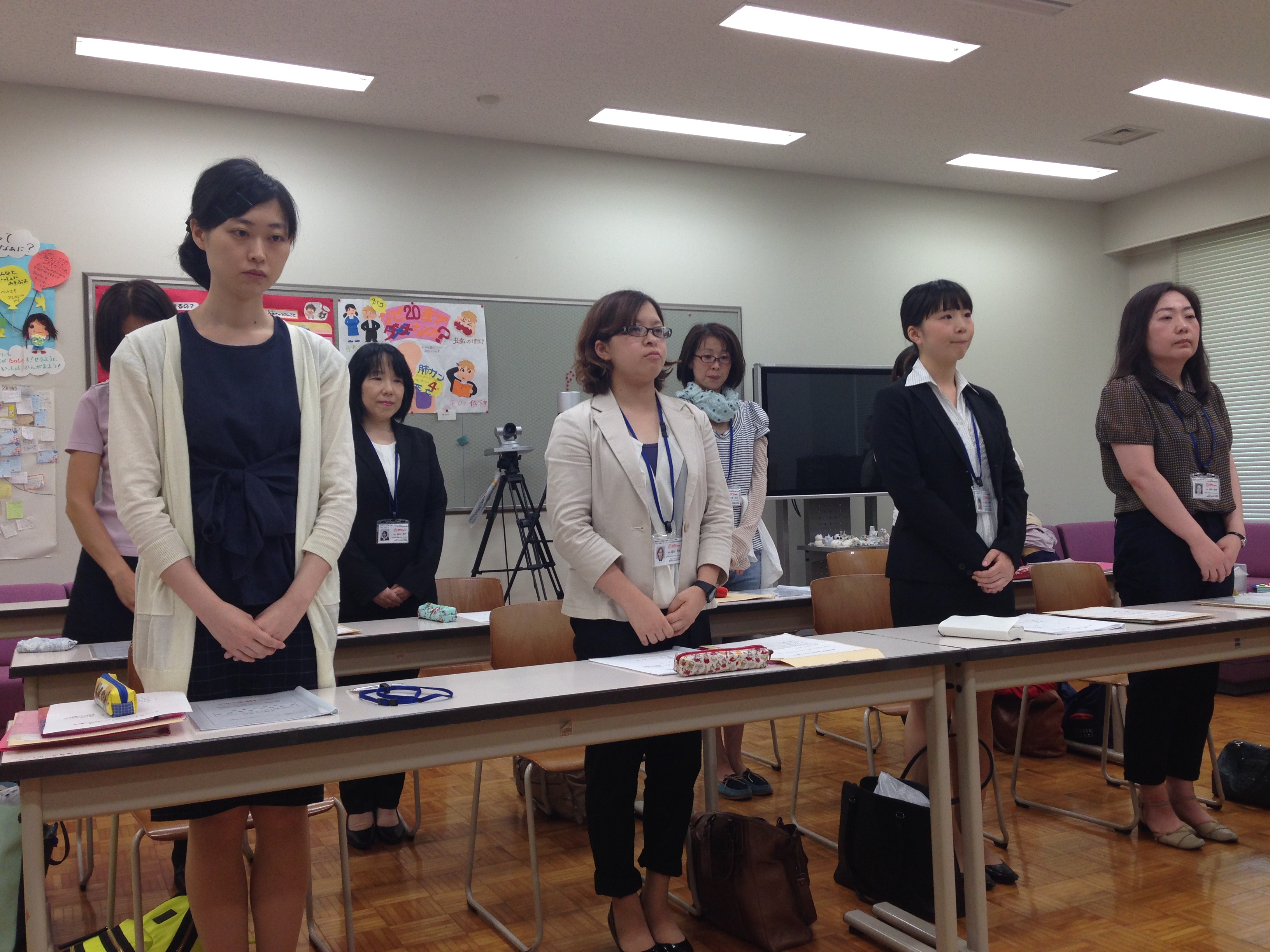
The first group in Shizuoka were new hospital play specialist (HPS) students who had travelled from all over the country, and the day began with a ceremony welcoming them to Shizuoka University. The university president and administrators attended, as did a local reporter. The students first appeared very serious and somber. Here is the before shot taken during the ceremony:
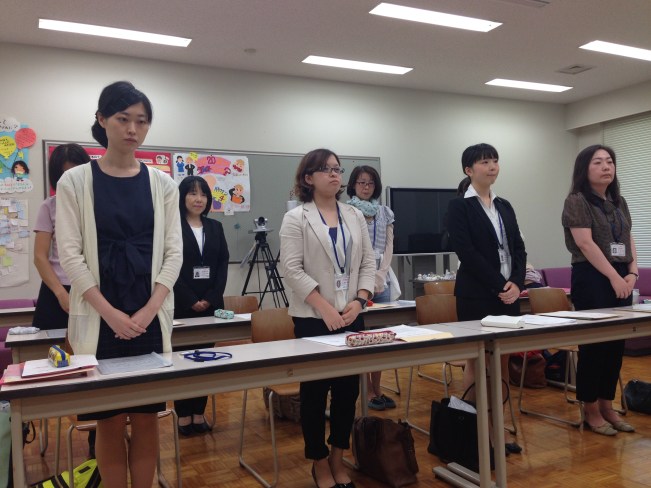
IMG_4449

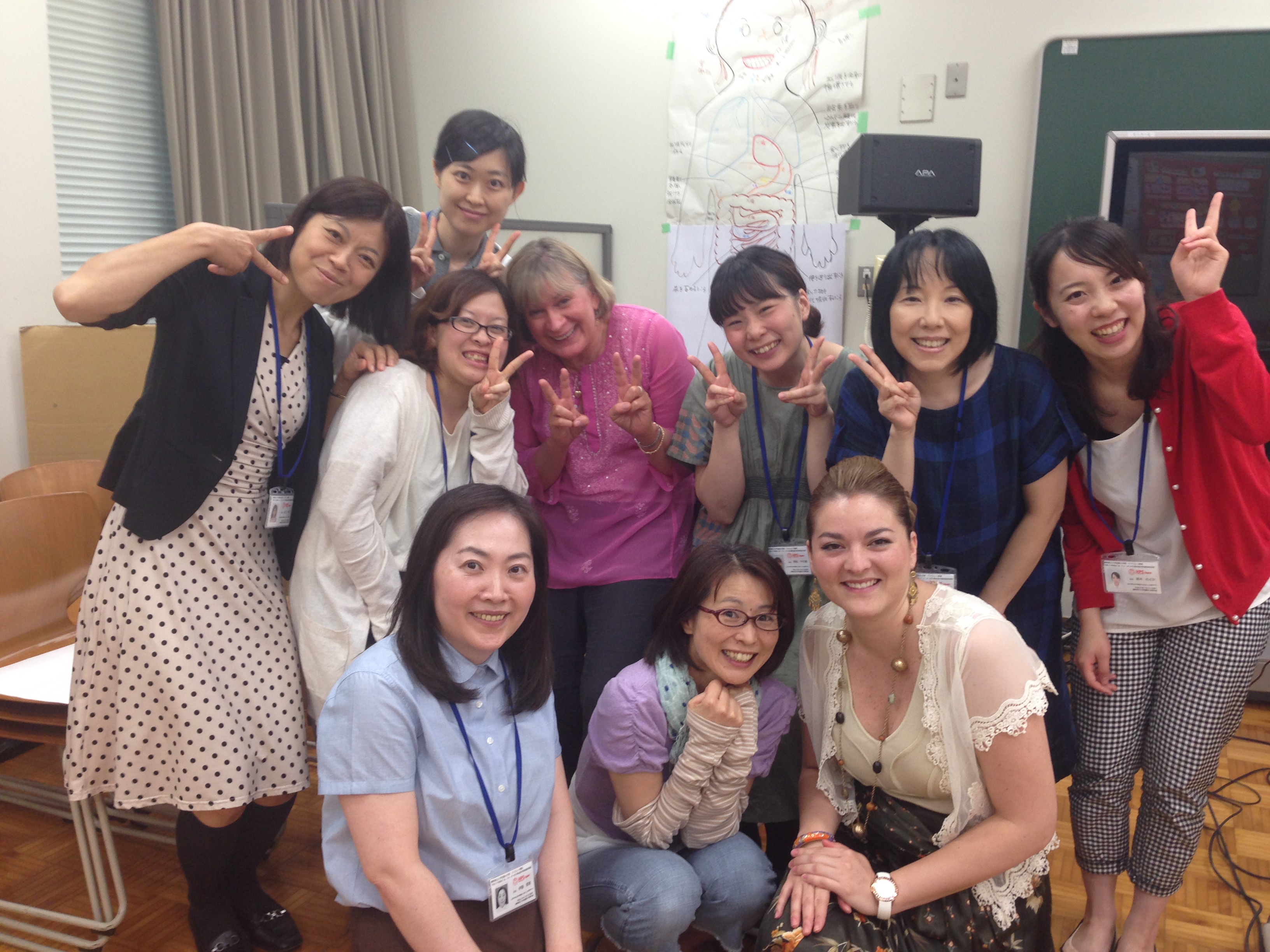
But we all warmed up to each other pretty quickly. Here we are at the end of the second day.
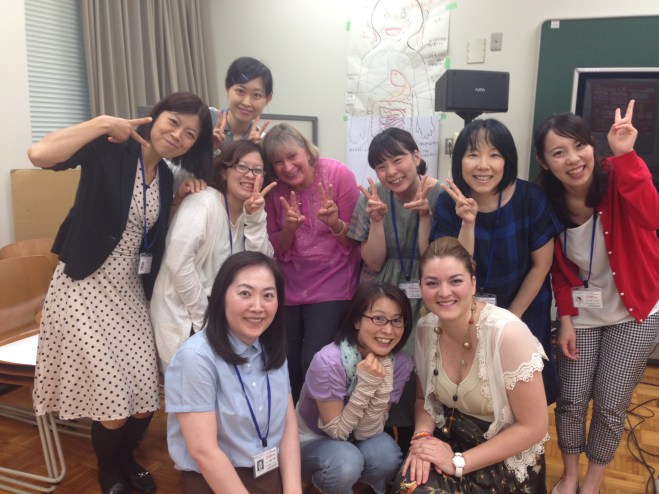
IMG_4549

Thanks to the reporter, an article featuring our class appeared in the next day’s Shizuoka paper.

CIMG0145

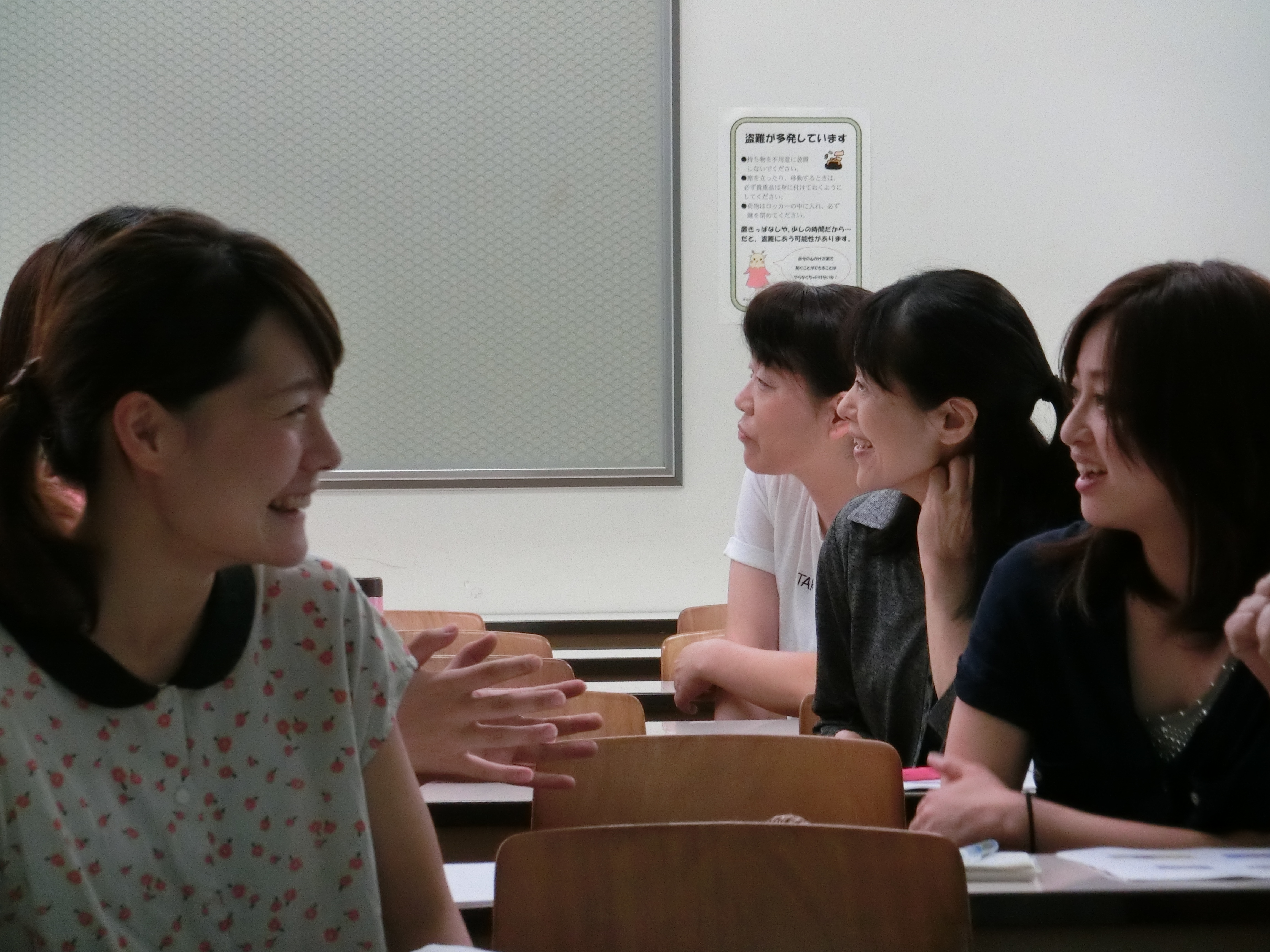
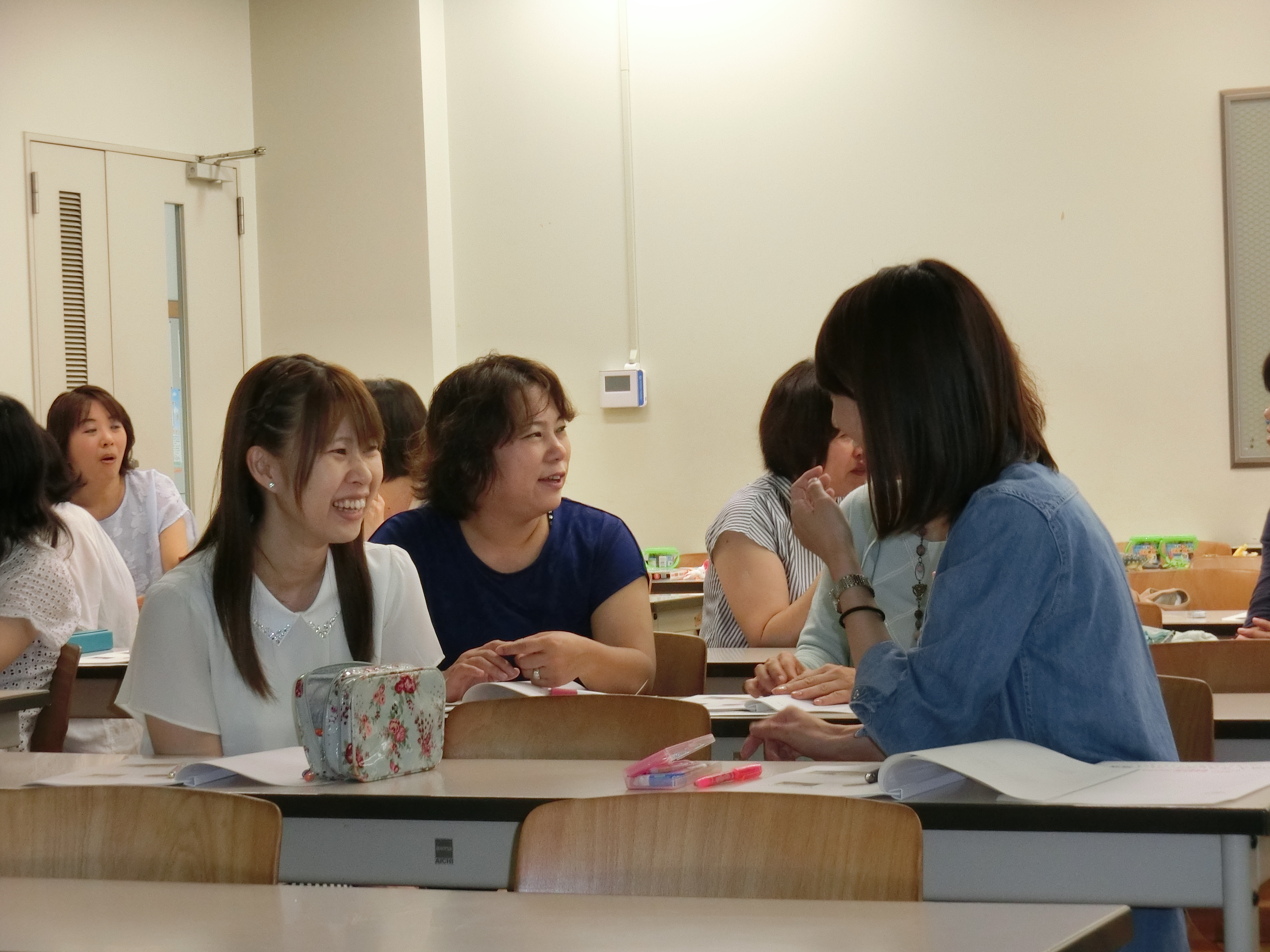
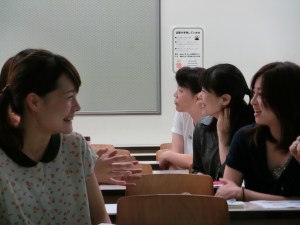
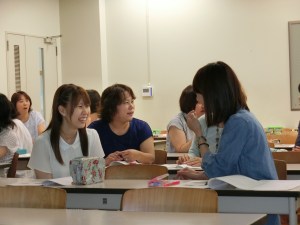
We began with my theory of a “Play Needs Continuum”. It describes 9 ways to deepen play opportunities for children in hospitals. Chika had translated my power point into Japanese.  When we spoke of raising awareness about the value of play, students paired off to share play memories from childhood.
CIMG0021 CIMG0020

When we addressed the use of self as a distraction tool to use during medical procedures, we all shared songs  and hand games from our cultures (click on bold green to see videos). Maria Busquetta from Mexico got everyone singing “Twinkle Twinkle Little Star” in Japanese, which impressed everyone very much. I taught them the invisible needle and thread trick.

When we needed to move our bodies to keep alert, Chika demonstrated “laughter therapy”. On most days, I started the day with the game “whoosh”, where the group passes an imaginary ball around a circle making sound effects as they go along. I had never tried this with more than 15 students, but it worked well even with the large group of 40 from Tokyo. Their improv skills with action and sound effects were great.

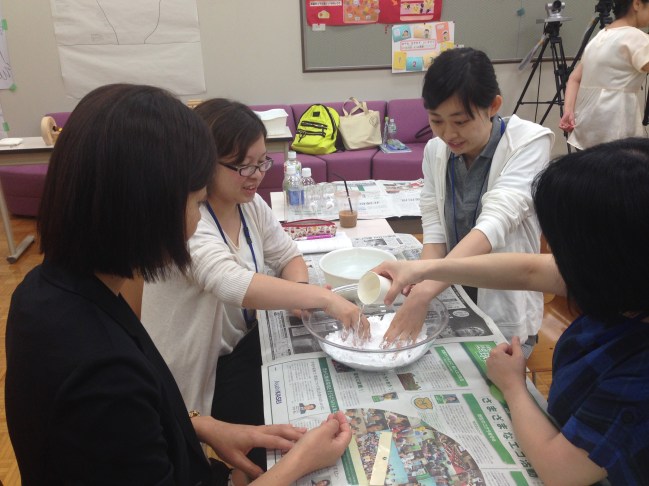
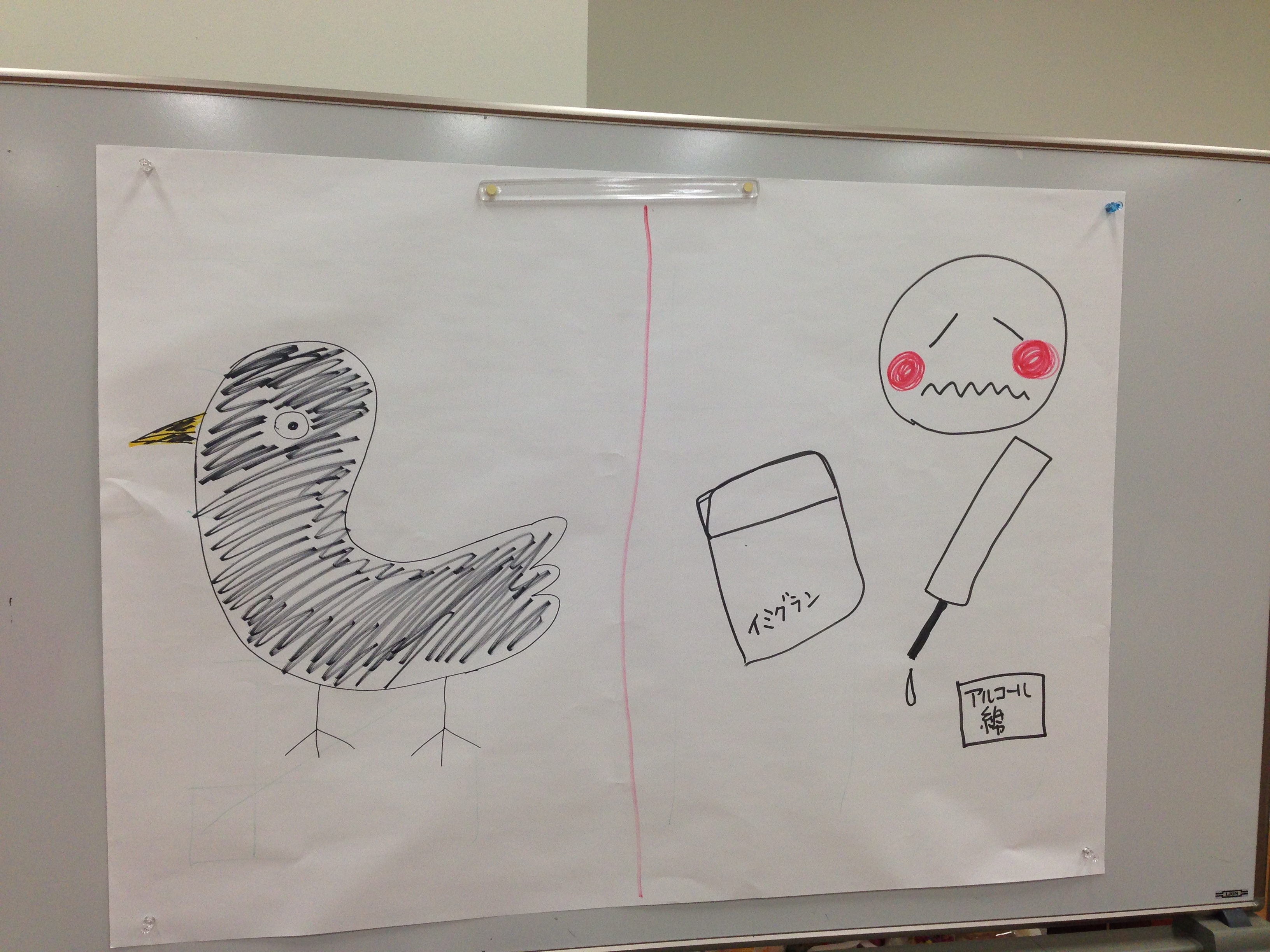
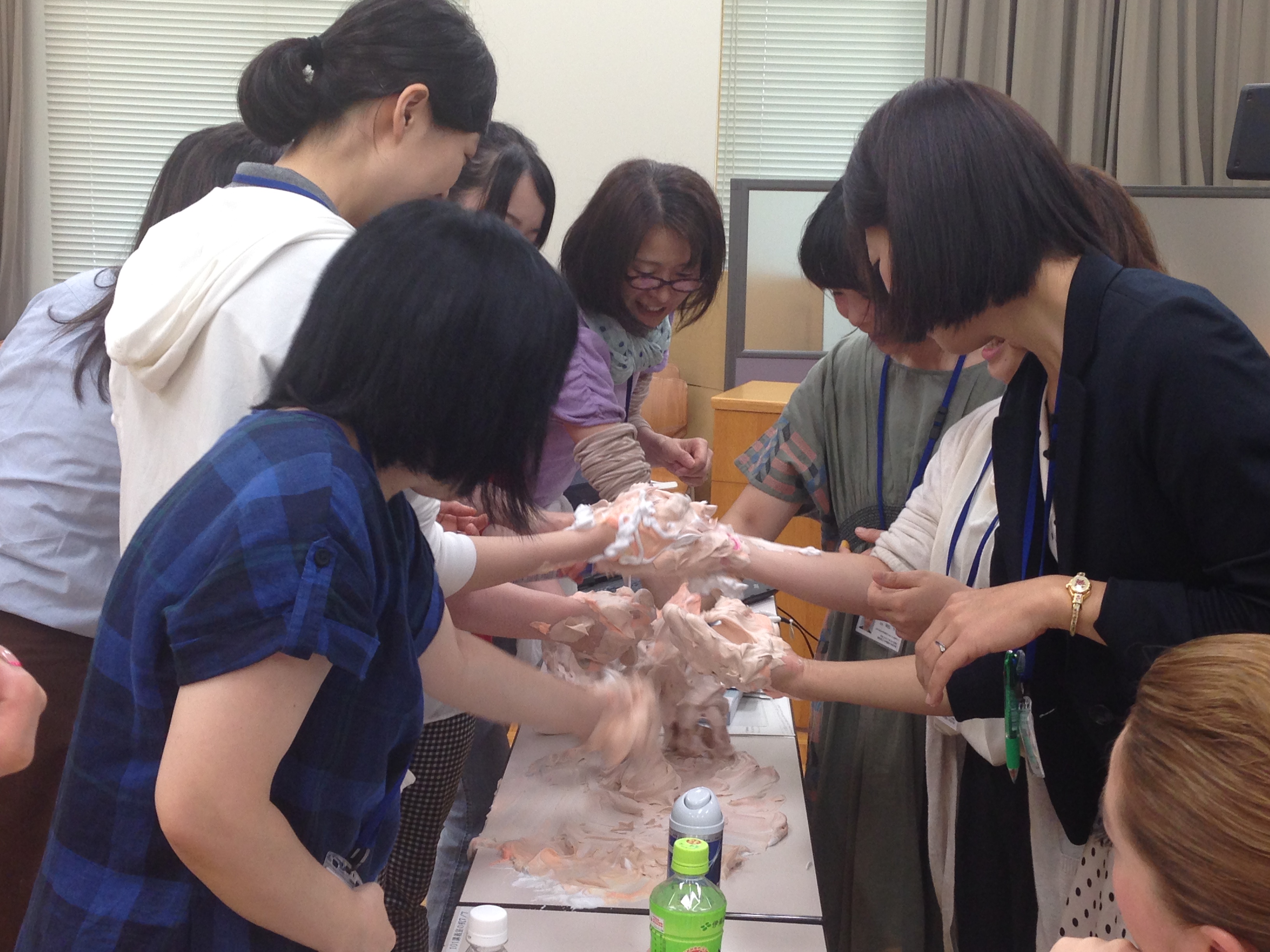
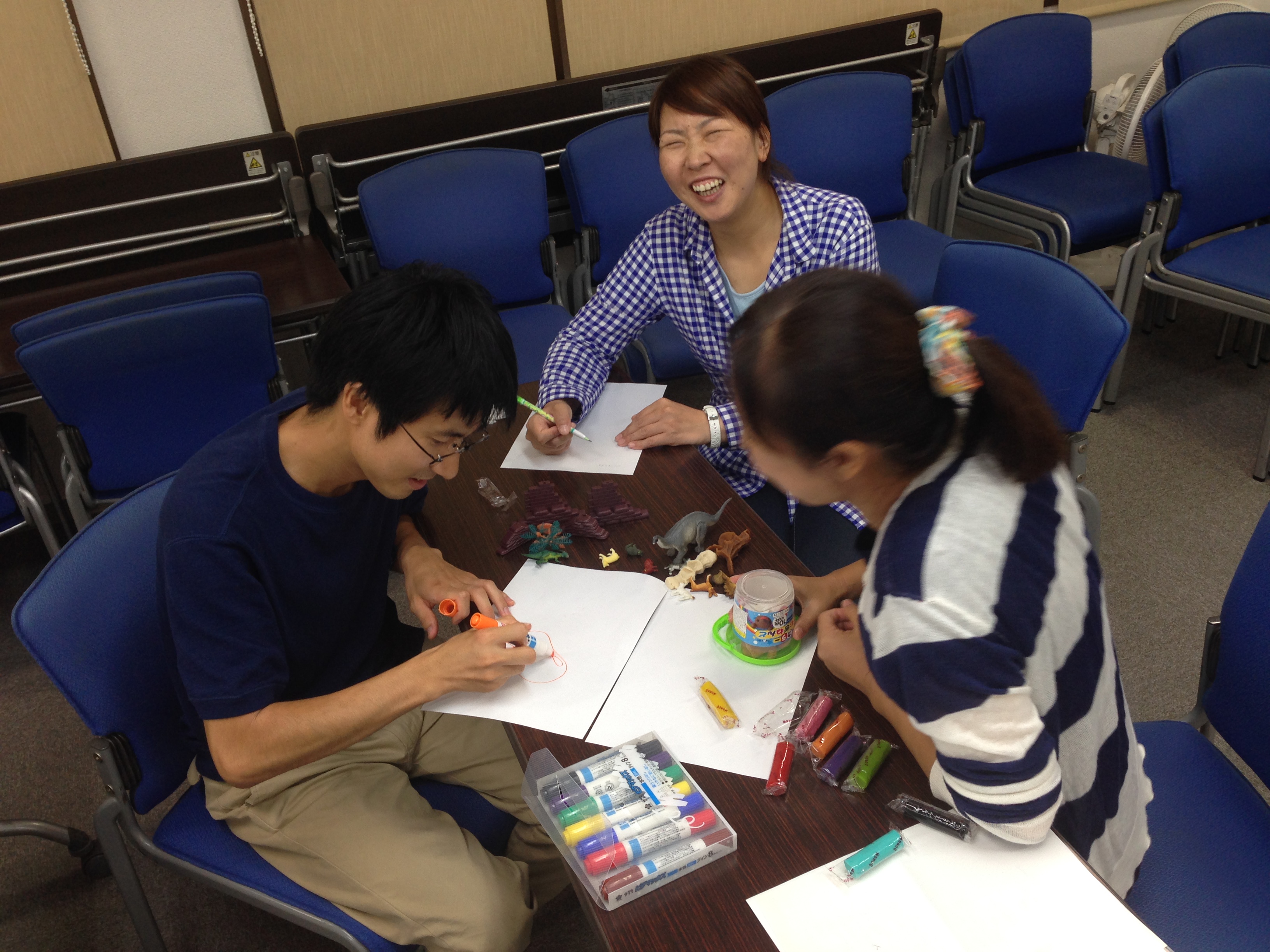
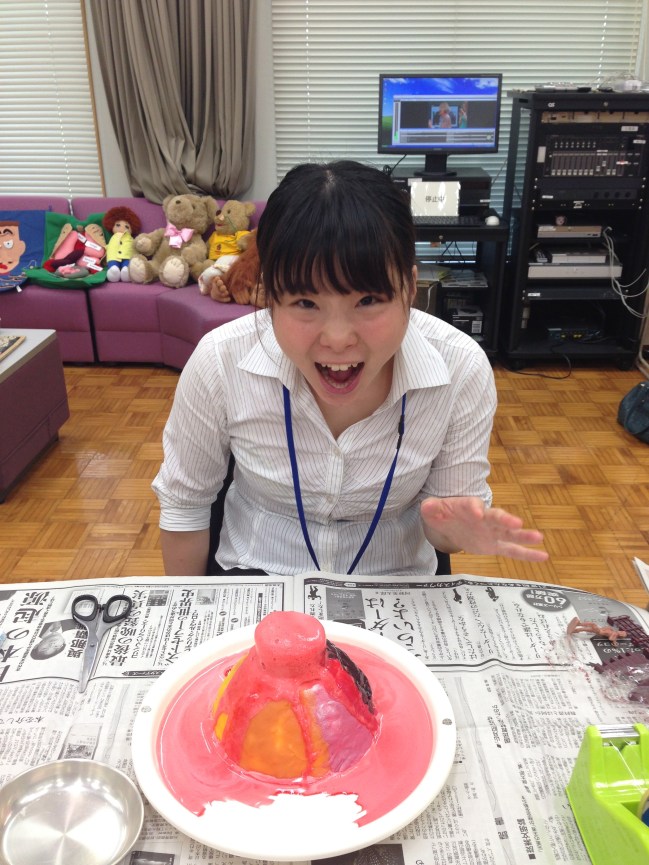
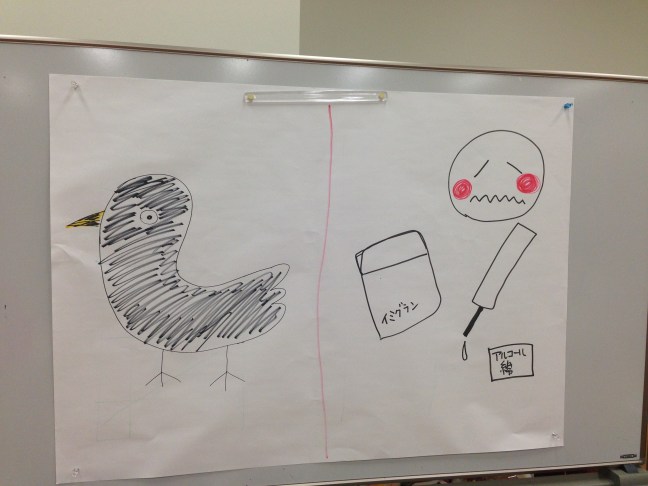
The students enjoyed making volcanoes (Kaduson, 1997), throwing wet toilet paper at a drawing of things which angered and frightened them (Kaduson, 1997), making oobleck and playing with shaving cream. Rolling up their sleeves to play helped them understand first hand the value of these techniques for hospitalized children.
IMG_4489

IMG_4495

IMG_4506

IMG_4522

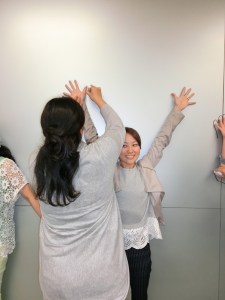
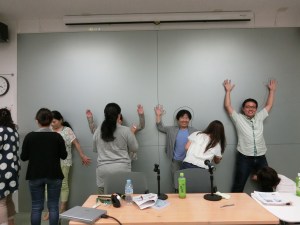
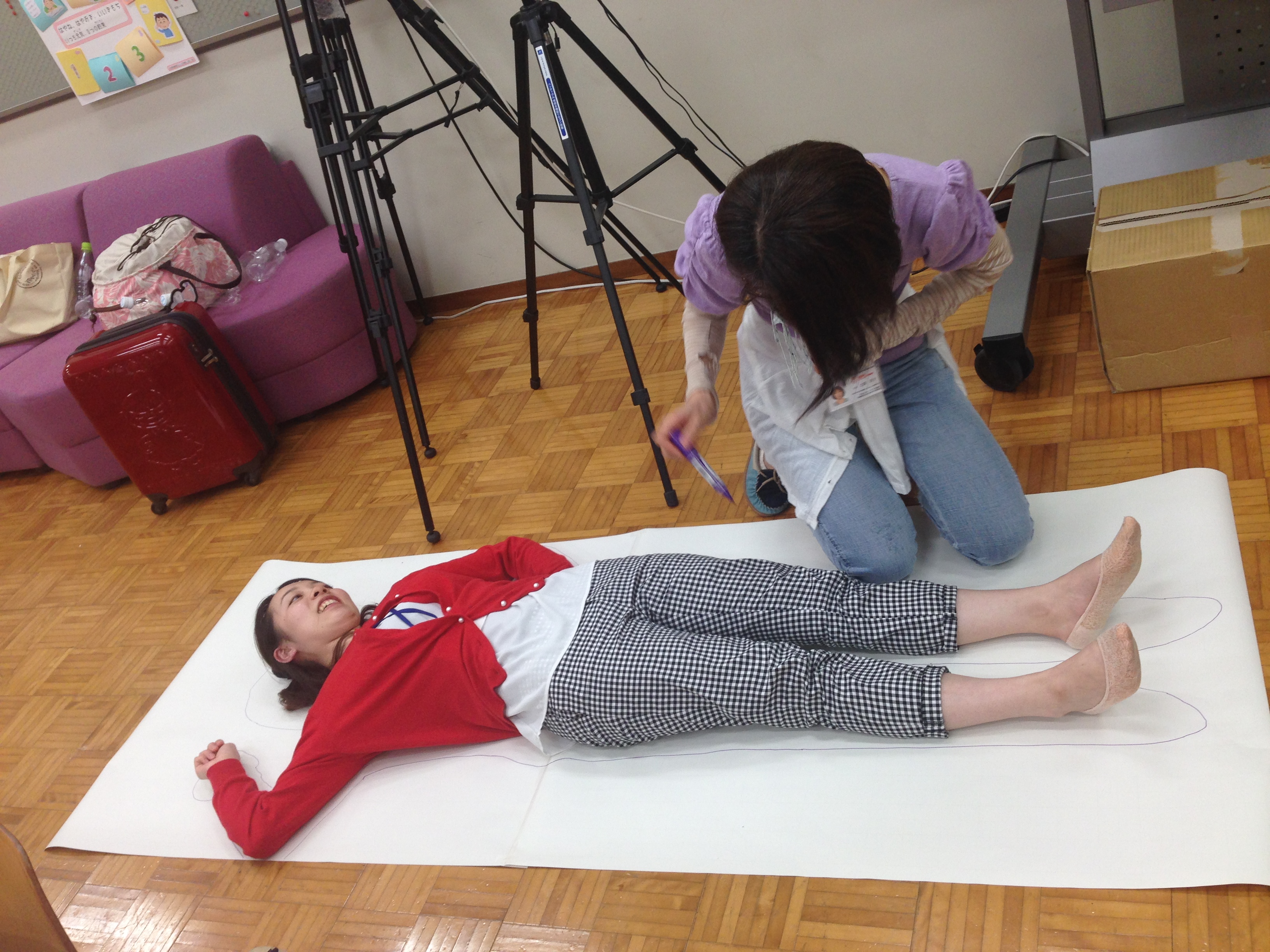
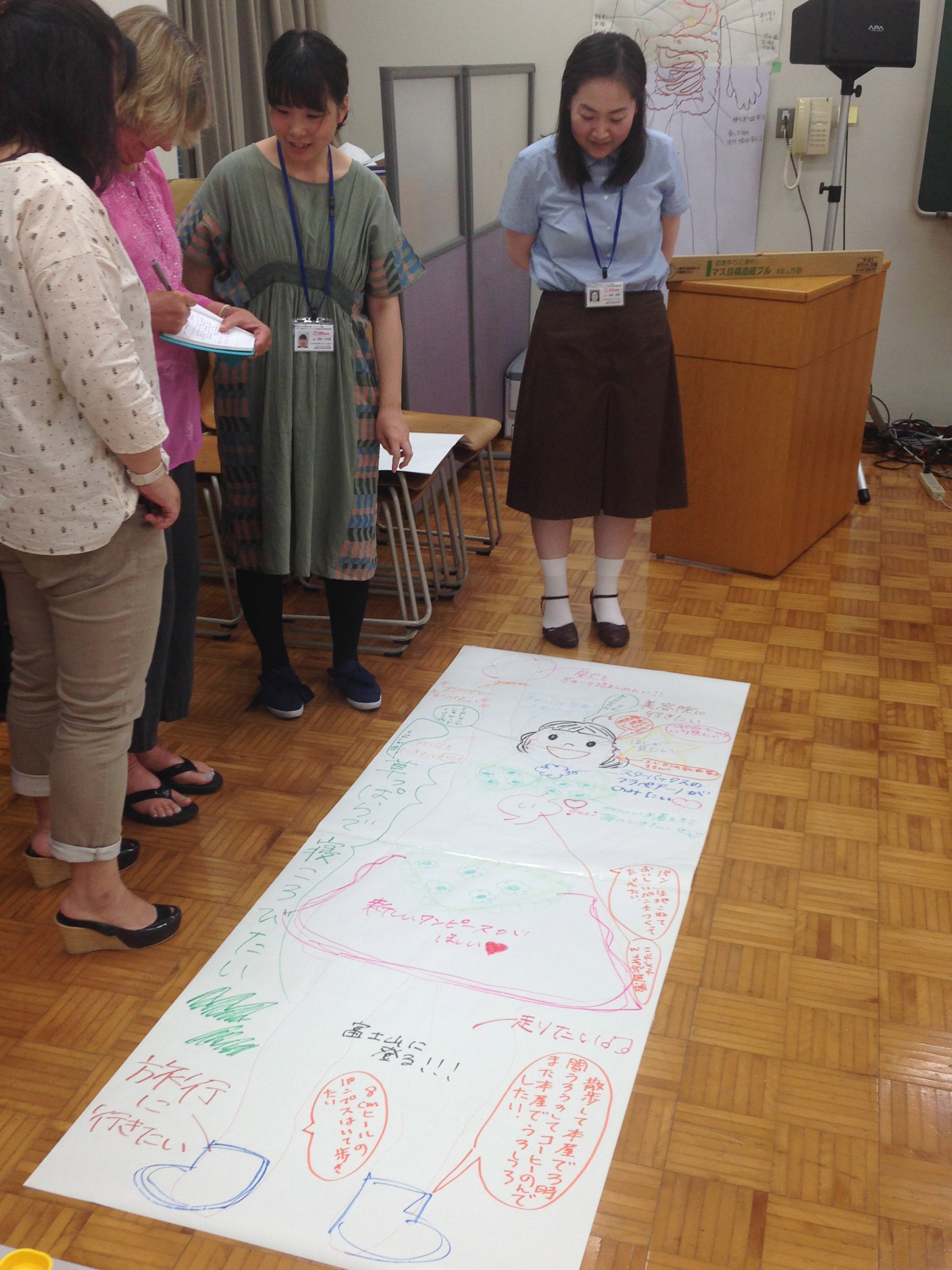
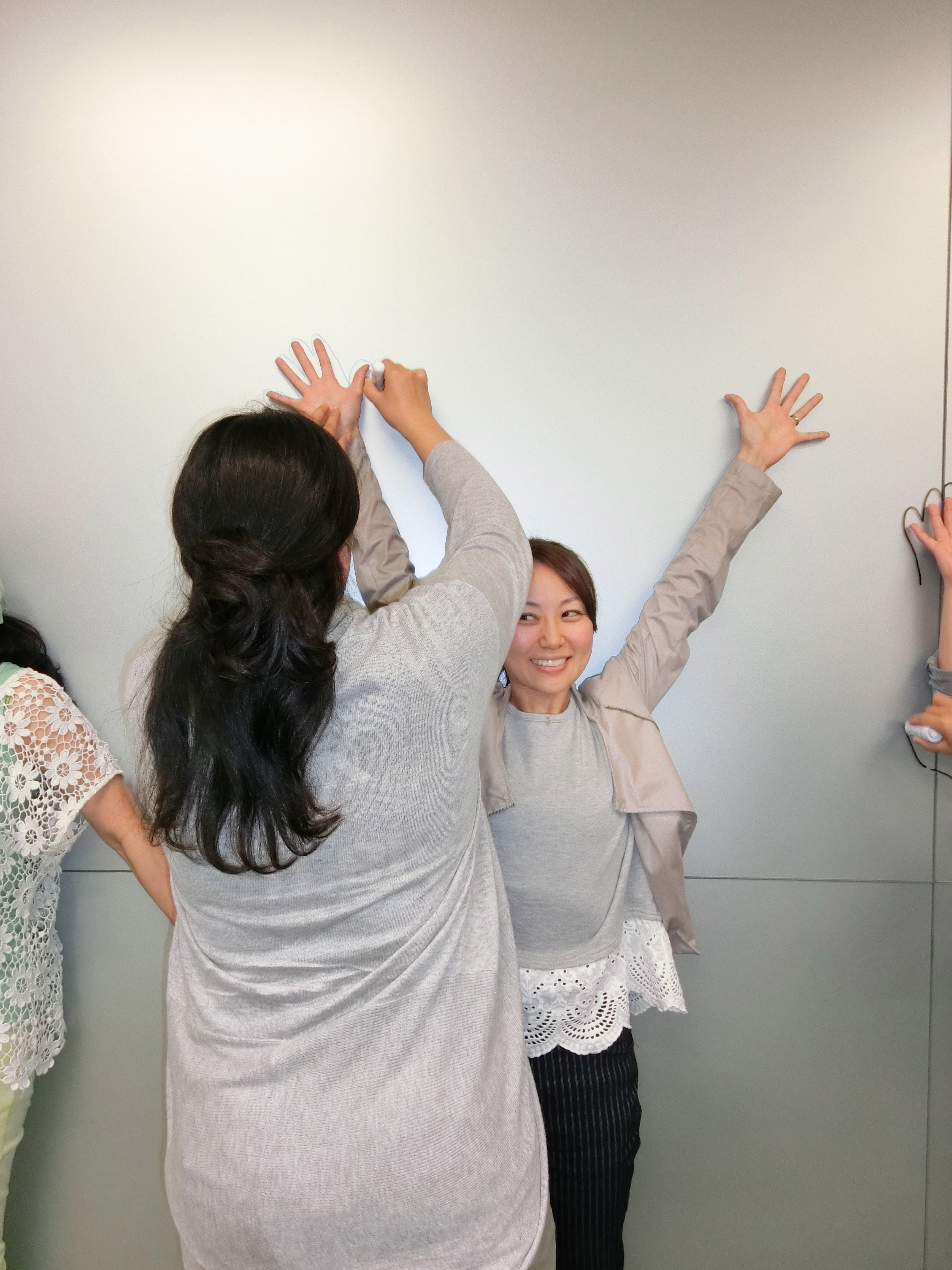
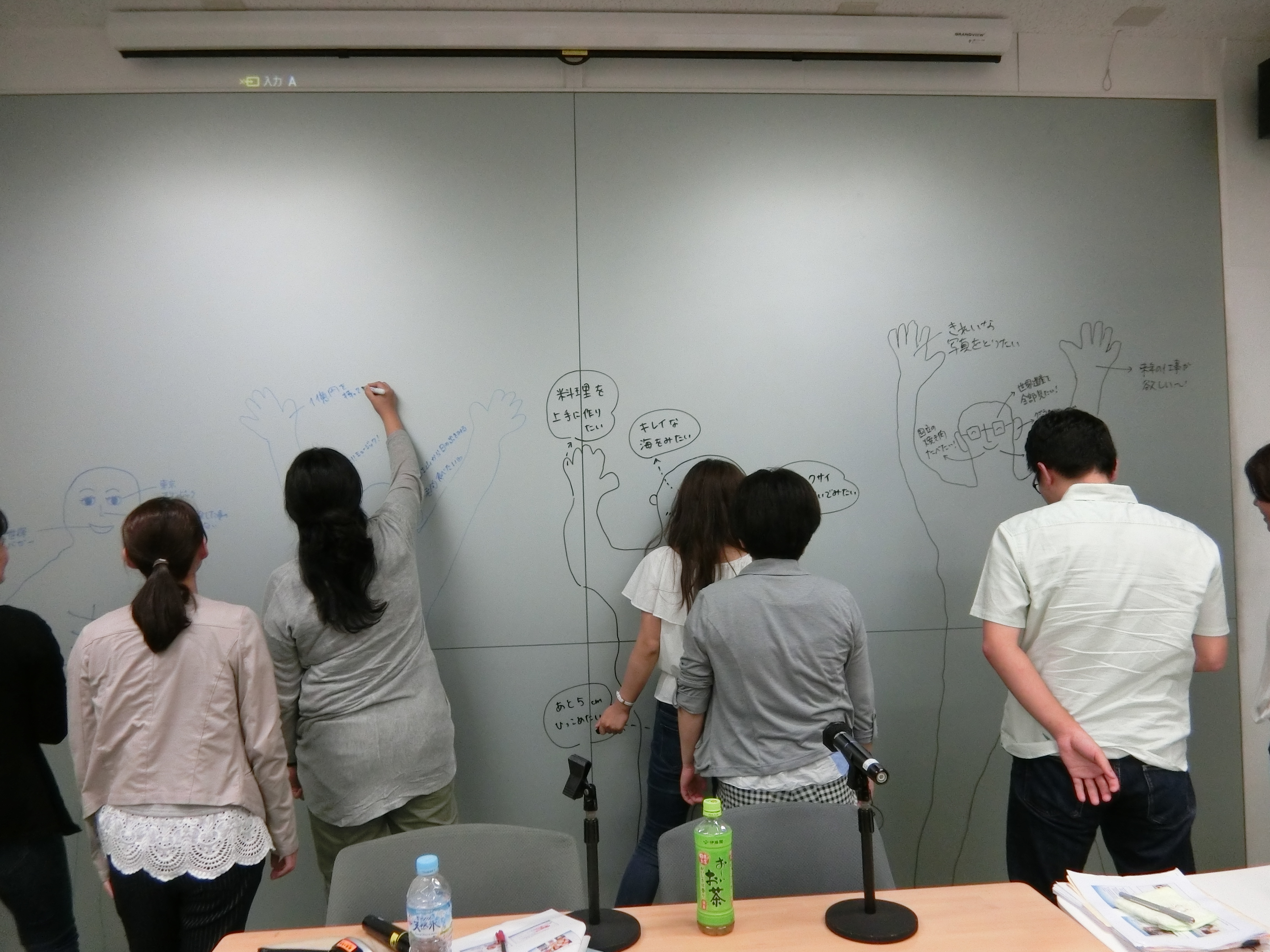
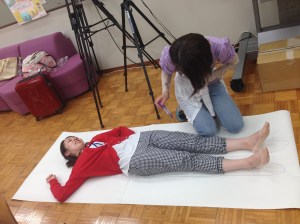
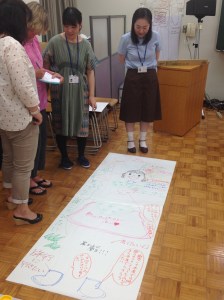
The students traced one another on paper and dry erase board for the “Wonders of the World”  activity (Carman, 2004). This activity helps traumatized kids and teens find hope and connect with a vision of the future as they draw what they would like to see with their eyes, smell, hear, taste, do/make with their hands, and where their feet will take them.
IMG_4531 IMG_4540

CIMG0064 CIMG0062

CIMG0066

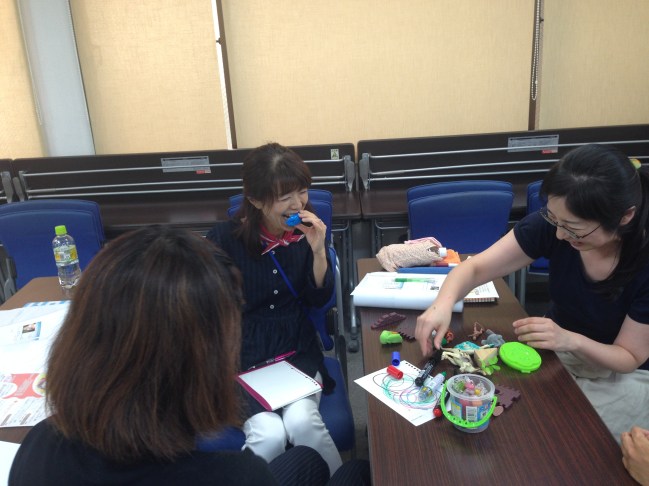
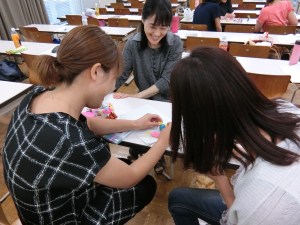
And last, but not least, we  demonstrated and practiced child-centered play techniques (Landreth 2012).
CIMG0024 IMG_4742 IMG_4748

The students were so willing and playful that the eight hours flew by each day. I have no doubt that children will be playing their hearts out throughout hospitals in Japan where these folks are training and working. Playing the Japanese way is a wonderful way to go.

International Job Opportunity!

imgres-4

NEWS FLASH!!!

My colleague, Siobhan Green, is looking for an experienced child life specialist to join their team in Australia. Here is Siobhan’s contact info and the job description. https://rch.mercury.com.au/ViewPosition.aspx?id=E2AK6pAarjo=&jbc=ere

Siobhan Greene
Senior Educational Play Therapist
Educational Play Therapy
50 Flemington Road Parkville 3052 Victoria
Telephone: 9345 5571 Ascom: 52457 Fax: 9349 1546
www.rch.org.au

A Bull in A China Shop in Japan

maxresdefault

My travels have opened my eyes and heart to other cultures. But sometimes it is a steep learning curve to communicate and function in a foreign land. As I journeyed to 4 Japanese cities in 12 days on teaching business, I felt way out of my element and clumsy in my efforts to behave appropriately in a vastly different environment. The image of a bull in a china shop kept flitting before my eyes every time I did something that felt dissonant and out of place. Thank goodness for the goodwill and generosity of my hosts.

Here are some of the many bloopers I made.

To begin with, everything is small, precise and beautiful in Japan. The people are orderly, fashionable, demure, and unendingly polite. Citizens stand in perfect lines, one behind the other, on train platforms. They speak quietly, if at all, in public places like elevators, restaurants and on trains. Children are quiet and obedient. The mere act of conversing with my travel companion, Marifer, made me feel like I was shouting in a place of worship. Never mind the times when we actually did have to call out to one another when we found ourselves separated in a store or train station.

The food everywhere is exquisitely prepared. At my first breakfast at Hotel Associa in Shizuoka, I was overwhelmed by the many dishes and the artful presentation of the bounty. I promptly whacked one of the dishes with my purse, sending a pair of tiny serving tongs flying. When I turned to retrieve them, I stepped on them and mangled them beyond repair. Oh no.imgres-4

According to my guide book on Japanese culture, being punctual is highly valued and expected. In my everyday life, I pride myself on arriving on time to all appointments. But, on my first day of teaching at Shizuoka University, I inadvertently took a taxi to the wrong campus, causing me to be twenty minutes late for my first day of school. When I arrived, the University President, Dean and several lead administrators were waiting for me outside the entrance in the 95 degree heat. Oh no. Continue reading

Traveler’s Prayer

imgres-4

I don’t believe in coincidence. I do believe in synchronicity. Less than 24 hours before I leave for a teaching trip to three cities in Japan, I open my book of daily inspirational reading Julia Cameron’s Transitions: Prayers and Declarations for a Changing Life to this passage:

“My Lifetime listens to yours”   Muriel Rukeyser

“The world is peopled by travelers each with a journey. As we make our way through our own obstacles, we are often oblivious to those who travel by our side. And yet when we open our hearts to the adventures and adversities of others, our own journey is illuminated. Those who travel beside me are my teachers and those I teach in turn.

Today, I turn my attention to the lives of others. I open to the interactive dance of our intersecting lives. Alert and attentive, I learn from those around me. Empathetic and involved, I teach what I have learned. Ours is a journey of shared hearts. I lift the lantern of camaraderie.”

And thank you Betsy for reminding me of the analogy of Johnny Appleseed. I look forward to seeing what wisdom I can gather as well as scatter.

Getting Older

image
Me and my godson, Joaquin July 2015

Tomorrow at 12:50 AM, I turn 54 years old. Many women do not want anyone to know their age. I remember turning forty and all the angst that led up to that day -such a waste of energy now looking back.  By fifty, I had wised up a bit and  celebrated my birthday by going skinny dipping  with friends. But now things are even more clear. When you have survived cancer, there is a crack in the door of egocentrism that can squeak open to reveal a great deal of light — if you allow it in. I now celebrate my aging with gusto, even if that means a slowing metabolism, greying hair, hot flashes, and an ache here and there (and here and there and here and there!!!).

I am so profoundly thankful for every day of health, for the joy of spending time in the company of really good people, and for my adventures, of which there are many. I am glad that I am here on earth enjoying these things, even when I get tripped up by a modicum of anxiety and fear, probably on a daily basis.

A writing coach is assisting me with the immense task of authoring a book. As I stumble about trying to figure out what the focus should be, what to leave in and what to take out, she says, “Your account of your cancer treatment is too cheerful. I want to hear more about your pain, what you endured.” Continue reading

Free New Child Life Tool for Bettering Hospital Playrooms

imgres

I am thrilled to announce the release of a new tool for your child life toolkit. It is an assessment form to help you make your playroom the best it can be. There is a dream playroom in all of our imaginations. Time, space, budget constraints and infection control guidelines aside, we all know what we would provide children and families if we were able to do so. The  VIPAR (Vilas Playroom Assessment Rubric) is intended to present the best possible scenario, and to measure how your playroom is meeting the needs of all pediatric patients and families at your hospital. Child life specialists and administrators can use this rubric as a quality checklist to assess playroom design and operation.

This rubric is several years in the making and has been test driven by many Bank Street College alumni. They kindly tried it out in their playrooms and gave me feedback to improve the document, making it as accessible and flexible as possible.

Tara Horan reports that the rubric gave her staff  “feelings of empowerment to make positive changes.”

Kelsey Frawley shared, “Another AHA moment was the cultural competency piece. I think as specialist’s we are taught to BE culturally competent, not judge, ask questions, be aware of differences, but incorporating it into a room is something I have not thought of. The developmental appropriate piece really stuck out, it is something we have struggled with as a site and recently have committed to revamping.”

Kate Shamzad states ‘In fact, it inspired us to order a wall mirror to be installed in the infant/toddler section of the hem/onc room.”

I owe them and others many thanks for their input. But the VIPAR is and should be a work in progress. So please give me feedback if you use it at debvilasconsult@gmail.com

It is pretty easy to use. Score each category based upon observation and investigation. Add together the 18 category scores to reach a total. Use the key at bottom of rubric to interpret total score.

It can be helpful to underline or highlight specific items to be improved within each category. Once a score is obtained, determine which improvements are within your department’s ability to improve. Set goals and deadlines for improvement. This rubric is not intended to make you feel that your playroom is substandard in any way. The hope is that it will guide you towards making some small or significant changes that will improve the quality of play available in your hospital.

Click below link to access and download the pdf.

VIPAR Vilas Playroom Assessment Rubric