Child Life & Art Therapy in Disaster Shelters: The Humanity Factor

DSCF2017

During these recent days of hurricanes, tornados, fires and violence, it is hard to know in which direction to turn – what to focus on – where to put our energies. Fred Rogers taught us all to “look for the helpers”, and I always find that calming and inspiring, so I have decided to republish a piece that I cowrote with Tara Lynch Horan after we coordinated services at a shelter in NYC following Hurricane Sandy in 2012. It gives a taste of what child life specialists and art therapists can do to ease the suffering of children in times of upheaval.

In addition, tapping into our ability to BE the helpers can also assist us in making sense of tragedy. In this vain, I attended a training this past weekend given by  Children’s Disaster Services  in coordination with the Child Life Disaster Relief organization. It was empowering, and I highly recommend the training to anyone who wishes to volunteer to provide safe play opportunities for children following disasters. You can do this locally or be deployed to other states in the USA. And if you can’t lend a hand, donations to organizations like these can still make a difference and impact quality of life for children.

Here is the article reprinted from Vilas, D. & Lynch Horan, T. (2013). Trees, Houses and Sidewalk Cities: Child Life and Creative Arts Interventions at a Post-Sandy Shelter.  New York Association for Play Therapy Newsletter, January 2013, 16 (2).

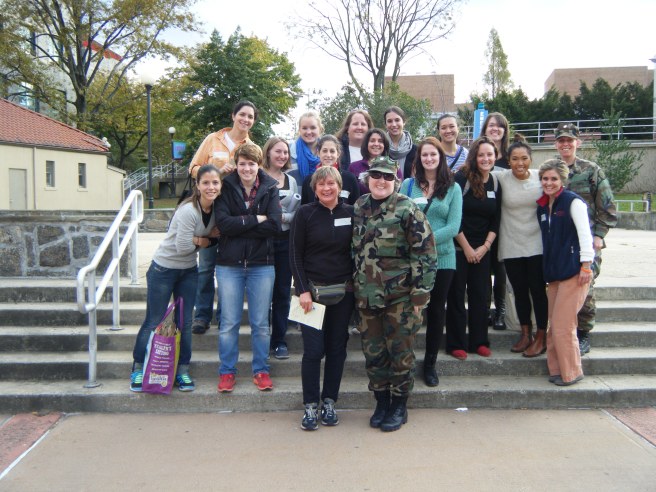
“A phone call from a Naval Commander stationed at a shelter in  NYC sparked the —-  Shelter Creative Arts Therapy / Child Life Initiative Mission. Commander Moira McGuire headed up a mental health team at the shelter serving many families. As a behavioral health nurse, she saw the need for therapeutic activities for the approximately 50 children facing displacement and uncertainty. In response to her outreach, a consortium of Creative Arts Therapists and Child Life Specialists quickly assembled. Our goal was to provide therapeutic creative arts opportunities to children and families post Hurricane Sandy. We hoped to facilitate psychosocial coping and adjustment to the stress and potential trauma of the Hurricane experience and to the stressors of the shelter environment. The first team of volunteers that responded within 24 hours numbered 14 and included 11 child life specialists who were colleagues, alumni or current students from the Bank Street College of Education, along with two art therapists and one dance and movement therapist.

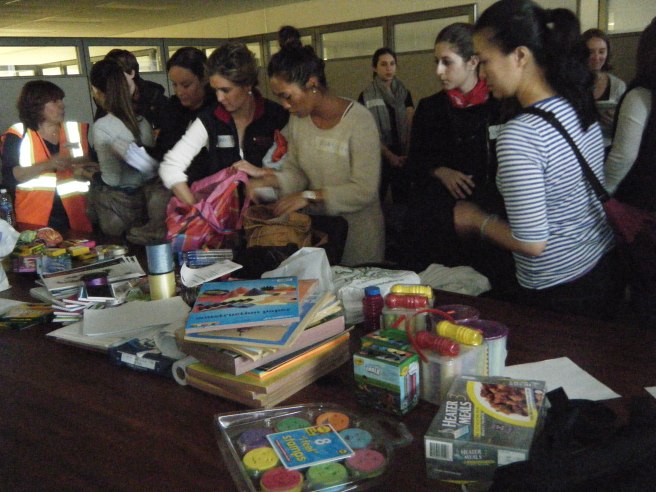
We would like to share some of the techniques that we employed successfully during the two weeks that the shelter was in operation. Leyla Akca, an art therapist, brought paper shopping bags in on that first day. She led children in an activity that explored the “stuff “we carry with us daily, and the invisible stuff we carry on the inside no matter where we are. It was a powerful metaphor, and the children took to it eagerly, decorating their bags with many open-ended materials. Leyla had previously participated in disaster relief in Turkey following earthquakes there. She had a lot of wisdom to share with us all, and her activity gave us focus and purpose.
DSCF2016

Maryanne Verzosa, a child life specialist from St. Lukes Roosevelt Hospital, supplied found objects from nature, which included sticks and twigs. As she gathered children in a circle sitting on the floor of the shelter, the children spontaneously created three-dimensional houses out of the materials. One child presented his stick house to his uncle, saying, “This is for you because you lost your house.” Commander McGuire had asked us to bring sidewalk chalk with us, as the children had access to an outdoor patio. Her instincts were perfect. A six year-old boy spent all afternoon creating a chalk city of roads, “for the children”, and buildings. We provided the child with miniature buildings and figures for his chalk city, and the play continued and drew other children into its circle.
images-2

One of the final activities took place during the last day when families were moving out of the shelter, many of them to hotels. Tara Lynch Horan, a child life specialist, worked with several art therapists on a community project of building a mural tree and decorating it with leaves representing what families leaned on during Sandy‟s aftermath. The art therapists worked with the children creating the tree, while Tara went from cot to cot, engaging parents in depicting their resiliency factors on precut leaves made from construction paper.

The collaboration of Child Life and Creative Arts Therapists brought about many therapeutic moments for these children and families. The activities employed a variety of directive and open-ended techniques. As we would expect, the children and parents created their own meaning and healing. All they needed was the time, space, materials and gentle encouragement from trained therapeutic agents. Humanity at its best.”
Why Aren’t We Preparing Kids for Disaster

Print

Beal_Photo_sm Guest Blogger Heather Beal is a military veteran with 23 years of crisis management and operational planning experience that she draws upon daily in her battle to raise two well-prepared, happy, curious, and intelligent children. As a trained emergency manager and parent, she saw the need to provide age-appropriate disaster preparedness information to young children in a way that empowered rather than frightened them. She is currently writing additional books to cover a greater spectrum of potential disasters children may face.
“Generally speaking, we do not prepare our children for disaster. We make them hold our hand in the parking lot and talk about the dangers of getting burned by the stove, but we stop short of this really big “disaster” word. When I think about it, I can come up with a few excuses we call reasons as to why we don’t give this topic the attention that we should.

First, like our children, (but usually without donning the superhero capes and masks), we believe that we are invincible. It (the disaster) can’t happen to ‘us,’ it only happens to ‘others.’ Folks – look at Hurricane Harvey, Superstorm Sandy, Hurricane Katrina, the Indian Ocean Tsunami, and any other number of disasters. With that many people affected – the ‘us’ and the ‘others’ are the same people. We need to look at disaster as a probability, not a possibility.

Second, we think talking about disaster will be too scary. I get it. No one wants to tell children anything bad could happen. We all know our children could get terribly hurt running if hit by a car in the parking lot, but we don’t get into explicit details about injury and death. We do however, talk to them about being safe, making good choices, and not doing things that could more likely result in their getting hurt.

We should approach talking about disaster in the same way we approach other learning topics or the consequences of actions or inaction. We don’t need to focus on the destruction a tornado can cause, how their lives could be uprooted, or what other things could dramatically change. We can however, talk about what children need to do to stay as safe as possible.

There are no guarantees in life for anything. We can’t guarantee that a car in the parking lot won’t do something stupid, just as we can’t guarantee the tornado will miss a child’s house, school, or childcare. But we, as parents, as childcare providers, as educators, as caregivers, as emergency managers, and as community members, can arm our children with the tools to succeed. We owe them that.

Sounds good – but how would I know, right? Fair question. A few years ago I tried to explain to my then 4-year old daughter that she and her brother might be woken up in the middle of the night to go into the basement if there was a tornado warning. Of course, it was already dark and stormy (thunder and lightning and everything). Needless to say, I did a very poor job, ultimately scaring her and beating myself up about my failed attempt to mitigate later fear through a botched explanation. Never again I vowed.

That was when I discovered that almost no one was having the conversation with young kids (toddler, preschool, or kindergarten) about disaster. At the same time, I realized that disaster was not going to sit by patiently and wait until my children could calmly and rationally discuss everything at a grown up level. I decided I could develop a way to talk with them in a way that didn’t scare them, but instead empowered them by teaching them what to do and giving them back a little control in a typically uncontrollable situation. They might not be able to stop the disaster, but they could do something to increase their safety within it.

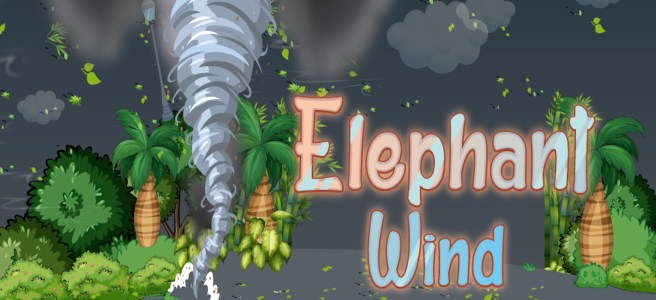
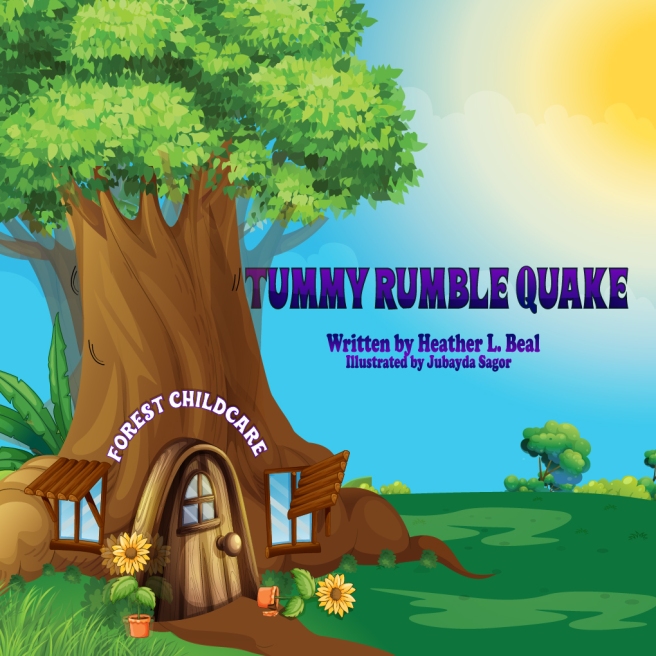
I started Train 4 Safety Press to develop picture books that would teach children what to do “if.” As I conducted research, I discovered a few books out there on the science of disaster, but almost none that taught young children what to do when the disaster was happening. Our first book Elephant Wind tackles what to do during a tornado. Tummy Rumble Quake teaches children about the Great ShakeOut™ and earthquake safety.

Children have a great capacity for building their own resilience. Teaching them how to protect themselves can have an exponential effect. Children could not only help themselves, they could help their classmates, their teachers, their family and their community. Isn’t anything that increases the odds we bring our children home after a disaster worth it? Can we afford not to talk about it?”

And here is a great resource: National Child Traumatic Stress Network

9780998791227


Bilingual Book for Pediatric Cancer Patients

My thanks to Marifer Busqueta for connecting me to this wonderful bilingual children’s book for children and families facing cancer:


nav_logo


The information below is copied directly from the book’s website benito books. Marifer herself has written a children’s book in Spanish to address children’s questions about loss and death, “I want to know what is death?”. It is wonderful to have access to books for Spanish speaking and bilingual children facing illness and loss.

17554104_10154206566695764_5630436754248429766_n

nav_logo

Home About the book News/Events Buy your copy

Overview

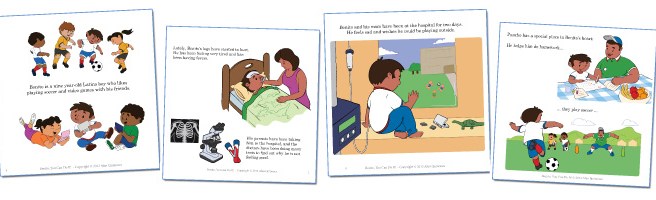
Benito, You Can Do It! Volume 1 is the first in a series of bilingual picture books for children diagnosed with cancer. This 80-page (40 in English and 40 in Spanish) picture book depicts a Latino family facing childhood cancer and uses a soccer analogy to explain the roles of the medical team.

Pages from the book

Written and illustrated by Alan Quinonez, this book helps parents find strength and hope when one of their little ones has been diagnosed with cancer.

Our Goals

The picture book series Benito, You Can Do It! has been inspired by the testimonials from the families in the Latinas Contra Cancer Parent Support Group as well as the expert knowledge and input of the medical team at Stanford’s Lucille Packard Children’s Hospital.

about_inspire

Our goals in developing this first-of-its-kind book series reflecting the Latino experience are:

  • To the affected families to share the resources, advice, and best practices learned from the cancer journey with their child.
  • To show the cancer survivors that this is an opportunity for them to step into the limelight and reach out to those who might lose faith.

The book series

Our first volume The News, helps children and their families cope with a recent diagnosis by providing a better understanding of the disease, and the medical team that will be helping them.

Upcoming volumes in the series are:

  • Vol.2 The Awareness (working title) Will explain how the immediate family of a child with cancer faces twice the risk of developing the disease, and what steps the family can take to reduce the risk.
  • Vol. 3 The Treatment will explain the different types of treatment and life at the hospital.
  • Vol. 4 The Siblings will help brothers and sisters process their own feelings of being set aside and neglected.
  • Vol. 5 The Return to School will explore the anxiety that children face when they go back to school before their hair has regrown.

Our fundraising on Kickstarer

From Sep 6th to Oct 6th 2013, we ran a kickstarter fundraising campaign.

Thanks to the generous donations from 171 backers, we were able to raise over $12,000, which allowed us to cover the costs of print, as well as set aside 110 books and make them available for free to families in need!

At our campaign page you can:

About the author/illustrator
about_alan

Alan Quiñonez is a writer and illustrator working on his dream of telling stories that cross language barriers and foster a message of hope and strength in children and families around the world. He lives with his partner in North Hollywood. His personal website is alanrq.com

About Latinas Contra Cancer

about_lcc

Latinas Contra Cancer is a decade old nonprofit based in San Jose, California. Founded by Ysabel Duron, a cancer survivor, this agency, one of the few of its kind in the country, works to improve outcomes for Latino families affected by cancer by increasing awareness and knowledge, access to care, and psychosocial support.
Learn more at latinascontracancer.org

Preventing Pediatric Pain: A Longterm Win Win


imgres

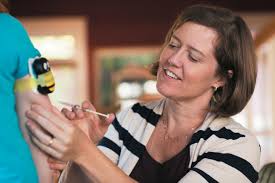
Amy Baxter, MD, the queen bee of pediatric pain prevention

“I believe established medicine is courting a public health disaster, not because of costs or lawsuits or one dumb publication from a scientist gone bad, but because of a national Pavlovian failure of empathy.” — Amy Baxter

Who is Amy?

“Emergency pediatrician Amy Baxter noticed a disconnect in health care: caregivers often cause pain to solve a problem, but for many patients, pain is the problem. While researching the causes and consequences of untreated pain, she invented Buzzy, a bee-shaped device that physiologically takes the sting out of shots using high frequency vibrations and cold. Amy is the director of Emergency Research for Pediatric Emergency Medicine Associates at Children’s Healthcare of Atlanta, Scottish Rite. In the academic world, she is known for creating and validating the BARF nausea scale for children, and an algorithm to measure the timing of child abuse. Honors include a 2011 Medical Design Excellence Award, Georgia Bio Innovative CEO of the Year, and a Wall Street Journal “Idea Person.”” (TEDMED, retrieved November 7, 2016)

In a recent conversation with Dr. Baxter, I asked her about her war on pain, and her appreciation for the field of Child Life.

What are your beliefs about pediatric pain and the need to prevent it?

I take seriously the oath to First Do No Harm.  When iatrogenic procedural pain causes people to fear healthcare later in life, we have done harm.  When we withhold pain management in the trauma bay, we do harm. I have always been suspicious when we do something without pain management to someone small enough to hold down, but we sedate or give analgesics when they’re big enough to fight back.

What do you believe children need most in the medical setting? 

Children need to know they’re safe.  Therefore, parents need to know we’re doing everything we can to make them not hurt.  Something may happen that isn’t comfortable, but kids need to trust that they’ll be warned.  If there isn’t any way to make it more comfortable, they need to know that their care team and parents are all agreeing and supporting what is best for the child. Even very young children know crap happens; what is scary is when the people who keep their world stable are visibly angry, confused or afraid.  Pain isn’t the worst thing that happens, it’s pain when their parents seem unable to protect them. When I fix a nursemaid’s elbow or a patella, I offer analgesics, but let parent and child know I can make them feel better FAST right now but it is going to be uncomfortable for 5 seconds or less.  Or they can wait, but it will still be a little uncomfortable.  Most opt for fast, but that control and honestly let them know I’m thinking about not hurting them first and foremost.

Why is pain prevention important for very young children?

Kids who are persistently afraid of needles have healthcare consequences. They grow up to be adults who don’t get flu shots, or start insulin when they need it, or donate blood.

What motivates you in uphill battles with sensitizing other medical professionals to the necessity of pain control for infants and children? 

I really believe that truth carries its own coercion.  If people who want to heal see the truth of the importance of pain relief, they eventually will align their behaviors with that belief.  No one wants to be an outlier in medicine.  Once one person sees the truth, that pain relief matters, they can’t unsee that.  Eventually the obvious will become apparent to everyone – we can make the entire system work better when we don’t hurt children.

How did you learn about Child Life?

I know this is hard to believe, but I can’t remember not knowing about Child Life.  I’m sure we didn’t have Child Life in pediatrics when I was training, but perhaps because it always seemed such an obvious need when I first began seeing Child Life specialists, perhaps I assumed they always been someplace, just perhaps not in my department.  I carried distraction toys on my stethoscope and in pockets since I began training, it just seemed logical.  My oldest was born my first year of residency, so I had a natural connection to what worked for different ages from the beginning of my training.

Resources for doctors, parents, nurses, and child life specialists

In this TEDMED Talk, Amy speaks to the increase in vaccinations in early childhood, and the impact it has in increasing needle fears later in life.  Visit her  Buzzy website to find out more about the most cost effective way to prevent needle pain in infants and children.
buzzy-child-life-halloween

The Child Life Maker Movement: Loose Parts Impacting Healthcare

img_1347

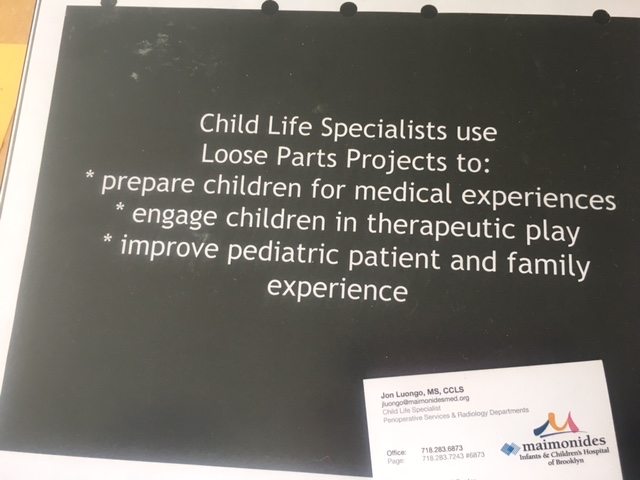
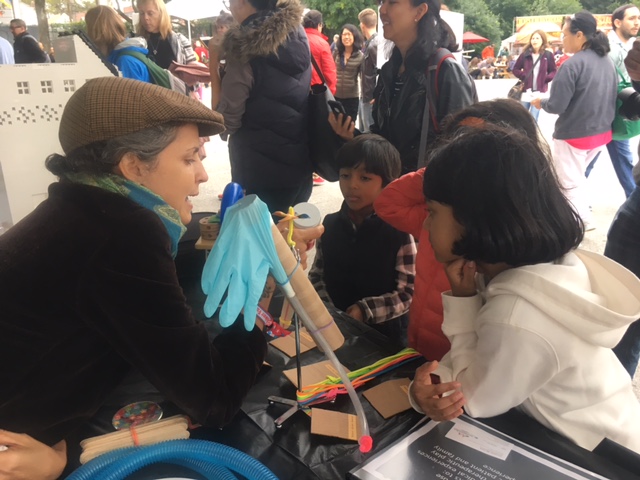
What happens when you cross a child life specialist with loose parts? Creativity, to say the very least. Specialists have been using loose parts to make the medical world more accessible and friendly for children and families since the beginning of our profession. They combine medical supplies (tubing, gauze, rubber gloves) and household items (paper towel rolls, pipe cleaners, paper clips, felt) to create everything from customized dolls that reflect a child’s medical situation, to a glove-o-phone to help children pass breathing tests. Simple and complex inventions have aided children in making meaning out of their medical experiences.


img_1316

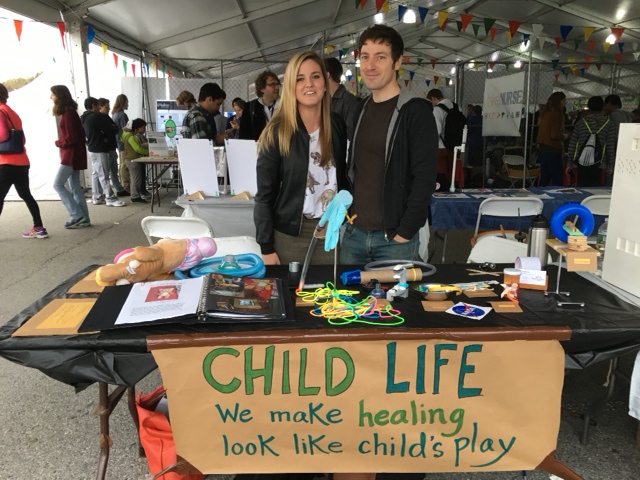
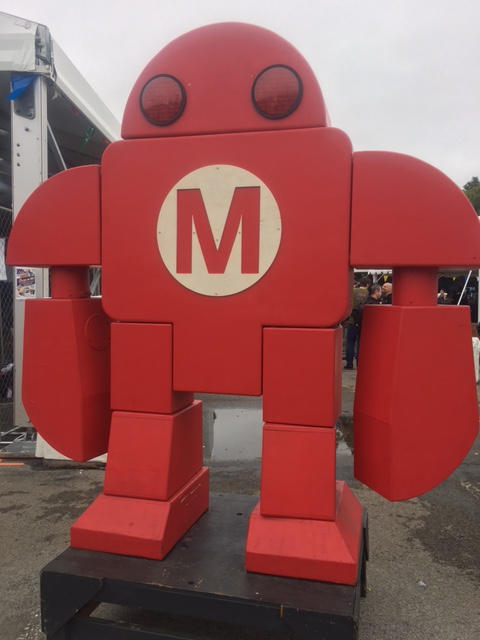
Now, with the Maker Movement, child life specialists have invaluable opportunities to join brains with other disciplines seeking to improve patient experience and speed recovery.   Bank Street College Child Life alumnae Jon Luongo and Kelly Segar, and children’s book author Anastasia Higginbotham rolled up their sleeves to join the Maker Faire at The New York Hall of Science this past weekend. They joined nurses, doctors, medical technicians and fellow inventors in the Health Maker tent on this brisk and cloudy autumn day.

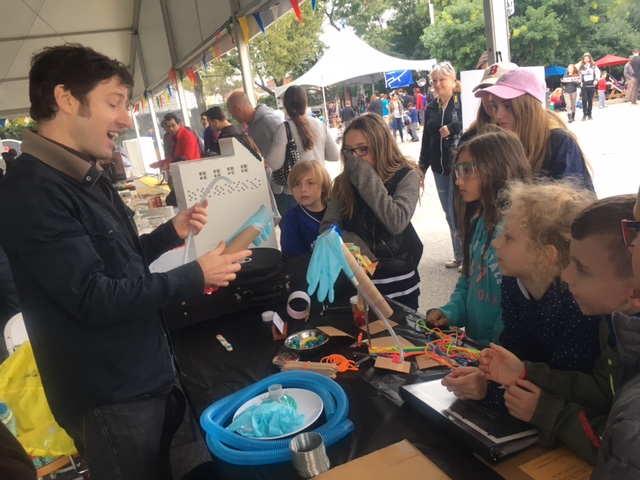
As children and caregivers meandered through the exhibits, .the specialists shared information about how to make pediatric hospital stays more manageable, less stressful, and more fun. As Jon demonstrated the glove-o-phone, kids jumped at the unexpectedly loud honk it made.

img_1326


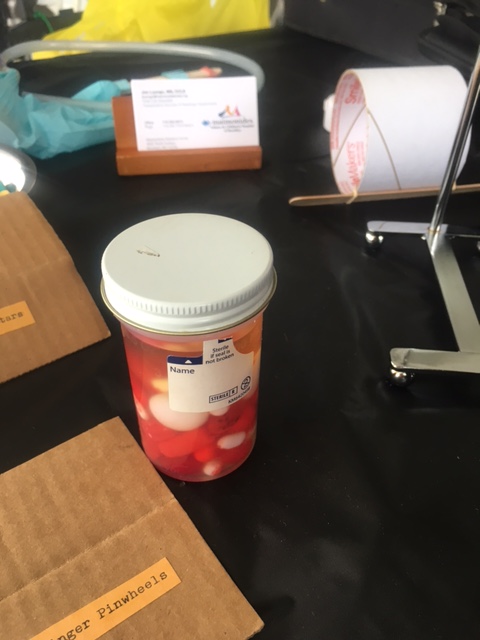
Exclamations of “Ewww gross!” were followed by attentive curiosity as Jon explained the purpose of the vial of “blood soup” on the table.


img_1317

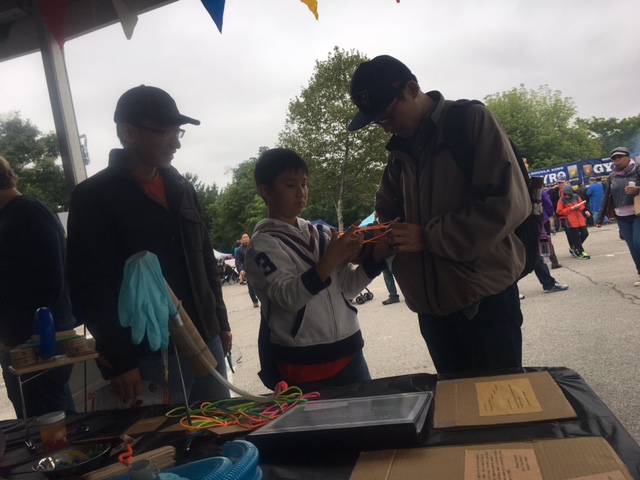
Families spontaneously grabbed colorful neon strings and engaged in string play, a simple game that crosses generations, culture and language around the world.

img_1332

Kelly demonstrated her Barium Bear, “Barry”, developed to support children receiving barium enemas and scans. She used simple circuitry that she learned from a Hospital Play Specialist in Japan to illuminate the pretend scan.


img_3265

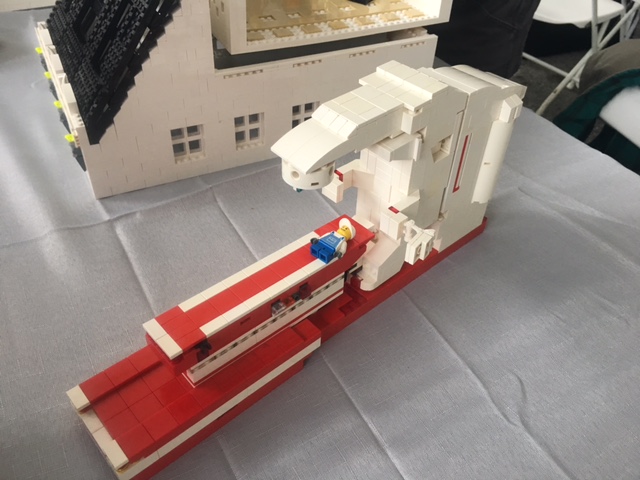
At nearby tables, radiation techs and doctors showcased how legos can be used to build mini MRI, CT-Scan, and linear accelerator machines. When they are doll sized, they aren’t quite so scary. And when children aren’t as frightened, doctors can administer less anesthesia to their tiny patients, a win-win for everyone.

img_1312

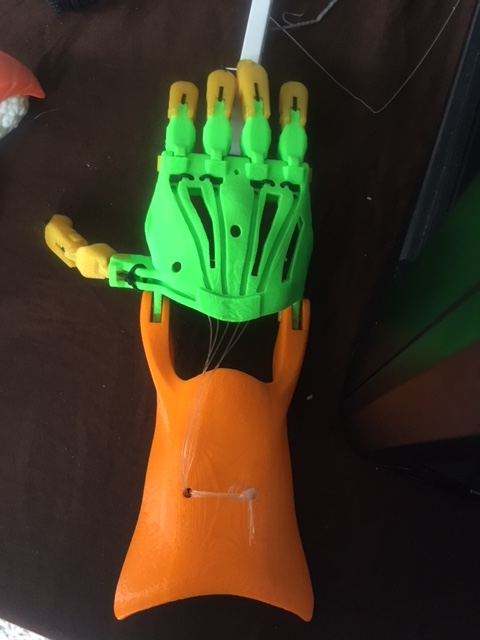
Did you know that a A three-D printer can be used to make prosthetic hands for children who have lost theirs to birth defects, disease or accidents? And for a fraction of the cost of traditional prosthetics. And they aren’t just your run of the mill hands either. They are superhero hands! As I observed a three-D printer humming away at one exhibit, I wondered about what kind of mind came up with the idea of this machine. And then who had the amazing idea about the possible application of it in the medical world?

img_1338

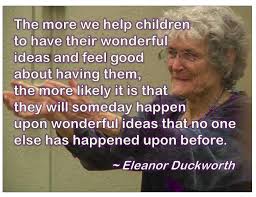
Wonderful ideas start somewhere, and when we encourage children to explore and create, even in the medical environment, we are investing in their healing and in their future. The Maker Faire was an extraordinary celebration of the possibilities of the human brain. From low-tech to high-tech, creative minds came together in the Health Lab tent to hack medical problems and make the healing process more fun. If you want to get your maker on, I encourage you to find maker spaces near you Challenge your child life staff to a loose parts contest at the next departmental meeting. Jumpstart a health maker group in your hospital and invite staff from throughout the institution to collaborate. And don’t forget your best assets. Find every opportunity to include children in creative problem solving with loose parts. In and out of the healthcare field, children and adults all benefit when we connect with what Eleanor Duckworth called “wonderful ideas.”

images

img_1307

img_1345


Doll Ambassadors: Providing Comfort to Kids with Cancer

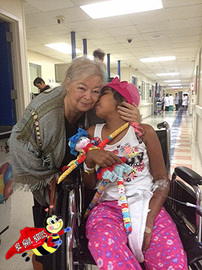
20160716-151336-bee-hdr_1_orig

Guest Blogger: Rosanna Bernstein – Founder of Bee Brave Buddies

When I had cancer and was going through chemotherapy, a white, curly haired stuffed poodle that one of my daughters gave me sat right on the pillow next to me at all times. I named her Gigi. Just looking at the quirky turned-up smile on this puppy`s face always gave me a feeling of comfort and made me smile.

I was diagnosed with Chronic Myelogenous Leukemia in 1998. I was in treatment for 3 years and was becoming sicker. A trial in its second phase for a new chemotherapy medication, specific for CML, now called Gleevec, was in its early stages at that time.  I was eventually accepted into this trial, and within several months I went into a remission. This chemotherapy was one of the first magic bullets, a medication targeted to treat the specific genetic mutation.  Although I still take a chemotherapy pill each evening, I have been so fortunate to be healthy and in remission to this day.

I was so grateful, that I decided I wanted to help others.

Through the years I have had several businesses: Yummy Gram, a gourmet basket company, Rosanna Hope Designs, a millinery and hand bag design company and Baby Bonbons, an online shop with vintage lace children`s clothing designs and accessories. During this time, I designed many original designs for baby blankets and matching pillows for the Baby Bonbons shop. I have always had a passion for art, beautiful laces and fabrics.

But, puppy Gigi always lurked in the back of my mind. I could still see that funny little face, and I got a warm feeling each time I thought about Gigi. I remember the soothing, inner peace I felt snuggling her. This feeling gave me the idea to combine my love of art and design with my desire to give back.

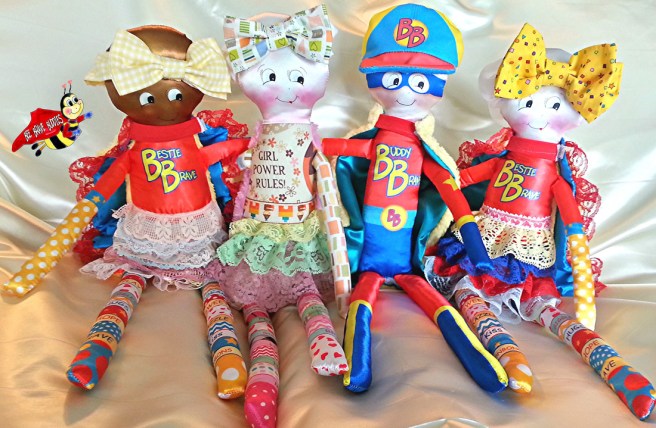
I combined my love for fabric and my whimsical children’s digital art drawings to design my original three Bee Brave Buddies dolls: Buddy Brave, a superhero doll for boys with magical powers, his twin sister, Bestie Brave, a superhero doll for girls, who is a true new best friend, and Catie Cuddles, a doll dressed in fancy lace who loves to cuddle and snuggle. I hope to use this same art process to design a line of Bee Brave Buddies Adventure books and other gifts for children.

My dolls were designed to become a new best friend to children who are in treatment for cancer or other childhood illnesses and who need a big snuggle and some magical secret powers to be brave. The three dolls are designed with beautiful bald heads. The girl dolls have special words printed on their long leggings: giggle, snuggle, love, dream, brave, cuddle, smile, laugh, hugs, play, dream, hope.

The dolls are also educational. An adult with cancer can use the dolls to explain hair loss and other treatments that children will face. Each doll comes with a matching hat or headband and the superheroes come with silky minky capes. The dolls have very soft plush pillow bodies to hug and love. Each doll comes in Caucasian or African American descent. Our dolls are printed and made in the USA. They are completely washable.

I have personally been giving my dolls to children with cancer since February of 2015. Bee Brave Buddies have been shipped to children across the USA and to several countries. We are excited to announce that we have now received our determination letter from the IRS and we are a 501(c)3 nonprofit. This will allow us to make and deliver dolls to children battling cancer across the country and beyond with your help and support.


What can you do to help? 

We are looking for doll ambassadors, an integral part of our team. They are like the generals in our army, helping us make big decisions: They locate hospitals in their area, make child life connections for delivery of dolls, are available for the doll presentations, help secure local press and manage social media regarding their particular hospital. Doll ambassadors also reach out to help us find local contacts to sponsor these boxes of dolls delivered to their local hospitals, either on a one-time basis gift or an ongoing monthly program.

Our new initiative, The Bee Brave Buddies of the Month Club allows a sponsor to send a box of ten dolls per month to a designated hospital. Our Christmas Holiday program encourages families or businesses to celebrate a holiday they will fondly remember, one in which they gave back to others. Our creative doll ambassadors put together teams from family, friends, businesses, corporations, church groups, school groups or sports teams that would like to rally for our cause. These are just a few examples of groups that can help us touch the lives of these children in a very profound way. Our dolls give the children comfort, courage and confidence. These seriously ill children only want to be normal and play! When the child smiles, the caregivers smile, and all of the medical staff smile. It is infectious! Our dolls provide these smiles when the children are hugging and loving them, much like my Gigi puppy provided to me.

9344858
Our mission is to put a Bee Brave Buddy doll in the arms of all children around the world in treatment or recuperation from cancer who need a hug to help these children feel brave and to provide emotional support to children and young adults with cancer and other serious illnesses. Any child battling cancer can receive a free Bee Brave Buddies doll to love.

If you would like to make a difference in the lives of these sweet children, drop by our web site www.beebravebuddies.com to learn more about our nonprofit and please join us today.

Warmly,

Rosanna Hope Bernstein

bbbbanner-960x270-for-weebly_2_orig

Bombings & Shootings & Stabbings, OH MY!

imgres-1


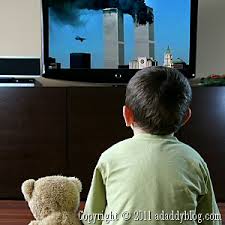
We all might be feeling on edge these days. I know I am after the bombings in my hometown of NYC this week. But I have coping skills as an adult. How hard must it to be to be a kid and see this stuff on TV? How do we help our children feel safe as we do our best to keep our own fears in check? We know that children need help to process these unfathomable occurrences. The bad news doesn’t just go over their heads, and they will draw their own conclusions and suffer inner fears alone without adult support. The trouble is, what do we do when we don’t know what to say? When we don’t have answers?

Thank goodness, there is some great expert advice out there to guide adults in helping kids process  disasters, both natural and manmade.  Here are some links to get you started.

Discussing Tragic Events in the News

Addressing Extremism

Talking to Children about Shootings

Stay safe out there, and help children in your care to feel safe by monitoring their exposure to news on TV and the internet. Whether you are a parent, caregiver, or if you work in a hospital or school setting, gently encourage adults to keep TV/radio news off in the presence of children, and to be aware of children’s listening ears when discussing events with one another. And then, begin the tough discussions.


Less anesthesia – More play for MRIs

ilovemri
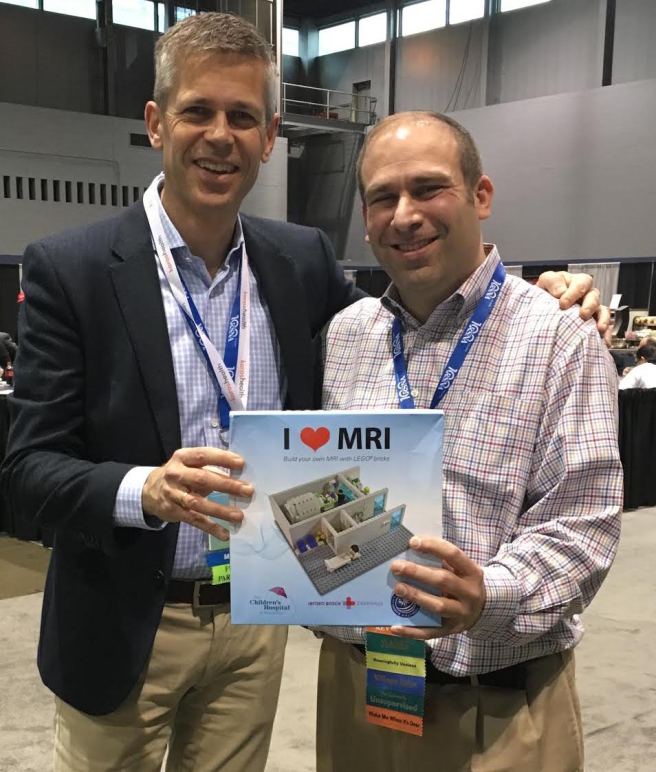
Erik Ranschaert and Ben Taragin

Dr. Benjamin Taragin knows a lot about what kids need when facing radiology scans. He has spearheaded the production of a miniature MRI model using toy building blocks, so that children can play about their experiences before and after scans. When I asked Dr. Ben about how this all came about, he shared the following narrative. We hope you will be inspired by his story and jump on board to help make his I Love MRI kits available to any child in need of an MRI.  Continue reading

Child Life Bibliotherapy

LogoOnTexture


Guest Blogger: Mary Pat Benning


Many child life specialists are familiar with the quizzical expressions that come when sharing their professional title and job responsibilities. Imagine that scenario- but magnified- when telling someone you are a child life specialist with a niche in bibliotherapy! For me, this revelation often requires a little illumination. And, truthfully, since the publishing of Heartfelt Books, I can say –I have gotten skillful in the art of explanation!  Continue reading

Is Reblogging like Regifting? Here is Teacher Tom: Eleven Things To Say Instead Of ‘Be Careful’


Forgive me for reblogging someone else’s great ideas today. But Teacher Tom’s words and images of children enjoying “risky” outdoor loose parts play moved me. And he has such great suggestions for how caregivers can help kids take good risks and explore their worlds unafraid, even as they learn how to be safe and think through their play. Thank you Tom! Click below for his article.

Source: Teacher Tom: Eleven Things To Say Instead Of ‘Be Careful’