What Kids Need During Holidays


images-1


imgres-2


No matter what holiday you celebrate, kids have certain needs that adults should consider during the holiday season (and all year round!).

Here is my round up of reminders for adults who are rushing and stressed with the many tasks and obligations of important holidays.

Kids Need:

Routine – Kids feel safer and calmer when following daily life routines. Holidays throw routines up into the air like confetti, and the result can be unpleasant for everyone. Whenever possible, keep sleeping/eating/napping/family-time routines in place.  If you can’t, talk to your children about what to expect. Where are they going or who will visit? What will they do and see? What is expected of them? Consider making a family calendar together depicting special events, and have children place a sticker on each day at they count down the days leading up to and including the holiday.

Play time – All children need time to play and unwind, and I am talking about  open-ended play, as well as games, art and cooking activities and physical play where they can run , jump and climb and get their sillies out. Make sure they put down their electronic devices and get away from screen time.

Permission to not perform – Sometimes when we get together with family and friends over the holidays, kids are expected to be squeezed, pinched, hugged and kissed by relatives who may need this affection a lot more than the child does. If your child has sensory issues or a history of trauma, this kind of touch can feel unbearable. You can talk with your child about this phenomenon prior to gatherings and coach them on how to respond to adults in a way that is polite but helps them maintain their body integrity. You may need to run interference and advocate for your child with well-meaning relatives, letting them know what kind of touch your child can tolerate.

Positive Limit Setting – All children need limits, especially those who are wired from too much holiday sugar or excitement. However, a constant barrage of “No!” “Stop that!” “Behave!” can wear thin and get you nowhere. When setting limits, ask yourself, is this a limit that needs to be set, or am I being arbitrary? If the limit is necessary, take a few deep breaths and try your best to remember these steps.

  1. Name the feeling or desire the child is showing before you set the limit. “Your are so excited.” Or “You really want that toy.” Or “You are so mad at your brother”.
  2. Set the limit  with a calm voice in a concrete way. “The furniture is not for jumping on” or “I am not buying toys today” or “Your brother is not for hitting.”
  3. Offer an alternative.  “Let’s run/play/dance/get your sillies out.” Or “You can play with your toys when you get home.” Or “You can punch a pillow or stamp your feet”
  4. Repeat if necessary, but give the child a chance to reign it in and make a good decision first. They might surprise you. Avoid over-explaining why the limit needs to be set. This tends to escalate negative behavior.

Moderation – The onslaught of media can turn the nicest child into a black hole of greed – commercials are aimed at children and can overstimulate them with desire for toys that may or may not be appropriate or affordable. Try to limit unsupervised screen time. Help children narrow down desires to a few affordable choices by making lists together. More is not always better. It is okay to say “No” to their requests without shaming them for wanting the toy – blame it on the advertisers! And try not to feel guilty if you cannot afford gifts. Your love and attention are the most valuable gifts you can give them.

The video below is a great reminder to us all about what  REALLY matters and what kids really need!



Taming Tantrums

kck-sticker-box-FINAL-01

Parenting is never easy – it may just be the toughest job in the history of the world. As a mother of two young boys, and a pediatric social worker, Randi Goldfarb  has seen a lot of tantrums in and out of hospitals.

I found that tantrum behavior is universal, and no one knows what to do. Then as a parent, I couldn’t control my own child’s tantrum.

Tantrums_4kids

Randi put on her thinking cap, asking herself how do you help a child calm down  and keep calm? Then she put on her creativity cap and rolled up her sleeves. The result is the keep calm kit©. Continue reading

Hospital Play in Iceland

imgres

IMG_1422

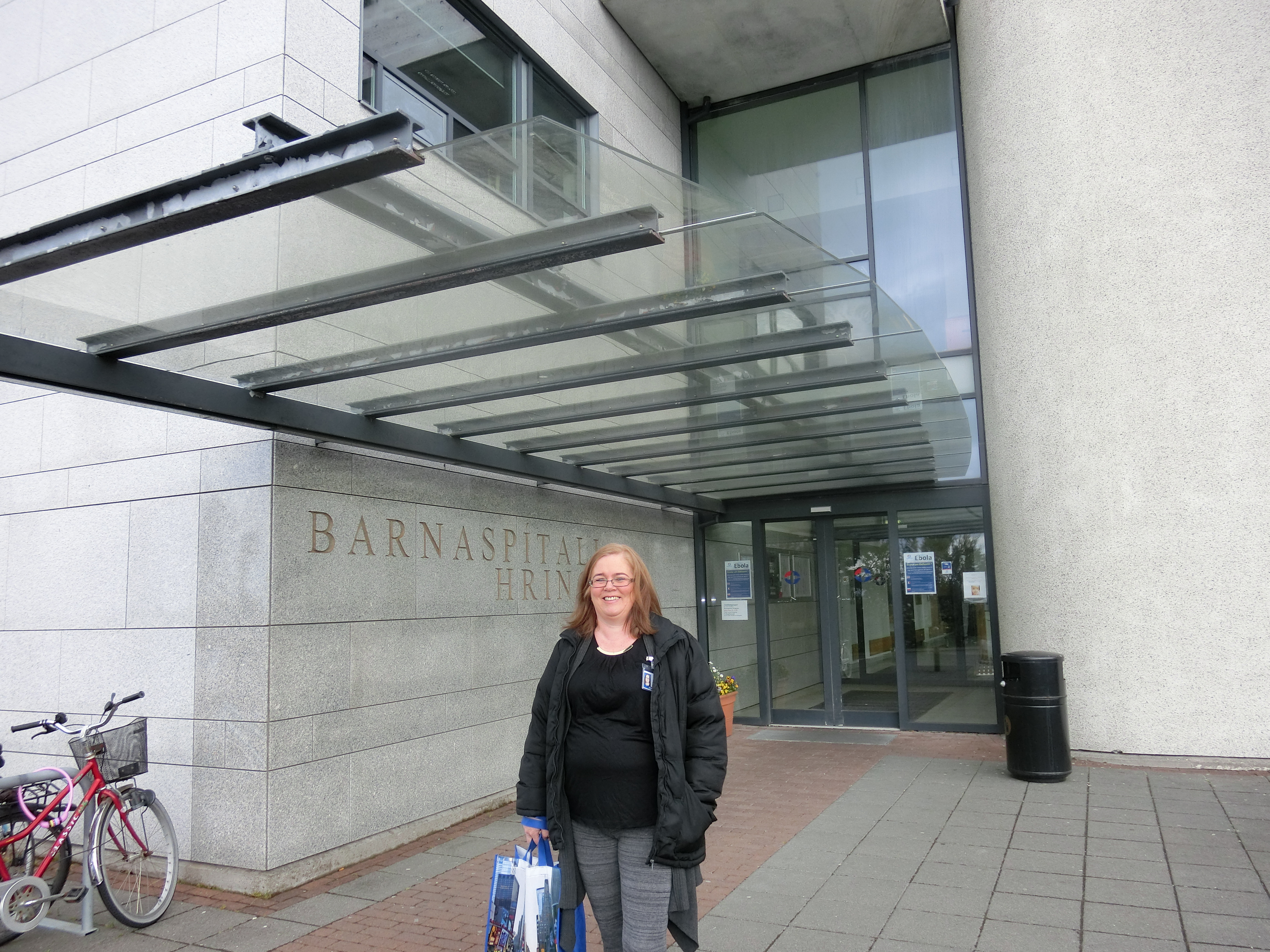
After the 99 degree weather in Japan, travel to Iceland called for wooly socks and a winter hat. During my first day in Reykjavik, I met with Dr. Drífa Björk Guðmundsdóttir, a psychologist who served as her country’s delegate at the first global summit on psychosocial pediatric care in 2014. She hosted me at Landspitali, the National University Hospital of Iceland.

CIMG0171

Our morning together included a tour of the pediatric inpatient unit, physical therapy department, clinic and NICU, and  an hour spent in conversation with some of Dr. Drifa’s colleagues, a physical therapist, hospital play specialist, nurse, nurse manager and social worker from a non-profit agency that serves hospitalized children and their families. We discussed best practice for helping parents support and prepare their children for hospitalization. It was clear to me that these professionals held many of the same values and goals for supporting children that we have in the US.

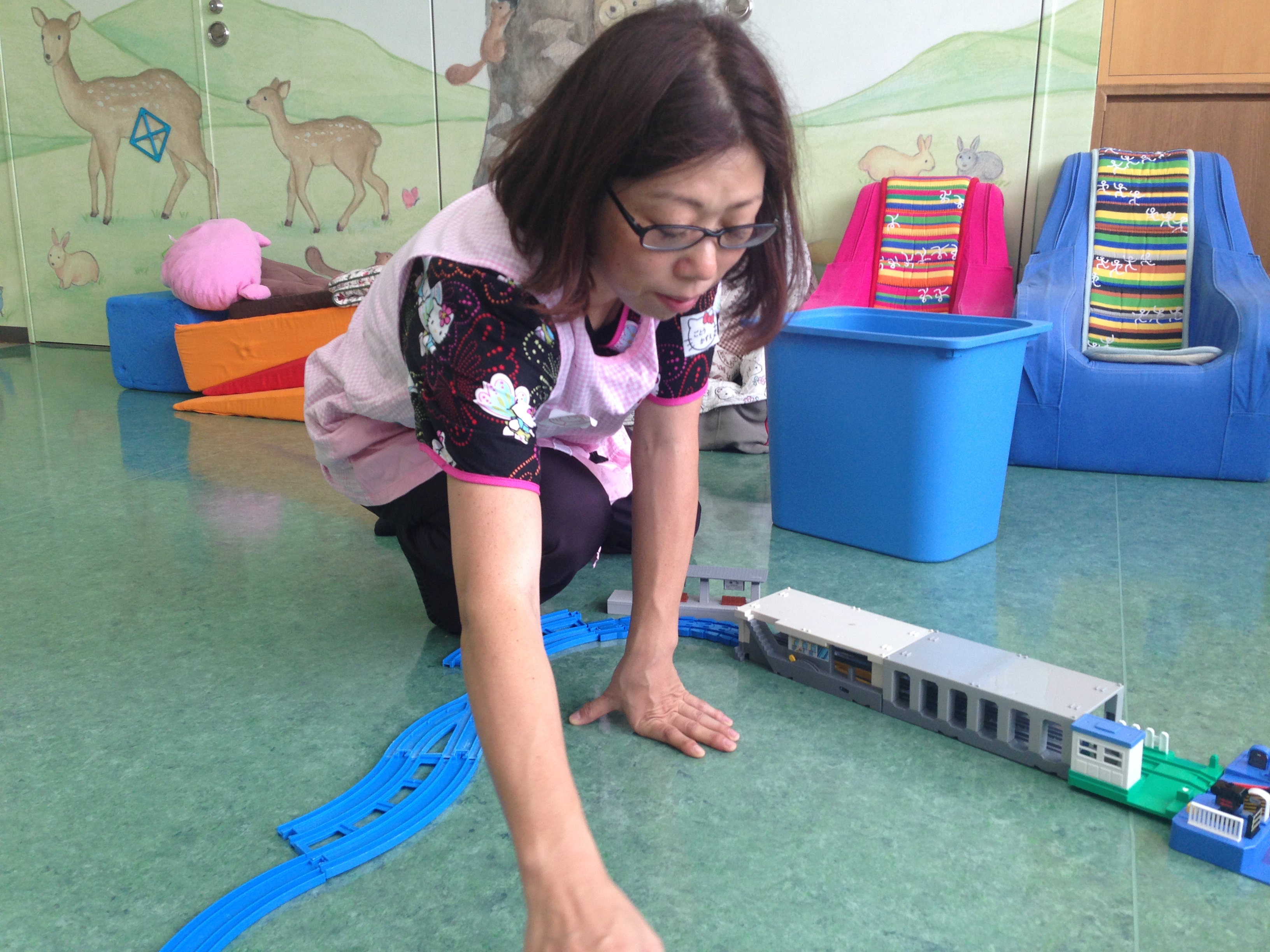
I enjoyed our conversation tremendously, but I must admit, I treasured my time with Sigurbjörg Guttormsdóttir (thankfully nicknamed Sibba, but pronounced “Sippa”!).  Sibba is one of the two hospital play specialists, and she has worked at the hospital for 25 years. A kindergarten teacher who received training in Sweden and Oregon, she wrote a thesis on play materials to use with children.  Sibba welcomed me to her playroom and proudly shared its history and resources, inviting me to sit down and play almost immediately.

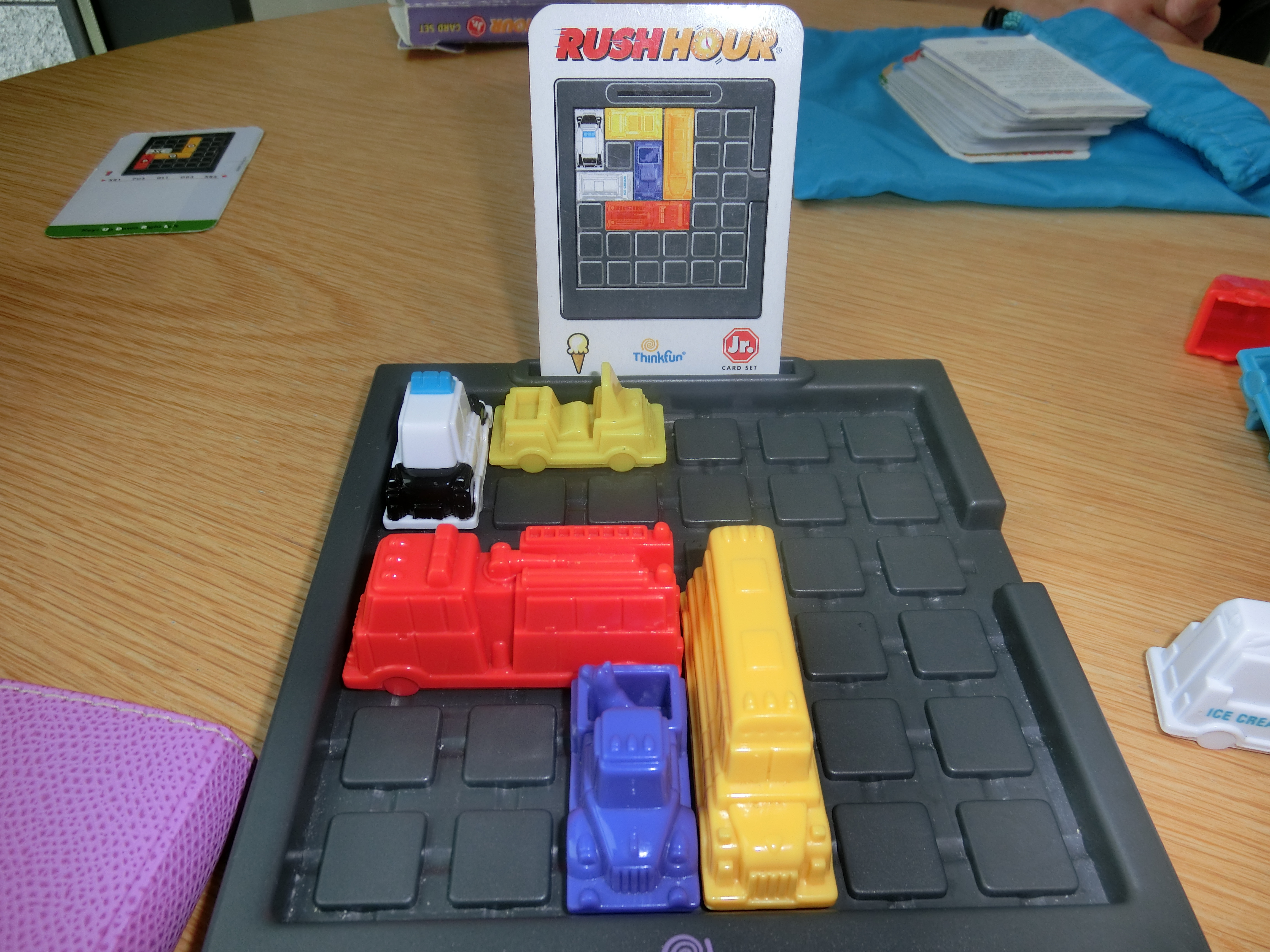
Here is the game of choice, Rush Hour.

CIMG0180

Continue reading

Learning from Hospital Play Specialist Hideko Konagaya in Japan

IMG_4587

While teaching in Shizuoka, Japan, I had the pleasure of spending a morning with Hideko Konagaya, a hospital play specialist, at Shizuoka General Hospital.

Hideko hosted Maria Busqueta  (a child life specialist and psychologist from Mexico City) and me in her bright and cheery playroom. Professor Chika Matsudaira of Shizuoka University assisted us by translating so that we could all communicate.

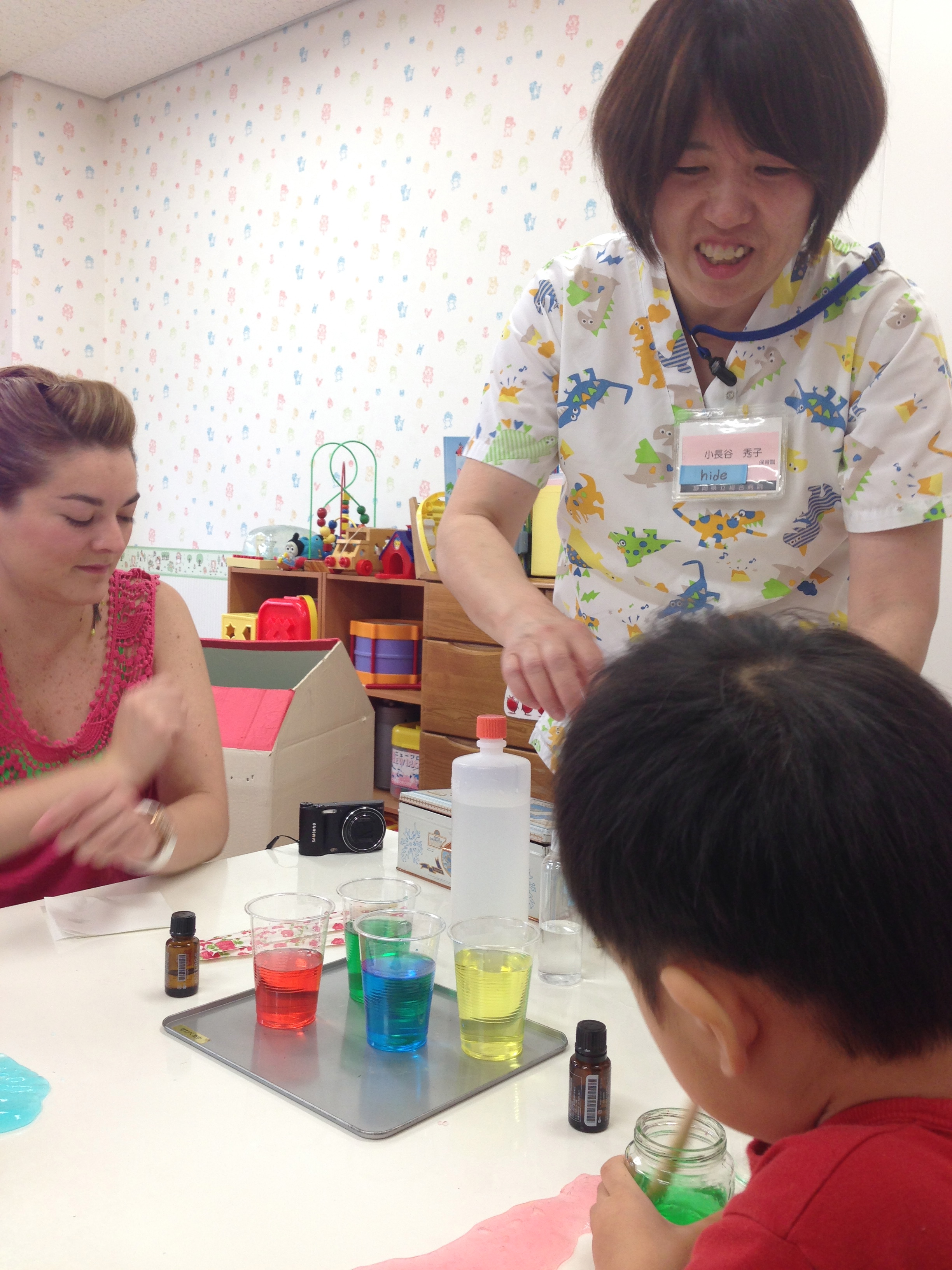
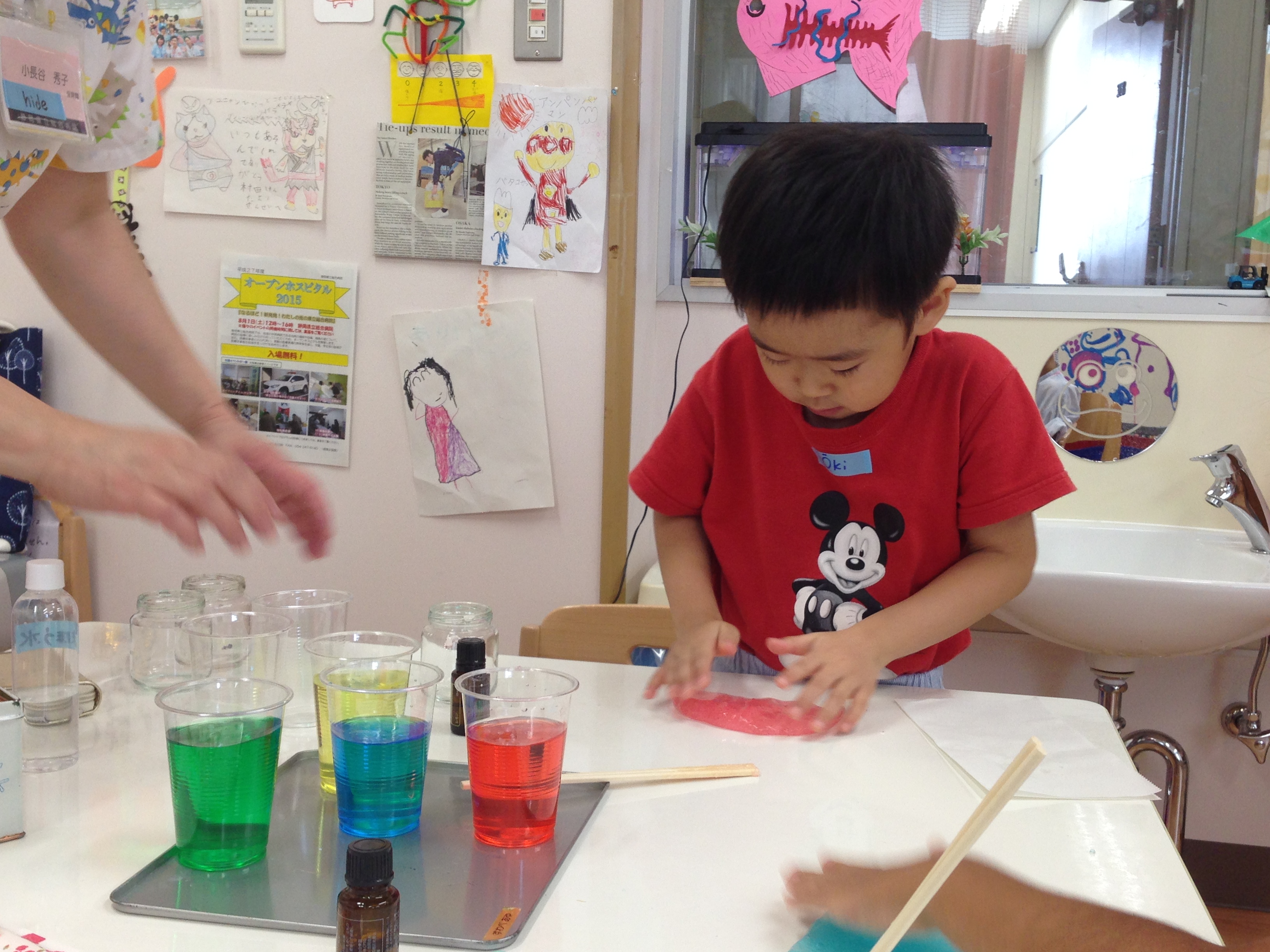
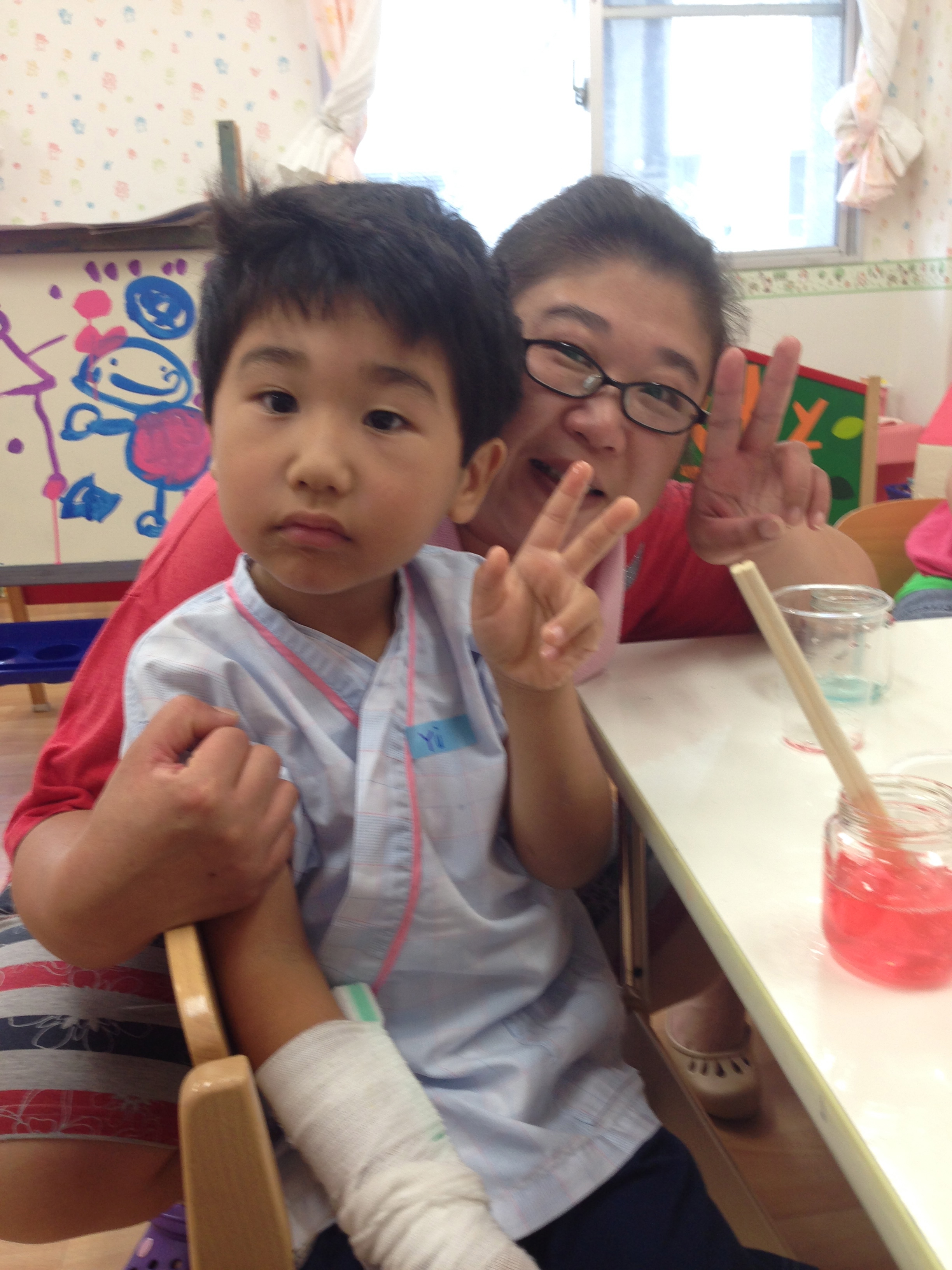
When we entered the playroom, two preschoolers already sat at a small table busily making slime. The children and their mothers gave us permission to photograph them.

IMG_4584 IMG_4588

Now I have made slime in my play course, but never slime as lovely as this! Hideko had set out brightly colored water in several plastic cups. She provided the boys with small glass jars (recycled baby food jars) and chopsticks for stirring. One at a time, Hideko and the children added rice glue, orange or lime essential oil for fragrance, sodium borate, and  a magical touch of glitter. The mixture came together to create a wonderful substance that smelled amazing and was positively addictive – no one could put it down or stop playing. The boys stirred like mad, and then ran the slime through their fingers until it hardened enough to hold shape. They used cookie cutters and plastic tools to manipulate it. I broke a cardinal rule of mine and touched one of the boy’s slime without asking. I just couldn’t help myself! He was a very good sport. Continue reading

NEWSFLASH! VIPAR Playroom Assessment Rubric now in fillable form

Screen shot 2015-08-22 at 2.26.19 PM

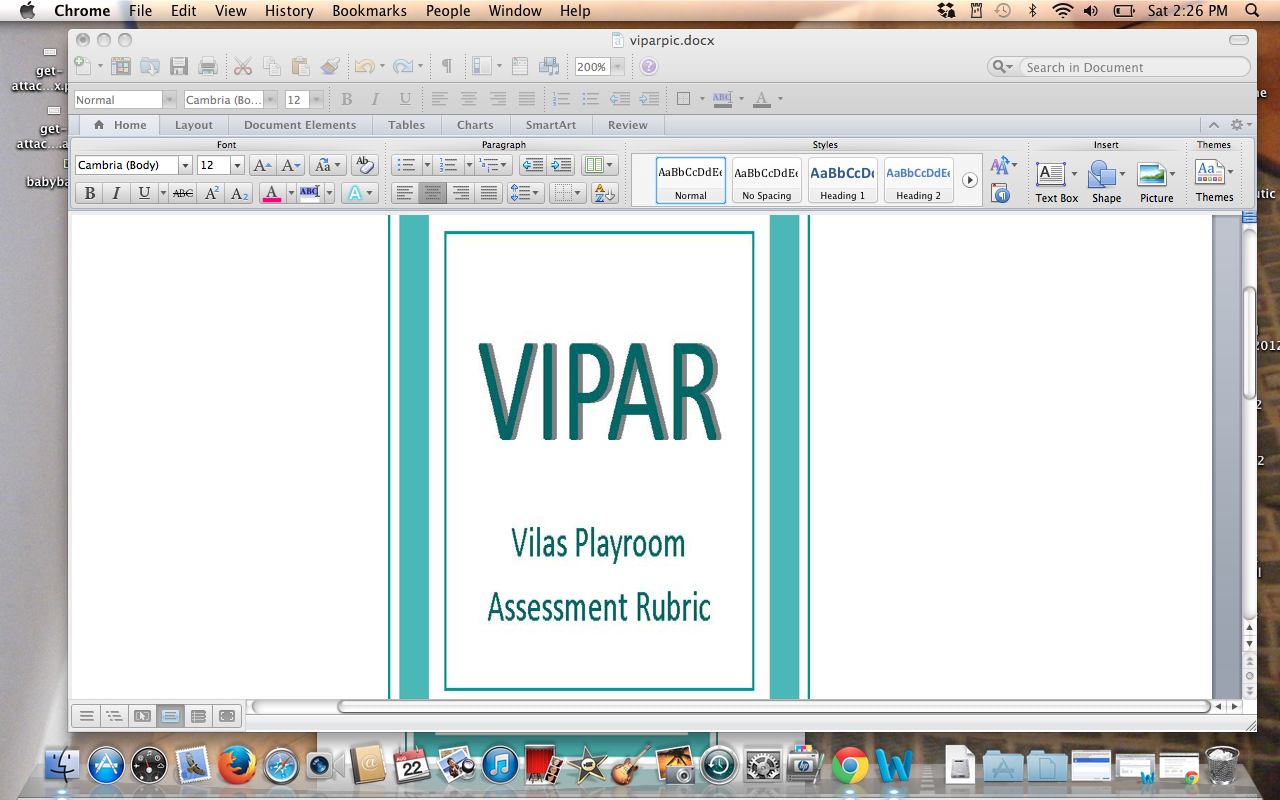
I am excited to announce the release of a fillable pdf format for the VIPAR, a new tool for your child life/hospital play toolkit. You can now fill out the VILAS Playroom Assessment Rubric (VIPAR) on your computer and print it out. The VIPAR is an assessment form to help you make your playroom the best it can be. There is a dream playroom in all of our imaginations. Time, space, budget constraints and infection control guidelines aside, we all know what we would provide children and families if we were able to do so. The  VIPAR (Vilas Playroom Assessment Rubric) (click on bold green type to access) is intended to present the best possible scenario, and to measure how your playroom is meeting the needs of all pediatric patients and families at your hospital. Child life specialists, hospital play specialists, and administrators can use this rubric as a quality checklist to assess playroom design and operation.

This rubric is several years in the making and has been test driven by many Bank Street College alumni. They kindly tried it out in their playrooms and provided me with feedback to improve the document, making it as accessible and flexible as possible.

Tara Horan reports that the rubric gave her staff  “feelings of empowerment to make positive changes.”

Kelsey Frawley shared, “Another AHA moment was the cultural competency piece. I think as specialist’s we are taught to BE culturally competent, not judge, ask questions, be aware of differences, but incorporating it into a room is something I have not thought of. The developmental appropriate piece really stuck out. It is something we have struggled with as a site and recently have committed to revamping. Kate Shamzad states “In fact, it inspired us to order a wall mirror to be installed in the infant/toddler section of the hem/onc room.”

I owe them and others many thanks for their input. But the VIPAR is and should be a work in progress. So please give me feedback if you use it at debvilasconsult@gmail.com. The form will soon be available on the Child Life Council’s website at the Play Center located in the Resource Library.

A Day with Hospital Play Specialist Kazue Goto in Japan

IMG_4403

One of the best parts of my trip to Japan was the fact that I  learned more than I taught. Yes, I traveled there as a child life professor to teach play techniques to hospital play specialists (HPS). But they had just as many wonderful techniques to share with me, and I cannot wait to incorporate them into my teaching repertoire here in the States.

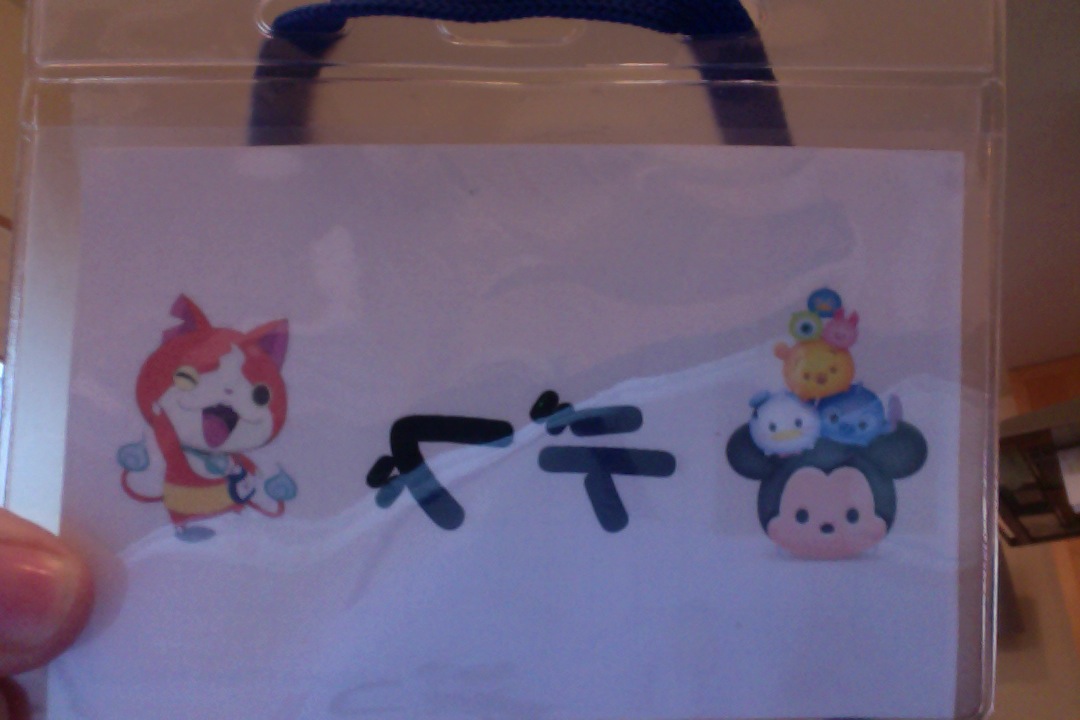
On our first day in Tokyo, Kazue Goto hosted Maria Busqueta and me at the National Rehabilitation Center for Children with Disabilities for a day of play with the inpatients on their orthopedic ward. She had prepared the children for our visit, and one by one, they approached us, shook our hands Western style, and introduced themselves by name. Kazue presented us with handmade name tags written in Japanese.

Photo on 8-12-15 at 5.34 PM

I taught the kids how to play the American game “Spot It!”, and Maria taught them how to play Mexican Lotteria. We all made volcanoes together, and then the fun REALLY began. Kazue taught us all how to make poop.

Yes, you heard it right — we all made poop out of bran cereal. The activity is designed to teach kids about their digestive systems. Many hospitalized children have issues with constipation or diarrhea, and this activity brings up helpful discussion about self care and gives children a chance to normalize something that can cause great pain and embarrassment. Continue reading

Free New Child Life Tool for Bettering Hospital Playrooms

imgres

I am thrilled to announce the release of a new tool for your child life toolkit. It is an assessment form to help you make your playroom the best it can be. There is a dream playroom in all of our imaginations. Time, space, budget constraints and infection control guidelines aside, we all know what we would provide children and families if we were able to do so. The  VIPAR (Vilas Playroom Assessment Rubric) is intended to present the best possible scenario, and to measure how your playroom is meeting the needs of all pediatric patients and families at your hospital. Child life specialists and administrators can use this rubric as a quality checklist to assess playroom design and operation.

This rubric is several years in the making and has been test driven by many Bank Street College alumni. They kindly tried it out in their playrooms and gave me feedback to improve the document, making it as accessible and flexible as possible.

Tara Horan reports that the rubric gave her staff  “feelings of empowerment to make positive changes.”

Kelsey Frawley shared, “Another AHA moment was the cultural competency piece. I think as specialist’s we are taught to BE culturally competent, not judge, ask questions, be aware of differences, but incorporating it into a room is something I have not thought of. The developmental appropriate piece really stuck out, it is something we have struggled with as a site and recently have committed to revamping.”

Kate Shamzad states ‘In fact, it inspired us to order a wall mirror to be installed in the infant/toddler section of the hem/onc room.”

I owe them and others many thanks for their input. But the VIPAR is and should be a work in progress. So please give me feedback if you use it at debvilasconsult@gmail.com

It is pretty easy to use. Score each category based upon observation and investigation. Add together the 18 category scores to reach a total. Use the key at bottom of rubric to interpret total score.

It can be helpful to underline or highlight specific items to be improved within each category. Once a score is obtained, determine which improvements are within your department’s ability to improve. Set goals and deadlines for improvement. This rubric is not intended to make you feel that your playroom is substandard in any way. The hope is that it will guide you towards making some small or significant changes that will improve the quality of play available in your hospital.

Click below link to access and download the pdf.

VIPAR Vilas Playroom Assessment Rubric