Child Life in the Community: Fiddlehead Care Farm

img_5613

Guest Blogger: Breanne Mathers from Fiddlehead Care Farm

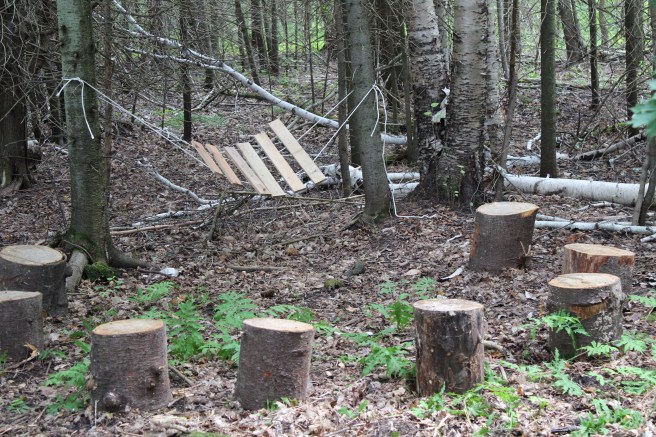
As an inpatient CCLS focused on Brain Injury and Complex Continuing Care, I worked for 9 years at Holland Bloorview Kids Rehabilitation Hospital but, in 2015, I found a new home for my child life skills outside the hospital walls. My business partner, Stephanie Deaken, a registered social worker, and I opened Fiddlehead Care Farm (FCF) in Ontario, Canada. FCF is a 50 acre fully accessible organic farm which provides innovative therapy for children, youth, and young adults with special needs to help them reach their potential and become their best selves. The programs are targeted at improving children’s physical, spiritual, psychosocial and mental health.

FCF’s mission is to give kids and their families the opportunity to learn, experience and grow without boundaries through animal-assisted therapy and nature-based education, rehabilitation and recreation. We aim to harness the healing and calming properties of nature to improve quality of life and restore the mind, body and spirit.

img_5703

Continue reading

Holiday Cheer Amidst Hard Times

10487385225423713349


I have been a bit silent as a blogger over this past month. I have a list of To Do’s regarding topics I want to get to, but my mojo isn’t flowing.  It could be the general busyness of this time of year – more work to do as I wind up the semester as an educator. More social events in the form of holiday parties and get togethers. More errands to run, more planning and preparation to do for guests arriving from afar (No not the Three Kings!).  It could be due to the need to be present for the many plot twists affecting myself, family and friends lately. Health issues put a crimp in my creativity wiring, whether they are mine or those of a loved one.

But despite the hustle and bustle and items added to my plate, I have been making time every day to enjoy the spirit of the holidays. It is the simple stuff really – taking a moment to enjoy the Christmas lights in the city – having holiday tea with a dear friend –  buying a gingerbread house in an old time bakery in Brooklyn – enjoying a rare treat of fattening eggnog  –  inhaling that wonderful pine scent as I walk past sidewalk Christmas Tree vendors  –  Stopping to hear a high school brass band play Silver Bells on East 86th Street on the longest day of the year –  Watching holiday movies on TV and attending a college production of a favorite Christmas opera Amahl and the Night Visitors. Continue reading

DIY Fingerprint Mold

Our Guest Blogger, Teresa Schoell, is a Certified Child Life Specialist working with pediatric patients and their families in the hospital. She will be sharing a creative way to provide therapeutic…

Source: DIY Fingerprint Mold

The Ripple Effects of Mindfulness and Meditation

Remaining calm and centered during the holidays

Child Life Mommy's avatarChild Life Mommy

The Ripple Effects of Mindfulness and Meditation-2.jpg

I recently completed a six-week course of mindfulness and meditation at my children’s  pediatric wellness center. I went into it with some knowledge of the practice and the benefits that it can bring to people, but not really knowing how to incorporate it fully into my life. My ultimate goal was to deepen my learning experience and to also teach it to my family and the children that I work with in my  practice.

The workshop was led by Cory Muscara from the Long Island Center for Mindfulness.  He was incredibly helpful on breaking down the theory, how to practice different types of meditation and how to realistically weave it into your life. He gave us daily homework to practice guided meditation, self-reflect and increase our awareness of the present moment.

All three may sound easy to do, but it was a challenge because our brains are wired to constantly…

View original post 280 more words

Medical Play: Modeling Empathy for your Child

file_000

Colleague and friend, Teresa Schoell, is a child life specialist in upstate New York. She is featured in  “That’s Child Life!” , a video published by the Child  Life Council. She is also, first and foremost, a mother to Malcolm. She posted this story on FaceBook today, and with her permission (and Malcolm’s), I wanted to share it with all of you.

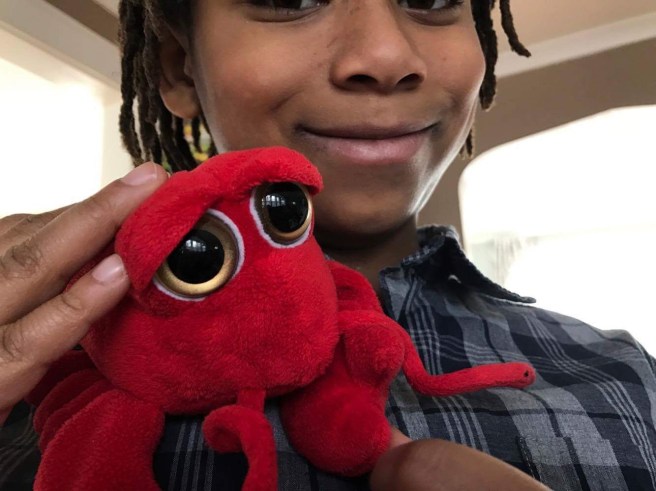
I just finished performing surgery on one of Malcolm’s beloved stuffies (a gift from the dear Justinn Walker). Apparently, JC the Lobster was quite anxious about the procedure, hiding in Malcolm’s arms while I threaded my needle.

“I’m scared it’s going to hurt,” came JC’s voice (with a marked similarity to Malcolm’s falsetto).

Then I heard Malcolm’s reassuring voice “Don’t worry, JC, we’ll give you sleep medicine so you don’t feel anything. Would a hug help you feel brave?”

A few hugs and and some invisible anesthesia later, the lobster was open on my table (prepped and draped in the usual sterile fashion….which is to say, laying on a couch cushion on my lap) Today’s procedure was to repair the distal fracture to the bendy wire in the patient’s left antenna, which supports movement and pose-ability.

Under general anesthesia I opened and peeled back the fabric, revealing the damaged wire. The sharp wire bits were realigned and repaired use med-surg duct tape, reinserted into the fabric, and sealed with a running subcuticular suture (sewed on the inside for a near-invisible scar). Procedure complete in 15 minutes with minimal stuffing loss. Patient resting comfortably.


I commend how Teresa invested in Malcolm’s powers of imagination and attachment by treating JC the Lobster with the respect one would give a live patient. When parents take their child’s attachments and emotional needs seriously, they model empathy, the glue that holds our society together.

file_001

Preventing Pediatric Pain: A Longterm Win Win


imgres

Amy Baxter, MD, the queen bee of pediatric pain prevention

“I believe established medicine is courting a public health disaster, not because of costs or lawsuits or one dumb publication from a scientist gone bad, but because of a national Pavlovian failure of empathy.” — Amy Baxter

Who is Amy?

“Emergency pediatrician Amy Baxter noticed a disconnect in health care: caregivers often cause pain to solve a problem, but for many patients, pain is the problem. While researching the causes and consequences of untreated pain, she invented Buzzy, a bee-shaped device that physiologically takes the sting out of shots using high frequency vibrations and cold. Amy is the director of Emergency Research for Pediatric Emergency Medicine Associates at Children’s Healthcare of Atlanta, Scottish Rite. In the academic world, she is known for creating and validating the BARF nausea scale for children, and an algorithm to measure the timing of child abuse. Honors include a 2011 Medical Design Excellence Award, Georgia Bio Innovative CEO of the Year, and a Wall Street Journal “Idea Person.”” (TEDMED, retrieved November 7, 2016)

In a recent conversation with Dr. Baxter, I asked her about her war on pain, and her appreciation for the field of Child Life.

What are your beliefs about pediatric pain and the need to prevent it?

I take seriously the oath to First Do No Harm.  When iatrogenic procedural pain causes people to fear healthcare later in life, we have done harm.  When we withhold pain management in the trauma bay, we do harm. I have always been suspicious when we do something without pain management to someone small enough to hold down, but we sedate or give analgesics when they’re big enough to fight back.

What do you believe children need most in the medical setting? 

Children need to know they’re safe.  Therefore, parents need to know we’re doing everything we can to make them not hurt.  Something may happen that isn’t comfortable, but kids need to trust that they’ll be warned.  If there isn’t any way to make it more comfortable, they need to know that their care team and parents are all agreeing and supporting what is best for the child. Even very young children know crap happens; what is scary is when the people who keep their world stable are visibly angry, confused or afraid.  Pain isn’t the worst thing that happens, it’s pain when their parents seem unable to protect them. When I fix a nursemaid’s elbow or a patella, I offer analgesics, but let parent and child know I can make them feel better FAST right now but it is going to be uncomfortable for 5 seconds or less.  Or they can wait, but it will still be a little uncomfortable.  Most opt for fast, but that control and honestly let them know I’m thinking about not hurting them first and foremost.

Why is pain prevention important for very young children?

Kids who are persistently afraid of needles have healthcare consequences. They grow up to be adults who don’t get flu shots, or start insulin when they need it, or donate blood.

What motivates you in uphill battles with sensitizing other medical professionals to the necessity of pain control for infants and children? 

I really believe that truth carries its own coercion.  If people who want to heal see the truth of the importance of pain relief, they eventually will align their behaviors with that belief.  No one wants to be an outlier in medicine.  Once one person sees the truth, that pain relief matters, they can’t unsee that.  Eventually the obvious will become apparent to everyone – we can make the entire system work better when we don’t hurt children.

How did you learn about Child Life?

I know this is hard to believe, but I can’t remember not knowing about Child Life.  I’m sure we didn’t have Child Life in pediatrics when I was training, but perhaps because it always seemed such an obvious need when I first began seeing Child Life specialists, perhaps I assumed they always been someplace, just perhaps not in my department.  I carried distraction toys on my stethoscope and in pockets since I began training, it just seemed logical.  My oldest was born my first year of residency, so I had a natural connection to what worked for different ages from the beginning of my training.

Resources for doctors, parents, nurses, and child life specialists

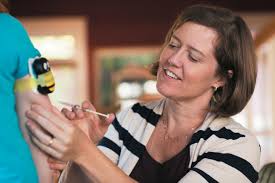
In this TEDMED Talk, Amy speaks to the increase in vaccinations in early childhood, and the impact it has in increasing needle fears later in life.  Visit her  Buzzy website to find out more about the most cost effective way to prevent needle pain in infants and children.
buzzy-child-life-halloween

Child Life Uniting for All Children

is

This morning we woke up to a new normal, which includes a stark awareness about the level of bifurcation in our country. Some folks are celebrating the prospect of change  — some are very afraid about what this change might mean for their future. There is no question that we face an enormous task in figuring out how to work for the common good when many of us have differing views of what that good should look like.

I believe that Child Life Specialists are uniquely poised to address this rift. We reach out  from a strength-based, cooperative front, moving forward from a place of deep inquiry, witnessing and advocacy for those in our care. No matter what our political beliefs, we know the value of the developmental interaction approach. We meet the needs of children and families first by asking what their needs are, then by listening and validating, and then by empowering them to find expressive outlets and coping strategies to address these needs. We facilitate children’s inner abilities to make meaning out of their individual path to healing, whatever that may look like. We do all of this while taking into account the child’s developmental needs and the family’s resources and cultural beliefs. These beliefs often conflict with our own, but we consciously choose to serve our patients with kindness and respect, despite our differences. We seek the common denominator of humanity to find common ground to work from.

We also do this, side by side with medical staff, who often see things very differently than we do. We work in an interdisciplinary fashion to cooperate within the system, being positive members of the team while we gently, firmly advocate for some approaches that may be outside the present medical culture. We make mistakes. We stumble and fall. But we learn from them, reflect upon them with bravery, and get up and try again.

So, let us remind ourselves of the tool kit we have right at hand. Our training. Our leadership skills. Our humanity. Our deep desire to serve and make the world better. Let’s make sure that every staff member we work with, every child in our care, every family member, feels safe and respected within the healthcare environment. Let us ask how they feel, listen to what they tell us, and provide witnessing and reassurance that we will do whatever possible to ensure that their safety and comfort, no matter their color, socioeconomic status, country of origin, religion, gender, sexual orientation or family makeup.

A resource: What do we tell the children?

We can do this.

“Peace in my heart brings peace to my family. Peace in my family brings peace to my community. Peace in my community brings peace to my nation. Peace in my nation brings peace to my world. Let there be peace on earth, and let it begin with me.”  (As Spoken at the Sacred Center- Manhattan, NY)


And listen to this:

Van Morrison Till we get the healing done

The Child Life Maker Movement: Loose Parts Impacting Healthcare

img_1347

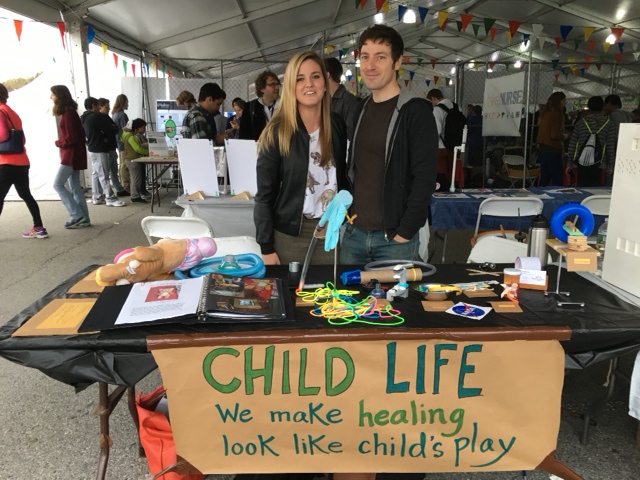
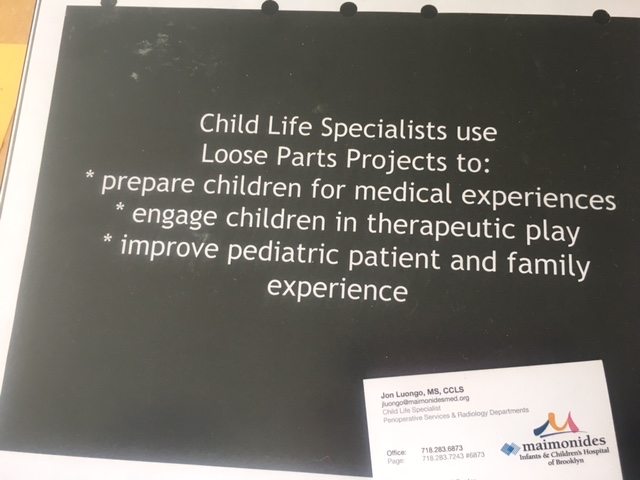
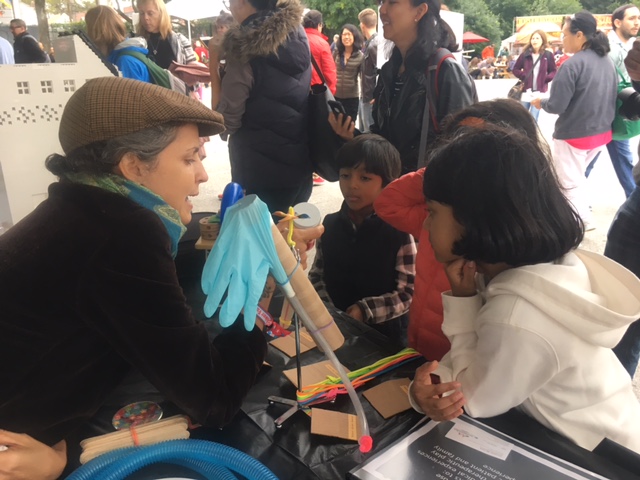
What happens when you cross a child life specialist with loose parts? Creativity, to say the very least. Specialists have been using loose parts to make the medical world more accessible and friendly for children and families since the beginning of our profession. They combine medical supplies (tubing, gauze, rubber gloves) and household items (paper towel rolls, pipe cleaners, paper clips, felt) to create everything from customized dolls that reflect a child’s medical situation, to a glove-o-phone to help children pass breathing tests. Simple and complex inventions have aided children in making meaning out of their medical experiences.


img_1316

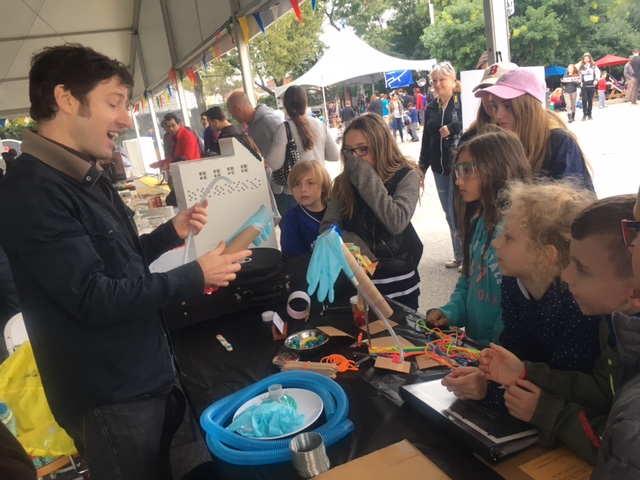
Now, with the Maker Movement, child life specialists have invaluable opportunities to join brains with other disciplines seeking to improve patient experience and speed recovery.   Bank Street College Child Life alumnae Jon Luongo and Kelly Segar, and children’s book author Anastasia Higginbotham rolled up their sleeves to join the Maker Faire at The New York Hall of Science this past weekend. They joined nurses, doctors, medical technicians and fellow inventors in the Health Maker tent on this brisk and cloudy autumn day.

As children and caregivers meandered through the exhibits, .the specialists shared information about how to make pediatric hospital stays more manageable, less stressful, and more fun. As Jon demonstrated the glove-o-phone, kids jumped at the unexpectedly loud honk it made.

img_1326


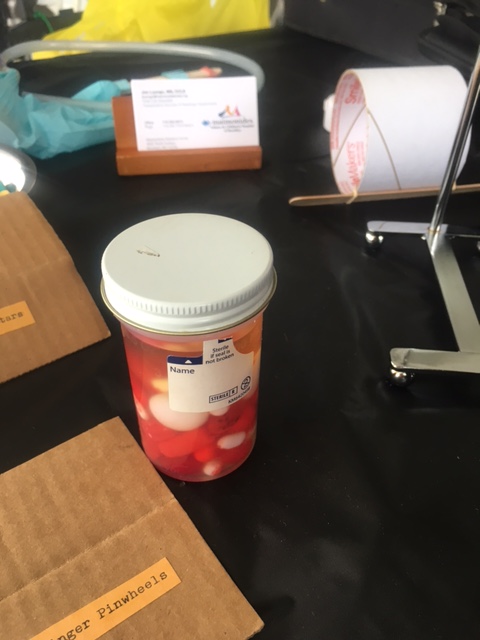
Exclamations of “Ewww gross!” were followed by attentive curiosity as Jon explained the purpose of the vial of “blood soup” on the table.


img_1317

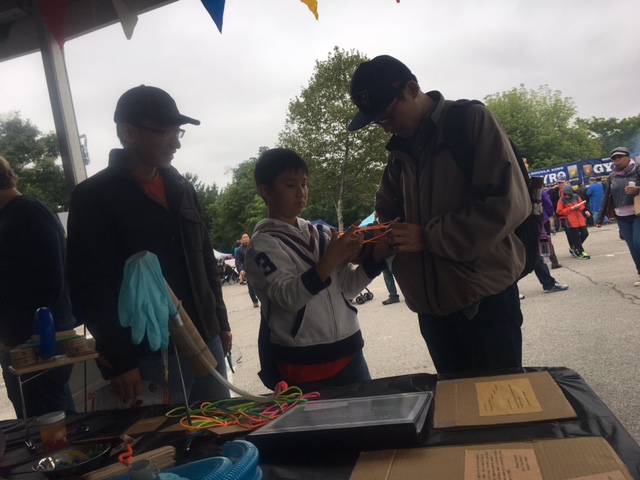
Families spontaneously grabbed colorful neon strings and engaged in string play, a simple game that crosses generations, culture and language around the world.

img_1332

Kelly demonstrated her Barium Bear, “Barry”, developed to support children receiving barium enemas and scans. She used simple circuitry that she learned from a Hospital Play Specialist in Japan to illuminate the pretend scan.


img_3265

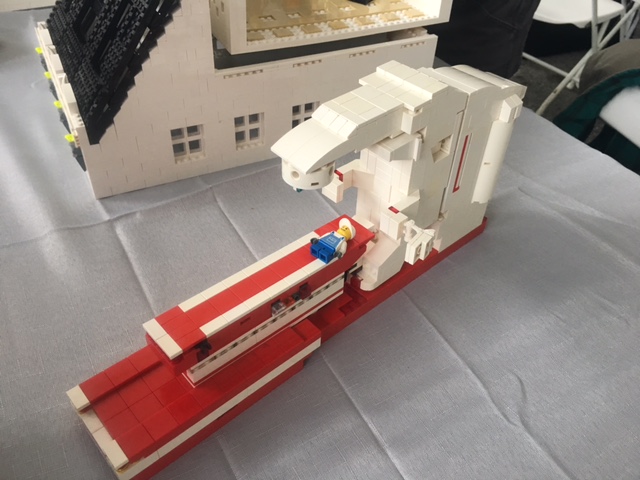
At nearby tables, radiation techs and doctors showcased how legos can be used to build mini MRI, CT-Scan, and linear accelerator machines. When they are doll sized, they aren’t quite so scary. And when children aren’t as frightened, doctors can administer less anesthesia to their tiny patients, a win-win for everyone.

img_1312

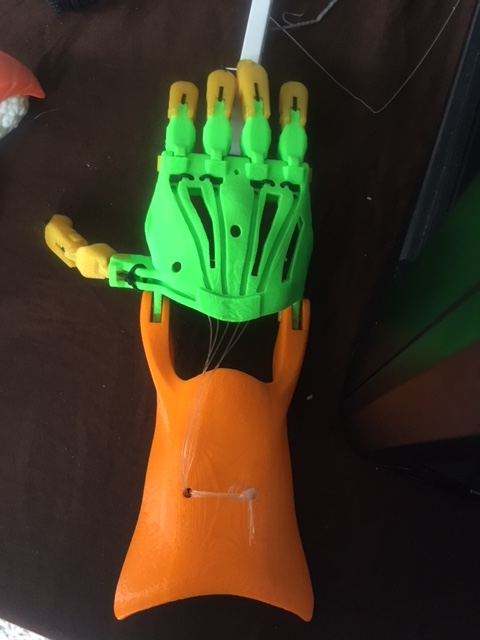
Did you know that a A three-D printer can be used to make prosthetic hands for children who have lost theirs to birth defects, disease or accidents? And for a fraction of the cost of traditional prosthetics. And they aren’t just your run of the mill hands either. They are superhero hands! As I observed a three-D printer humming away at one exhibit, I wondered about what kind of mind came up with the idea of this machine. And then who had the amazing idea about the possible application of it in the medical world?

img_1338

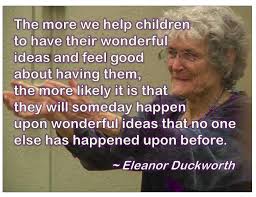
Wonderful ideas start somewhere, and when we encourage children to explore and create, even in the medical environment, we are investing in their healing and in their future. The Maker Faire was an extraordinary celebration of the possibilities of the human brain. From low-tech to high-tech, creative minds came together in the Health Lab tent to hack medical problems and make the healing process more fun. If you want to get your maker on, I encourage you to find maker spaces near you Challenge your child life staff to a loose parts contest at the next departmental meeting. Jumpstart a health maker group in your hospital and invite staff from throughout the institution to collaborate. And don’t forget your best assets. Find every opportunity to include children in creative problem solving with loose parts. In and out of the healthcare field, children and adults all benefit when we connect with what Eleanor Duckworth called “wonderful ideas.”

images

img_1307

img_1345


How We Helped Our Kids Cope with a Pet Loss — Child Life Mommy

He was 13 years old, or at least that was our guess. We rescued our feisty French bulldog, Bugz, 11 years ago and he instantly became a family member. He was there for our milestones of marriage, career change, new home and children. He had some challenging quirks to him caused from an abusive past, […]

via How We Helped Our Kids Cope with a Pet Loss — Child Life Mommy

Doll Ambassadors: Providing Comfort to Kids with Cancer

20160716-151336-bee-hdr_1_orig

Guest Blogger: Rosanna Bernstein – Founder of Bee Brave Buddies

When I had cancer and was going through chemotherapy, a white, curly haired stuffed poodle that one of my daughters gave me sat right on the pillow next to me at all times. I named her Gigi. Just looking at the quirky turned-up smile on this puppy`s face always gave me a feeling of comfort and made me smile.

I was diagnosed with Chronic Myelogenous Leukemia in 1998. I was in treatment for 3 years and was becoming sicker. A trial in its second phase for a new chemotherapy medication, specific for CML, now called Gleevec, was in its early stages at that time.  I was eventually accepted into this trial, and within several months I went into a remission. This chemotherapy was one of the first magic bullets, a medication targeted to treat the specific genetic mutation.  Although I still take a chemotherapy pill each evening, I have been so fortunate to be healthy and in remission to this day.

I was so grateful, that I decided I wanted to help others.

Through the years I have had several businesses: Yummy Gram, a gourmet basket company, Rosanna Hope Designs, a millinery and hand bag design company and Baby Bonbons, an online shop with vintage lace children`s clothing designs and accessories. During this time, I designed many original designs for baby blankets and matching pillows for the Baby Bonbons shop. I have always had a passion for art, beautiful laces and fabrics.

But, puppy Gigi always lurked in the back of my mind. I could still see that funny little face, and I got a warm feeling each time I thought about Gigi. I remember the soothing, inner peace I felt snuggling her. This feeling gave me the idea to combine my love of art and design with my desire to give back.

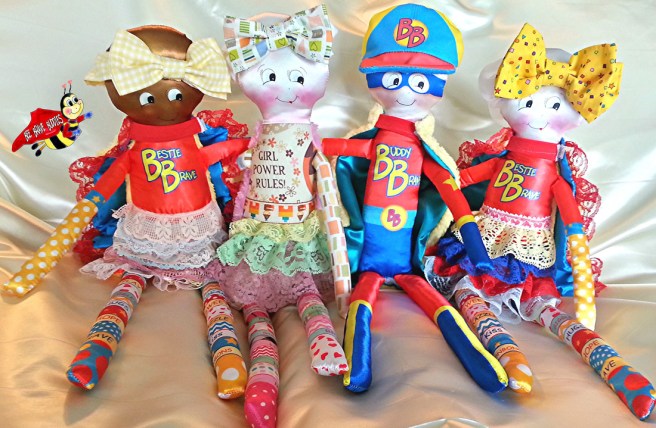
I combined my love for fabric and my whimsical children’s digital art drawings to design my original three Bee Brave Buddies dolls: Buddy Brave, a superhero doll for boys with magical powers, his twin sister, Bestie Brave, a superhero doll for girls, who is a true new best friend, and Catie Cuddles, a doll dressed in fancy lace who loves to cuddle and snuggle. I hope to use this same art process to design a line of Bee Brave Buddies Adventure books and other gifts for children.

My dolls were designed to become a new best friend to children who are in treatment for cancer or other childhood illnesses and who need a big snuggle and some magical secret powers to be brave. The three dolls are designed with beautiful bald heads. The girl dolls have special words printed on their long leggings: giggle, snuggle, love, dream, brave, cuddle, smile, laugh, hugs, play, dream, hope.

The dolls are also educational. An adult with cancer can use the dolls to explain hair loss and other treatments that children will face. Each doll comes with a matching hat or headband and the superheroes come with silky minky capes. The dolls have very soft plush pillow bodies to hug and love. Each doll comes in Caucasian or African American descent. Our dolls are printed and made in the USA. They are completely washable.

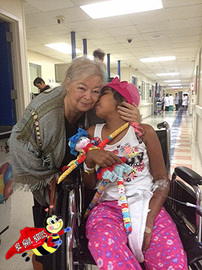
I have personally been giving my dolls to children with cancer since February of 2015. Bee Brave Buddies have been shipped to children across the USA and to several countries. We are excited to announce that we have now received our determination letter from the IRS and we are a 501(c)3 nonprofit. This will allow us to make and deliver dolls to children battling cancer across the country and beyond with your help and support.


What can you do to help? 

We are looking for doll ambassadors, an integral part of our team. They are like the generals in our army, helping us make big decisions: They locate hospitals in their area, make child life connections for delivery of dolls, are available for the doll presentations, help secure local press and manage social media regarding their particular hospital. Doll ambassadors also reach out to help us find local contacts to sponsor these boxes of dolls delivered to their local hospitals, either on a one-time basis gift or an ongoing monthly program.

Our new initiative, The Bee Brave Buddies of the Month Club allows a sponsor to send a box of ten dolls per month to a designated hospital. Our Christmas Holiday program encourages families or businesses to celebrate a holiday they will fondly remember, one in which they gave back to others. Our creative doll ambassadors put together teams from family, friends, businesses, corporations, church groups, school groups or sports teams that would like to rally for our cause. These are just a few examples of groups that can help us touch the lives of these children in a very profound way. Our dolls give the children comfort, courage and confidence. These seriously ill children only want to be normal and play! When the child smiles, the caregivers smile, and all of the medical staff smile. It is infectious! Our dolls provide these smiles when the children are hugging and loving them, much like my Gigi puppy provided to me.
9344858
Our mission is to put a Bee Brave Buddy doll in the arms of all children around the world in treatment or recuperation from cancer who need a hug to help these children feel brave and to provide emotional support to children and young adults with cancer and other serious illnesses. Any child battling cancer can receive a free Bee Brave Buddies doll to love.

If you would like to make a difference in the lives of these sweet children, drop by our web site www.beebravebuddies.com to learn more about our nonprofit and please join us today.

Warmly,

Rosanna Hope Bernstein
bbbbanner-960x270-for-weebly_2_orig