Self-Regulation through Play

imgres-1            imgres

I posted a question poll on  Twitter yesterday to try something new.

What kind of play promotes self-regulation – open ended free play or board games?

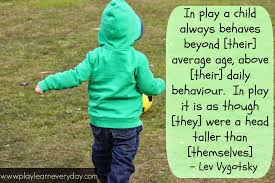
At first glance, those of us who work with young children will shout out happily: FREE PLAY! Why? Because it allows children  to explore their environment at their own pace and interests. It provides many opportunities for them to problem solve and access their imagination and creativity.  It gives them feed back loops to build vital connections in their developing brains. It helps them make meaning and gain mastery over childhood challenges or traumas. As Lev Vygotsky said:
images-1

No question. It is great stuff.

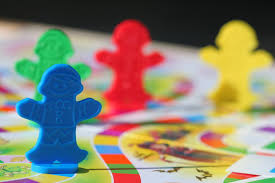
But my tweet was a trick question. Structured, close-ended games and toys also have their place in a child’s development of self regulation. When a child is in a stressful situation, sometimes a familiar game like CandyLand or Checkers might help them calm down and feel safe. If a child has played about something that made them feel vulnerable in some way, playing a close-ended game, doing a puzzle or coloring in a coloring book after more open-ended play can shore them up and help them get back to baseline. Board games teach turn taking, frustration tolerance, how to be a gracious winner and how to  lose without losing it.

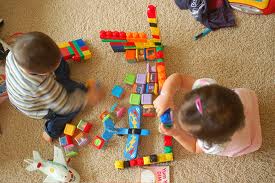
When we think about how to best support a child’s developmental and emotional being, it pays to provide many different types of play. Sensory play with water, sand, shaving cream, oobleck or play dough is wonderful for toddlers and preschoolers. Constructive play with blocks, legos, cardboard boxes, any raw materials, is great for preschoolers on up. Dramatic play with play dress up materials, puppets, dolls, play food, miniature figurines, etc. speaks highly to preschoolers and young school aged kids. All children need to move their bodies, run, jump, balance, climb and take moderate physical risks in order to gain mastery over their body in space. Preschoolers can be introduced to board games, but the rules need to be flexible and adults should know that it is fine for a young child to change the rules so that they win. When children reach the age of 6 and 7, they can begin to learn to play by the rules and practice winning and losing. Games without toys such as tag, hide and seek, Mother may I, Simon says, kick the can,  and capture the flag teach invaluable lessons in social interactions, and teach kids to rely on themselves for entertainment.
images-2

We can learn a lot through observing a child’s play choices. We can see what they are drawn to and comfortable with, what challenges, pleases or frustrates them, and we can introduce new and less familiar activities to scaffold their growth. We can provide play time and attention as caring adults, and we can also make room for them to play on their own and with peers. Children need time to muck around and explore without an adult agenda always steering their play.

However you slice it, the more playtime a child gets, the more opportunities there are for cognitive, emotional, social and motor development. Advocate for play to be included every day in Pre-K and Kindergarten, and for recess to be part of the daily curriculum through grade school. Kids focus better on academics when they’ve had time to play out their sillies. Keep them growing a head taller than themselves at every turn, and you will be on the right track.

imgres                 imgres-1

Taming Tantrums

kck-sticker-box-FINAL-01

Parenting is never easy – it may just be the toughest job in the history of the world. As a mother of two young boys, and a pediatric social worker, Randi Goldfarb  has seen a lot of tantrums in and out of hospitals.

I found that tantrum behavior is universal, and no one knows what to do. Then as a parent, I couldn’t control my own child’s tantrum.

Tantrums_4kids

Randi put on her thinking cap, asking herself how do you help a child calm down  and keep calm? Then she put on her creativity cap and rolled up her sleeves. The result is the keep calm kit©. Continue reading

Retraining my Brain

IMG_5114

I had surgery last week to repair a tendon in my right wrist, which happens to be my dominant hand. With my hand wrapped up like a giant cocoon, I am learning a few lessons quickly.

  1. There are many daily tasks that we perform without much attention or awareness.
  2. My non-dominant left hand is slow and clumsy.
  3. I cannot multitask as I did before.
  4. I am slowing down to a methodical plod with each task.
  5. I am compensating by using my left hand a lot.
  6. This may not be such a bad thing.

“The non-dominant hand is actually linked to the non-dominant hemisphere in your brain – the one that isn’t exercised as often. There are studies that show that when you use your dominant hand, one hemisphere of the brain is active. When you use the non-dominant hand, both hemispheres are activated, which may result in thinking differently and becoming more creative.”http://www.goodfinancialcents.com/benefits-of-using-your-opposite-hand-grow-brain-cells-while-brushing-your-teeth/

Continue reading

Reach for It!

imgres

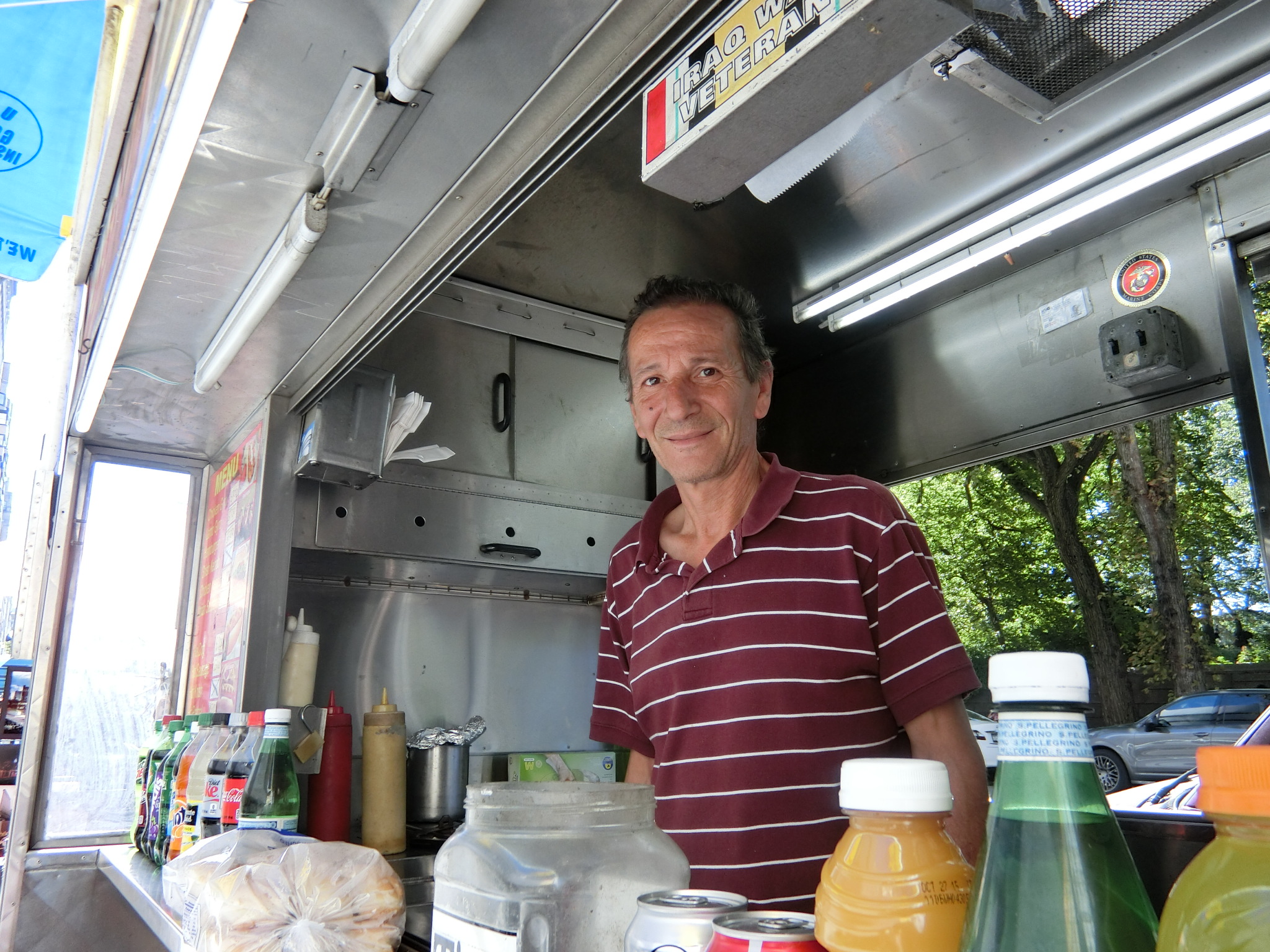
A community of street vendors lines the sidewalk around the corner from where I live. As I run the gauntlet of tourists and fellow New Yorkers, my yellow lab-pit mix lunges at an unsuspecting flock of pigeons. They burst into the air, settling a moment later. Gracie gives it another go, all but yelling “Hiyah!” as the birds flap around us.

One of the vendors calls out, “You just keep on going!”

I turn to him and smile. “Yeah, can you believe she’s 11 years old?”

“No, you,” he grins. “You’re like the energizer bunny, going and going.”

As Gracie pulls me on, I wonder. Why did he say that? I don’t know his name, but he knows something about me. At the end of my 1.6 mile walk around the reservoir, I return to his food cart.

“Hey, excuse me,“ I say. “Can I ask you a question?”

He turns from what he’s doing and steps closer to his cart window, looking down at me.

“Did you know that I’d been sick?” I ask him. “Is that why you said that before?”

He smiles kindly. “Yeah, I talked to the guy who walks your dog. I asked him about you.”

I let that sink in for a moment. I take another risk.

“You were sick a while back too, right? I noticed you’d lost weight, and then you weren’t around for a while.”

“I lost a kidney,” he replies. “But now I’m 100%.” He says this with a big smile, spreading his hands expansively to measure his improvement. “ What were you sick with?”

“Breast cancer,” I say, without hesitation. “Surgery, chemo, radiation, the whole shebang. Now I’m 100% too.”

I reach my hand into his cart. “I’m Debbie. Nice to meet you, neighbor.”

“Jimmy”, he says, shaking my hand.

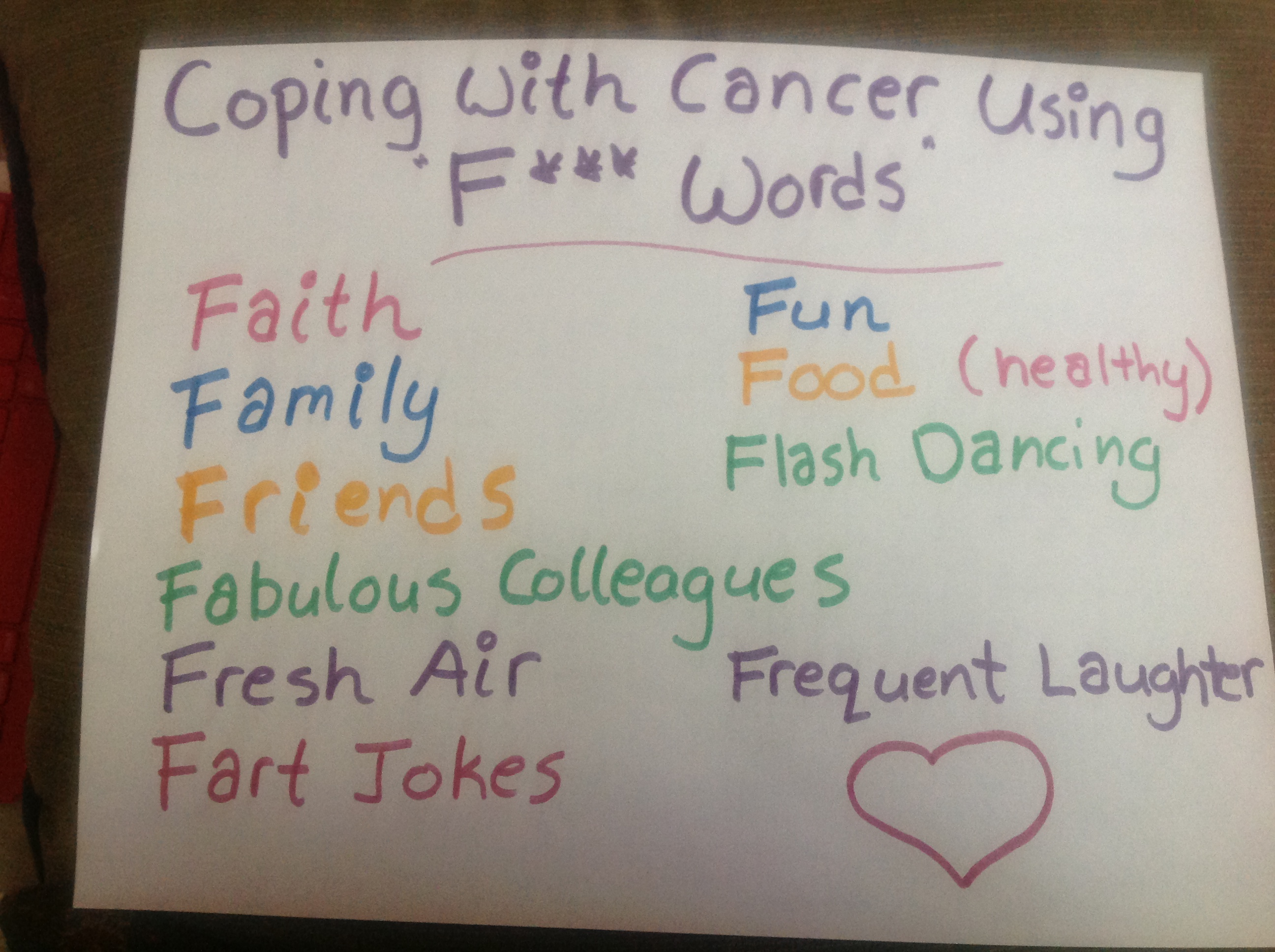
I see this encounter as a reminder. I survived some pretty daunting medical treatment in 2013. But I had incredible support from some unexpected places. In addition to a community of colleagues and Bank Street College alumni who did everything from walking my dog to accompanying me to chemo appointments, I had my own secret weapon. I reached into my Child Life bag of tricks for coping mechanisms to help me through. I used play, humor, writing and videography to scaffold my journey.

IMG_0018

This week I face a much less frightening surgery, an outpatient procedure to mend a torn tendon in my right wrist. Until this morning, though, I have to admit I was feeling a bit sorry for myself and pretty anxious about being stuck left handed for the duration of my recovery.

But Jimmy’s witnessing was a reminder. It jumpstarted my awareness of the lessons learned during cancer treatment. I have all that I need. It’s all here. I can handle this. All I have to do is reach for it.

IMG_5083

Hospital Play in Iceland

imgres

IMG_1422

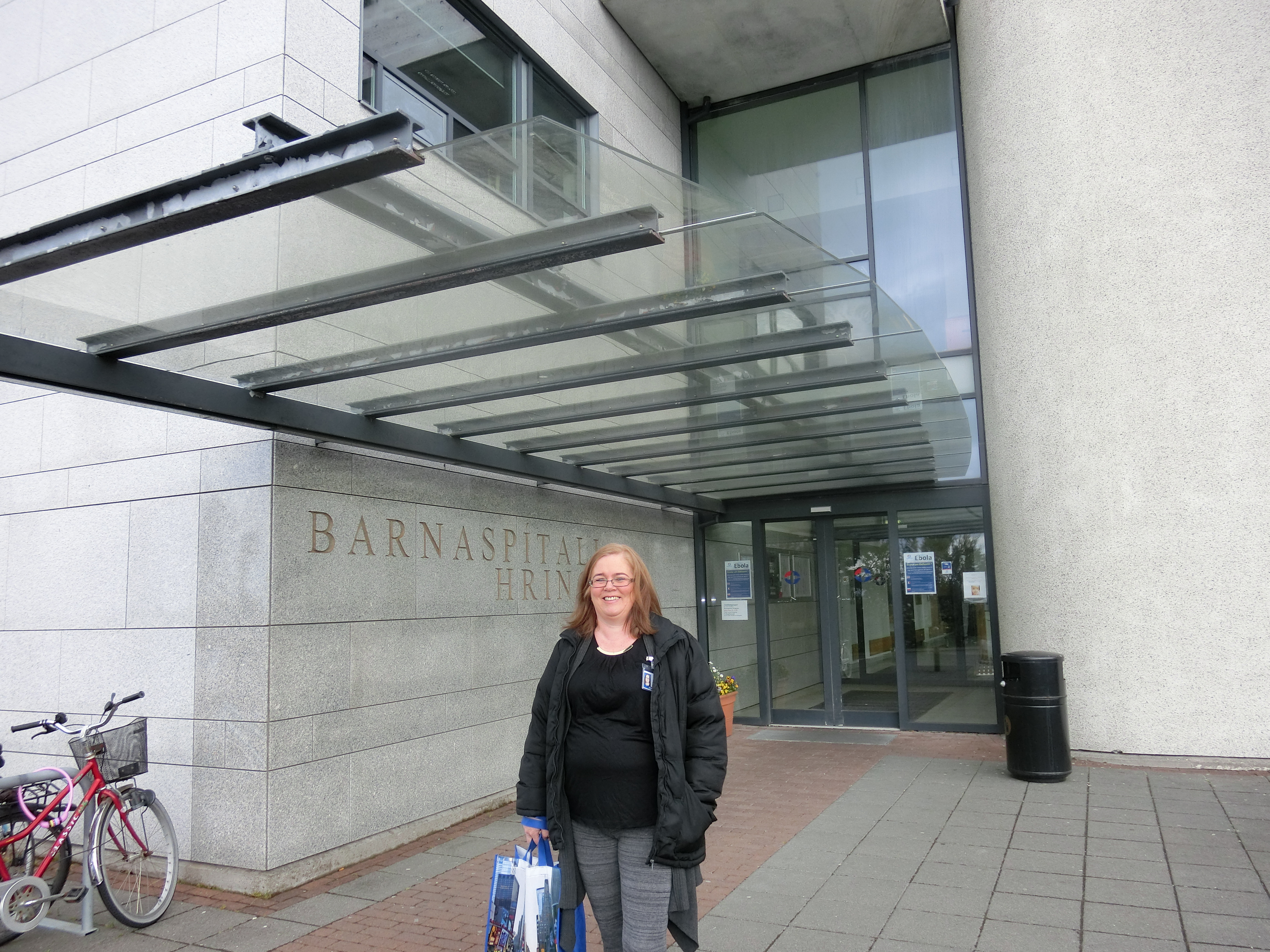
After the 99 degree weather in Japan, travel to Iceland called for wooly socks and a winter hat. During my first day in Reykjavik, I met with Dr. Drífa Björk Guðmundsdóttir, a psychologist who served as her country’s delegate at the first global summit on psychosocial pediatric care in 2014. She hosted me at Landspitali, the National University Hospital of Iceland.

CIMG0171

Our morning together included a tour of the pediatric inpatient unit, physical therapy department, clinic and NICU, and  an hour spent in conversation with some of Dr. Drifa’s colleagues, a physical therapist, hospital play specialist, nurse, nurse manager and social worker from a non-profit agency that serves hospitalized children and their families. We discussed best practice for helping parents support and prepare their children for hospitalization. It was clear to me that these professionals held many of the same values and goals for supporting children that we have in the US.

I enjoyed our conversation tremendously, but I must admit, I treasured my time with Sigurbjörg Guttormsdóttir (thankfully nicknamed Sibba, but pronounced “Sippa”!).  Sibba is one of the two hospital play specialists, and she has worked at the hospital for 25 years. A kindergarten teacher who received training in Sweden and Oregon, she wrote a thesis on play materials to use with children.  Sibba welcomed me to her playroom and proudly shared its history and resources, inviting me to sit down and play almost immediately.

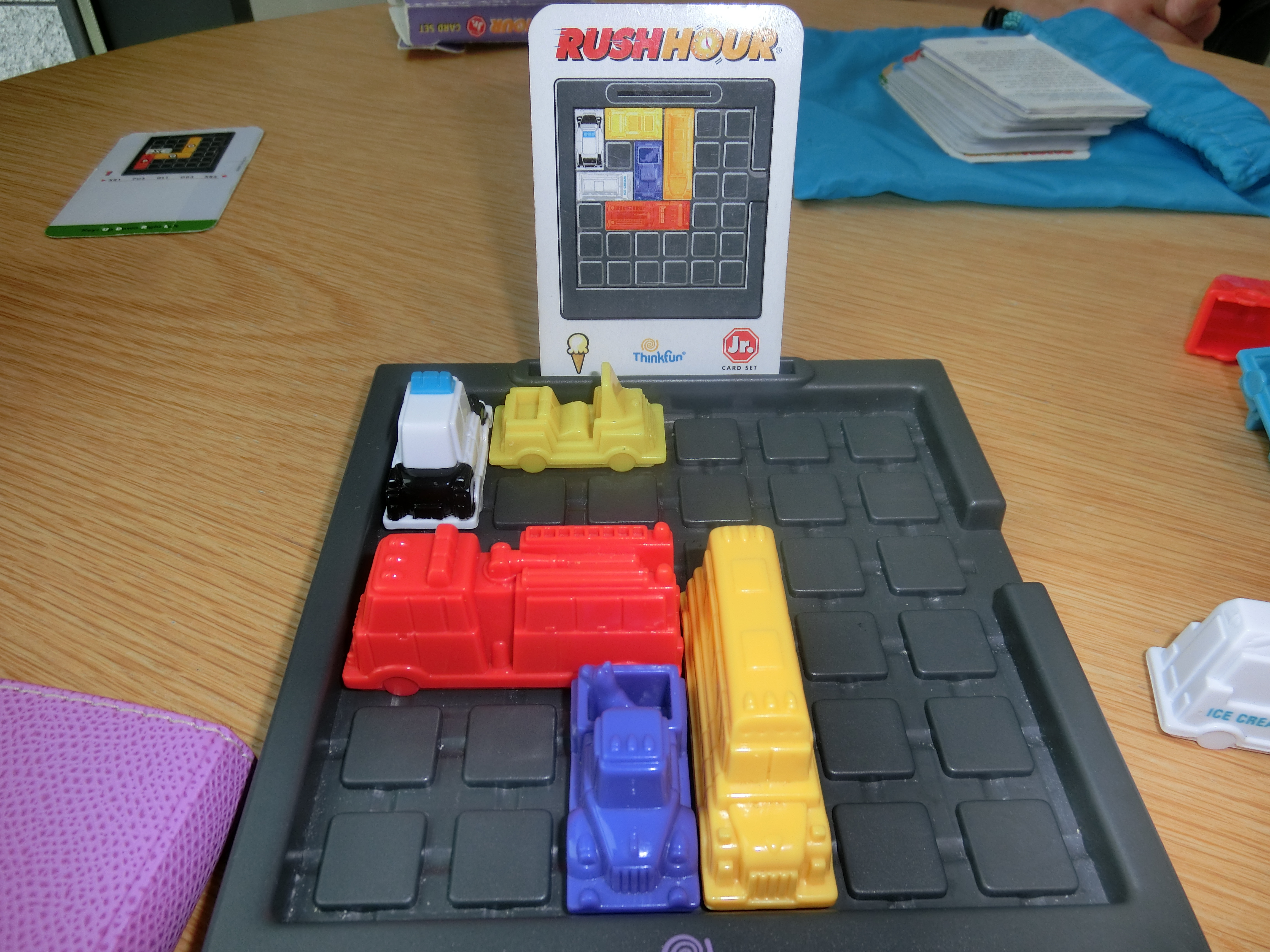
Here is the game of choice, Rush Hour.

CIMG0180

Continue reading

Learning from Hospital Play Specialist Hideko Konagaya in Japan

IMG_4587

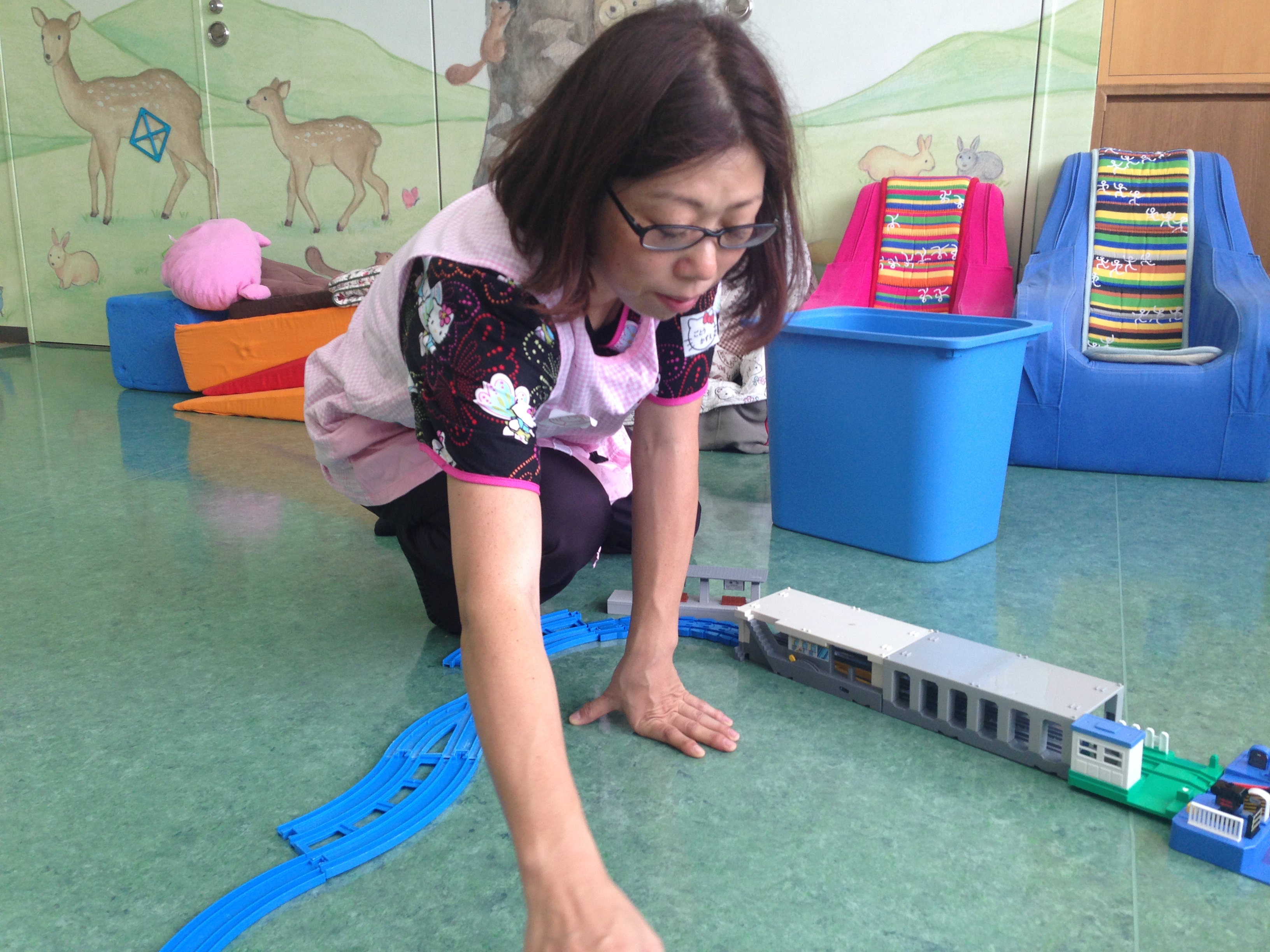
While teaching in Shizuoka, Japan, I had the pleasure of spending a morning with Hideko Konagaya, a hospital play specialist, at Shizuoka General Hospital.

Hideko hosted Maria Busqueta  (a child life specialist and psychologist from Mexico City) and me in her bright and cheery playroom. Professor Chika Matsudaira of Shizuoka University assisted us by translating so that we could all communicate.

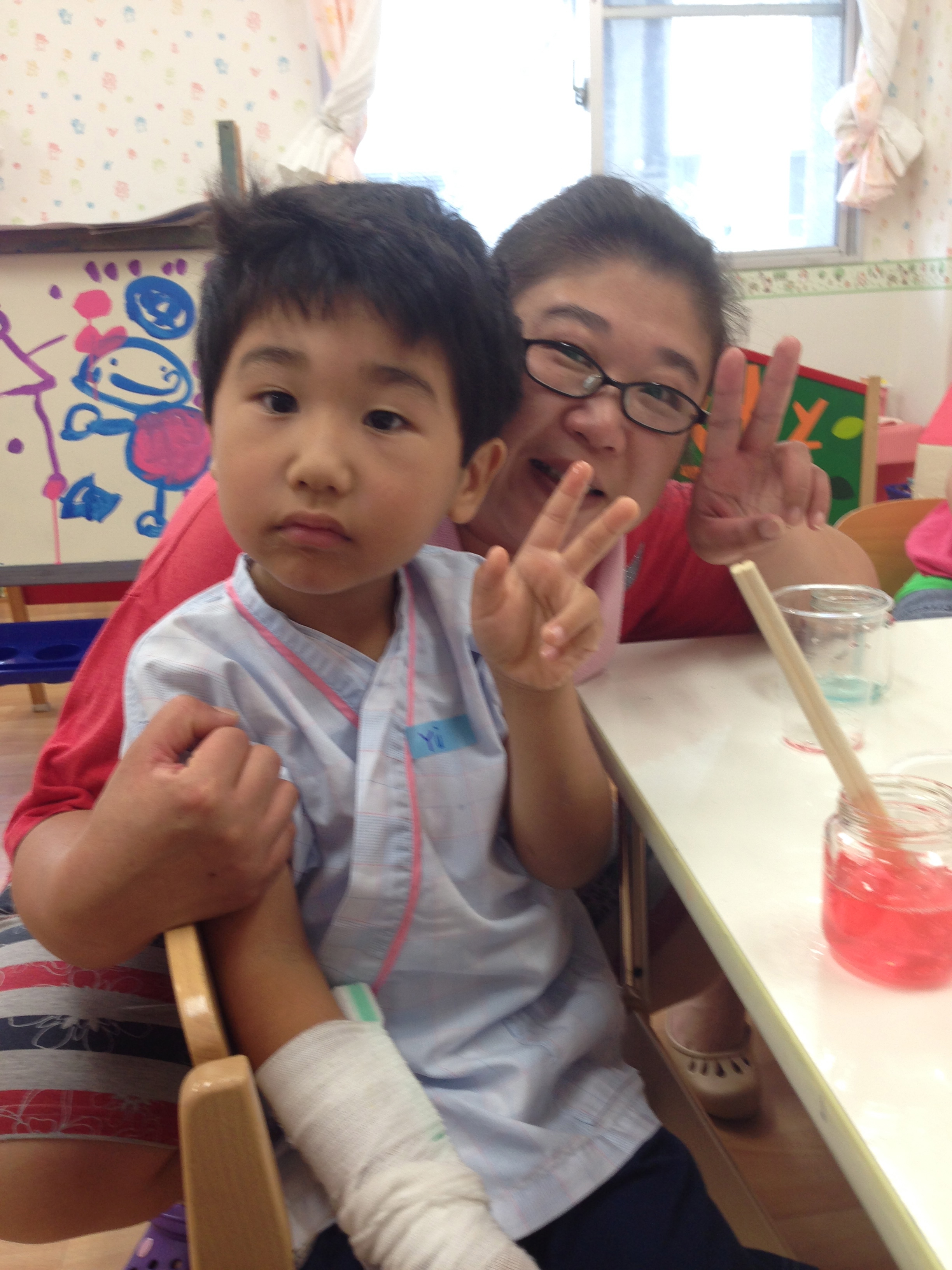
When we entered the playroom, two preschoolers already sat at a small table busily making slime. The children and their mothers gave us permission to photograph them.

IMG_4584 IMG_4588

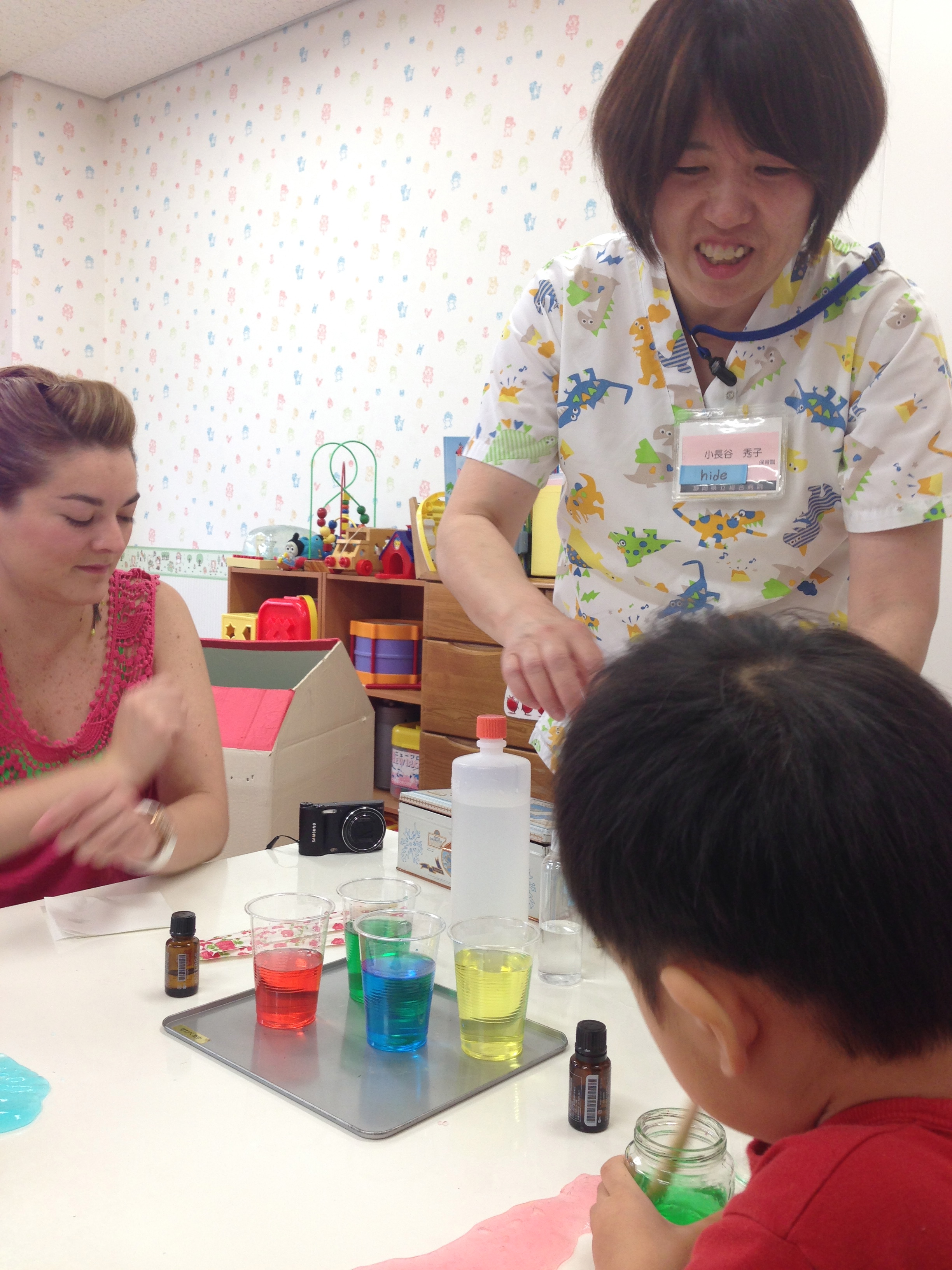
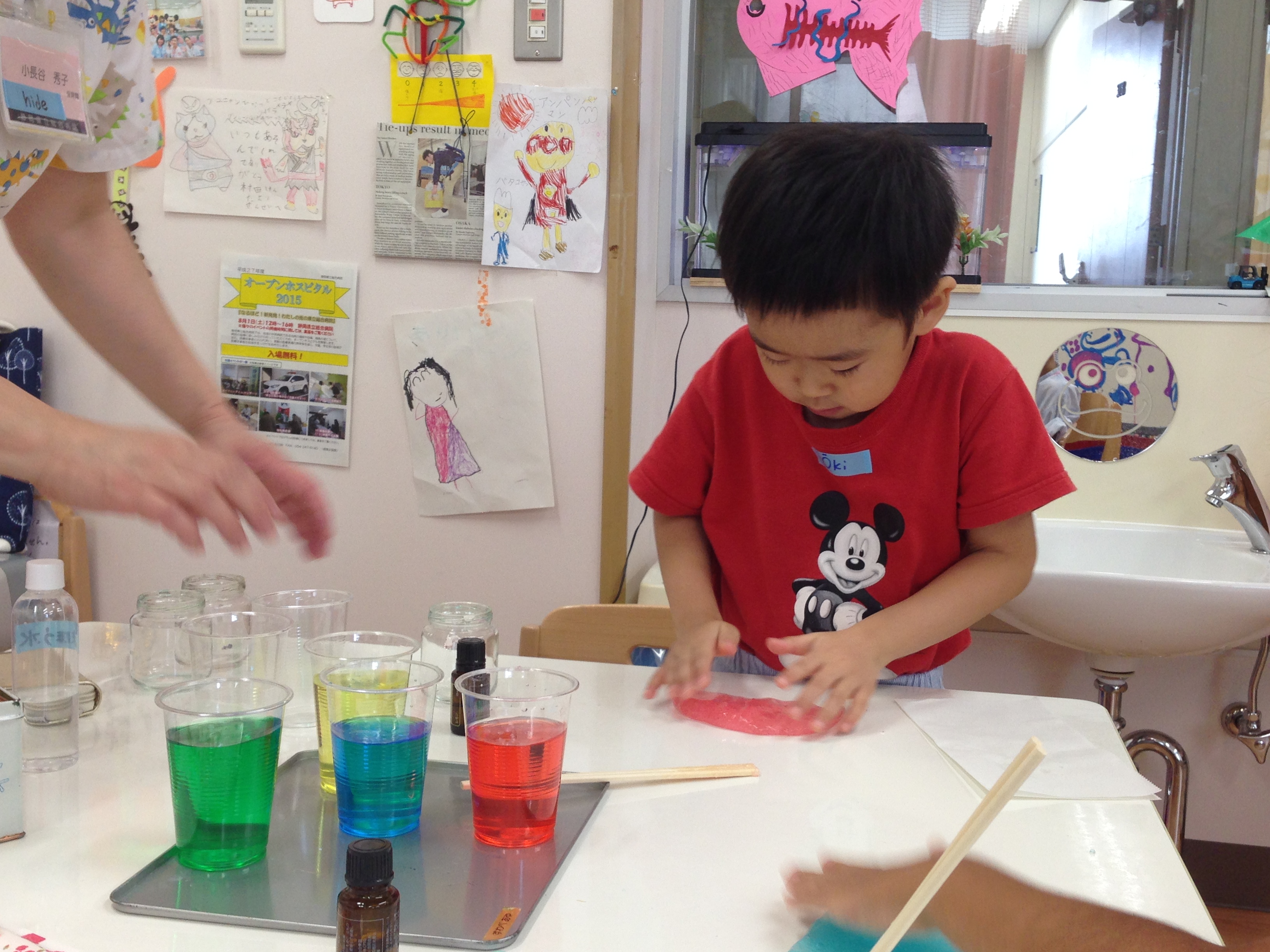
Now I have made slime in my play course, but never slime as lovely as this! Hideko had set out brightly colored water in several plastic cups. She provided the boys with small glass jars (recycled baby food jars) and chopsticks for stirring. One at a time, Hideko and the children added rice glue, orange or lime essential oil for fragrance, sodium borate, and  a magical touch of glitter. The mixture came together to create a wonderful substance that smelled amazing and was positively addictive – no one could put it down or stop playing. The boys stirred like mad, and then ran the slime through their fingers until it hardened enough to hold shape. They used cookie cutters and plastic tools to manipulate it. I broke a cardinal rule of mine and touched one of the boy’s slime without asking. I just couldn’t help myself! He was a very good sport. Continue reading

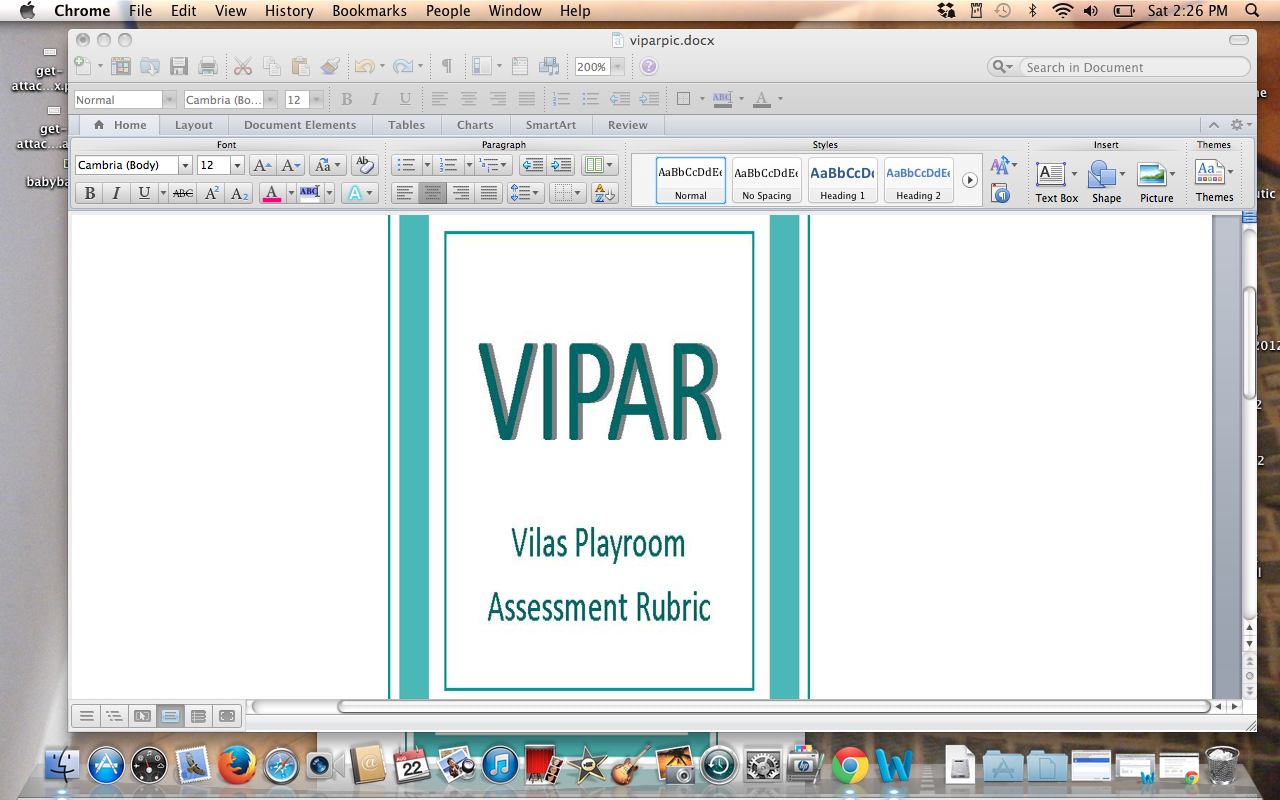
NEWSFLASH! VIPAR Playroom Assessment Rubric now in fillable form

Screen shot 2015-08-22 at 2.26.19 PM

I am excited to announce the release of a fillable pdf format for the VIPAR, a new tool for your child life/hospital play toolkit. You can now fill out the VILAS Playroom Assessment Rubric (VIPAR) on your computer and print it out. The VIPAR is an assessment form to help you make your playroom the best it can be. There is a dream playroom in all of our imaginations. Time, space, budget constraints and infection control guidelines aside, we all know what we would provide children and families if we were able to do so. The  VIPAR (Vilas Playroom Assessment Rubric) (click on bold green type to access) is intended to present the best possible scenario, and to measure how your playroom is meeting the needs of all pediatric patients and families at your hospital. Child life specialists, hospital play specialists, and administrators can use this rubric as a quality checklist to assess playroom design and operation.

This rubric is several years in the making and has been test driven by many Bank Street College alumni. They kindly tried it out in their playrooms and provided me with feedback to improve the document, making it as accessible and flexible as possible.

Tara Horan reports that the rubric gave her staff  “feelings of empowerment to make positive changes.”

Kelsey Frawley shared, “Another AHA moment was the cultural competency piece. I think as specialist’s we are taught to BE culturally competent, not judge, ask questions, be aware of differences, but incorporating it into a room is something I have not thought of. The developmental appropriate piece really stuck out. It is something we have struggled with as a site and recently have committed to revamping. Kate Shamzad states “In fact, it inspired us to order a wall mirror to be installed in the infant/toddler section of the hem/onc room.”

I owe them and others many thanks for their input. But the VIPAR is and should be a work in progress. So please give me feedback if you use it at debvilasconsult@gmail.com. The form will soon be available on the Child Life Council’s website at the Play Center located in the Resource Library.

A Day with Hospital Play Specialist Kazue Goto in Japan

IMG_4403

One of the best parts of my trip to Japan was the fact that I  learned more than I taught. Yes, I traveled there as a child life professor to teach play techniques to hospital play specialists (HPS). But they had just as many wonderful techniques to share with me, and I cannot wait to incorporate them into my teaching repertoire here in the States.

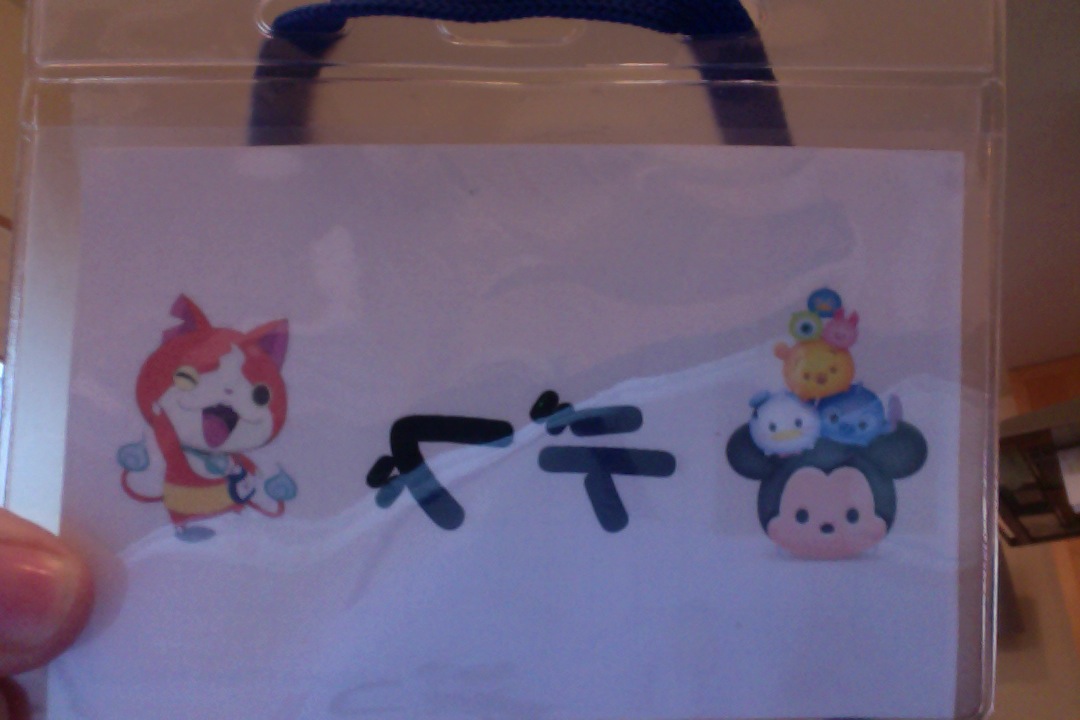
On our first day in Tokyo, Kazue Goto hosted Maria Busqueta and me at the National Rehabilitation Center for Children with Disabilities for a day of play with the inpatients on their orthopedic ward. She had prepared the children for our visit, and one by one, they approached us, shook our hands Western style, and introduced themselves by name. Kazue presented us with handmade name tags written in Japanese.

Photo on 8-12-15 at 5.34 PM

I taught the kids how to play the American game “Spot It!”, and Maria taught them how to play Mexican Lotteria. We all made volcanoes together, and then the fun REALLY began. Kazue taught us all how to make poop.

Yes, you heard it right — we all made poop out of bran cereal. The activity is designed to teach kids about their digestive systems. Many hospitalized children have issues with constipation or diarrhea, and this activity brings up helpful discussion about self care and gives children a chance to normalize something that can cause great pain and embarrassment. Continue reading

Play the Japanese Way

IMG_4451

Trepidation was the word of the day as I prepared to teach play techniques in Japan. How would I  cope with teaching in eight hour increments to students and professionals whose primary language was Japanese?  How would the participants respond to me? I barely ever lecture at Bank Street College, but here it would be the expected modality of teaching. I worried for my students who would have to listen to my English first before Chika Matsudaira, my hosting professor,  translated everything I said.

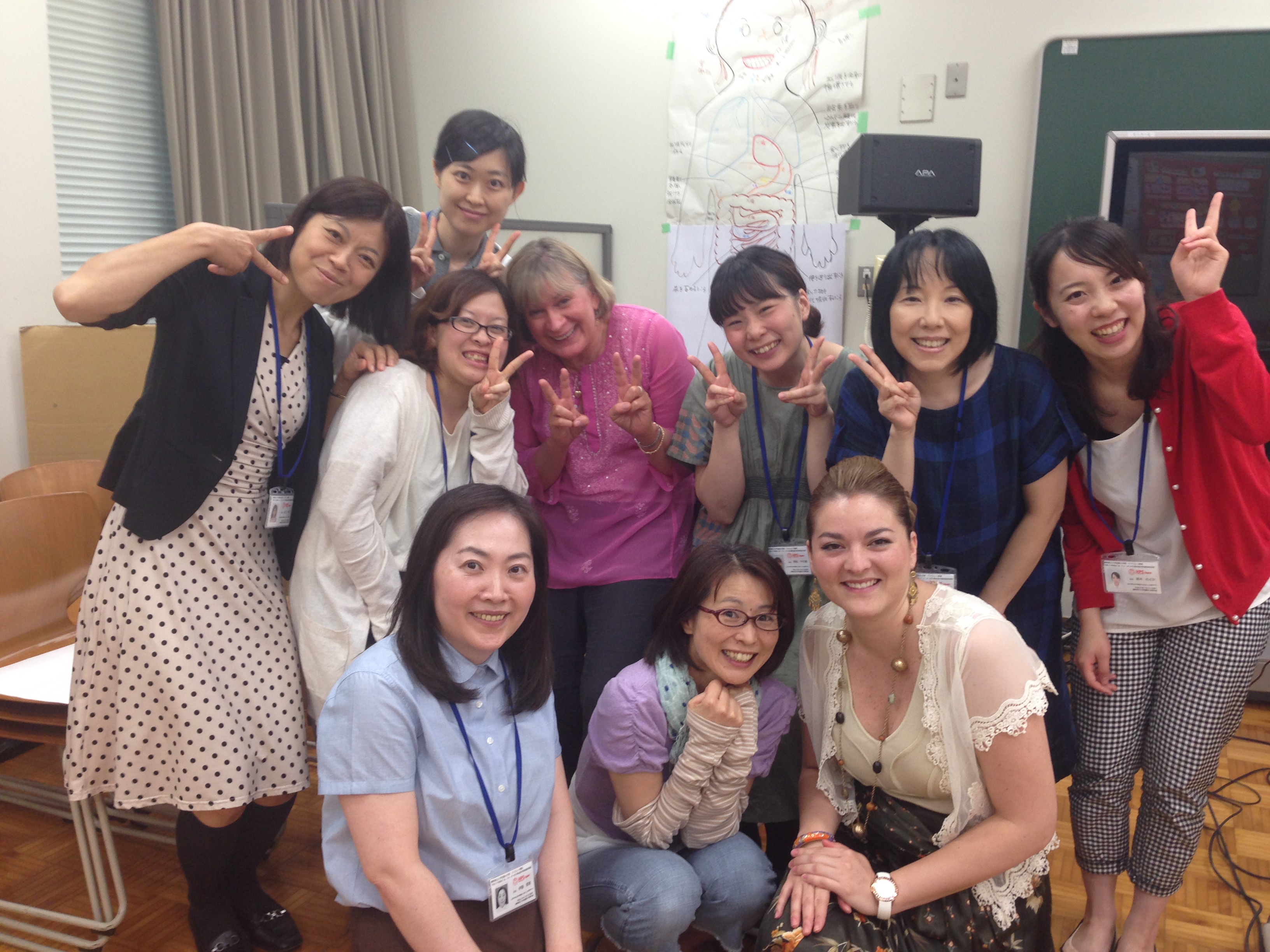
But I should know by now that everything works out in the end. Here are some highlights from the four groups we taught, some new to the profession, others in it for years. They included students, hospital play specialists, nurses, nursing administrators, nursery nurses (early education professionals working in hospitals), occupational and physical therapists and one child life specialist. In the span of 5 days, we taught a total of 91 people. The photos and video footage below include scenes from all 4 classes.

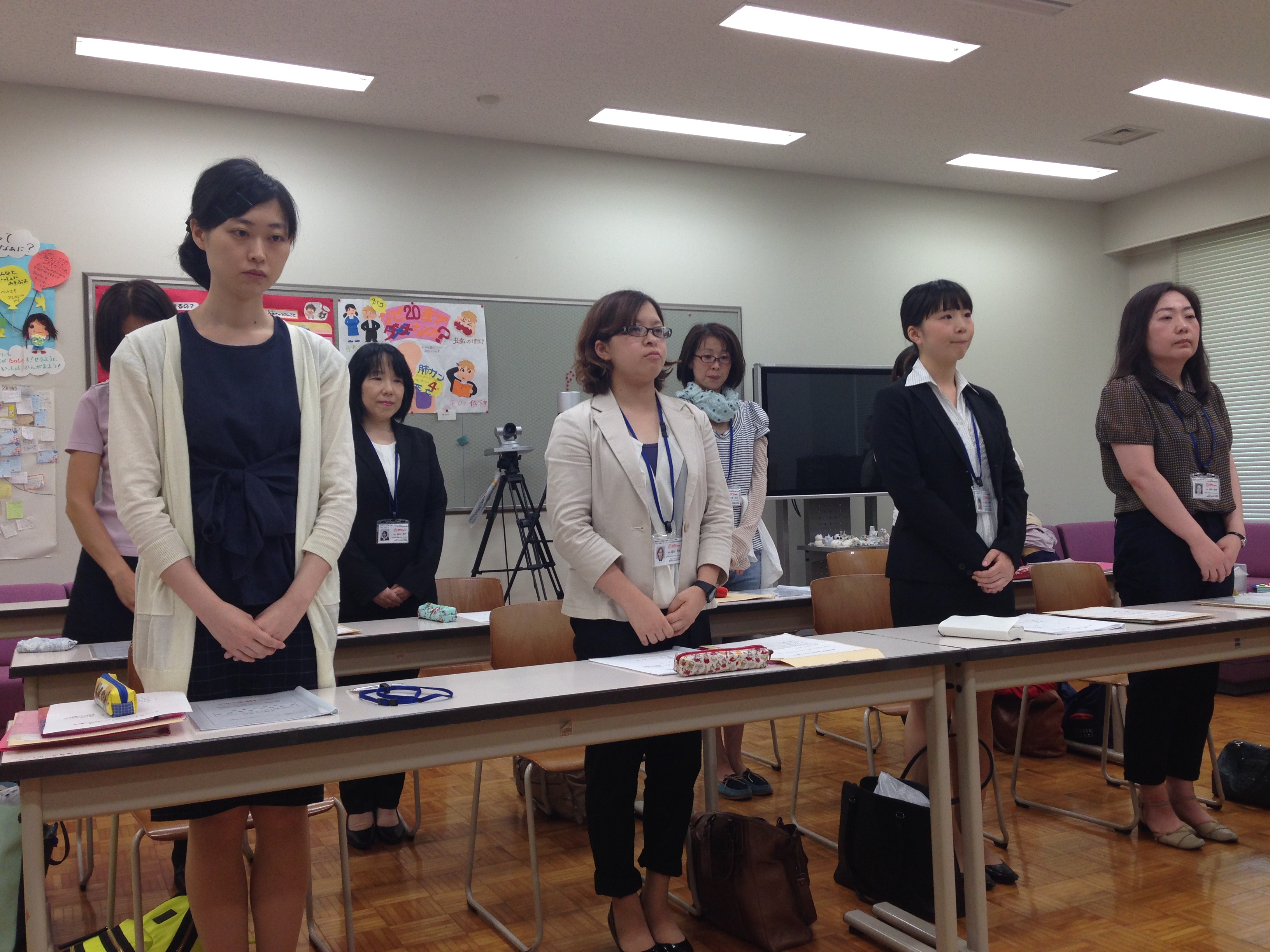
The first group in Shizuoka were new hospital play specialist (HPS) students who had travelled from all over the country, and the day began with a ceremony welcoming them to Shizuoka University. The university president and administrators attended, as did a local reporter. The students first appeared very serious and somber. Here is the before shot taken during the ceremony:

IMG_4449

But we all warmed up to each other pretty quickly. Here we are at the end of the second day.

IMG_4549

Thanks to the reporter, an article featuring our class appeared in the next day’s Shizuoka paper.

CIMG0145

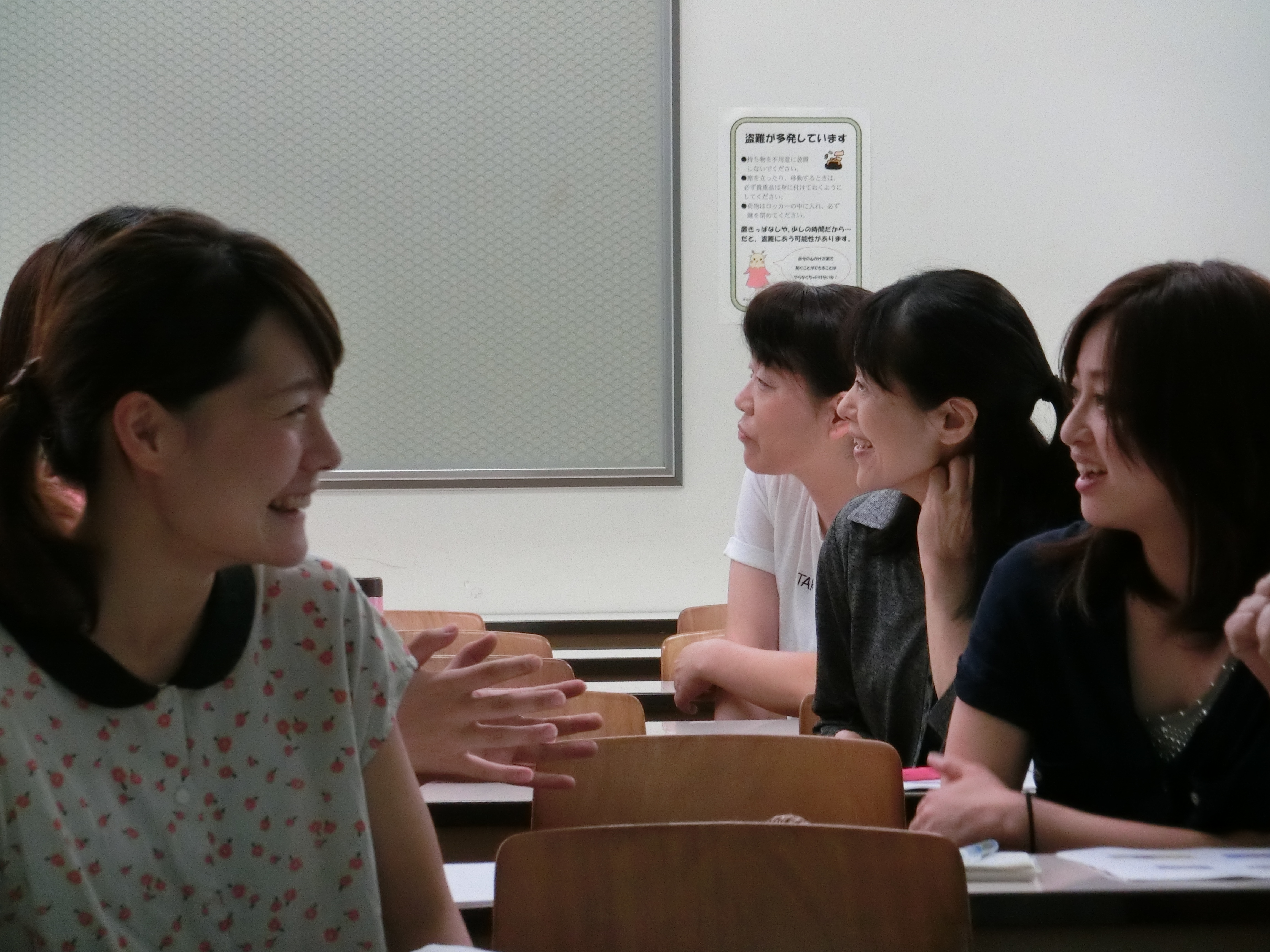
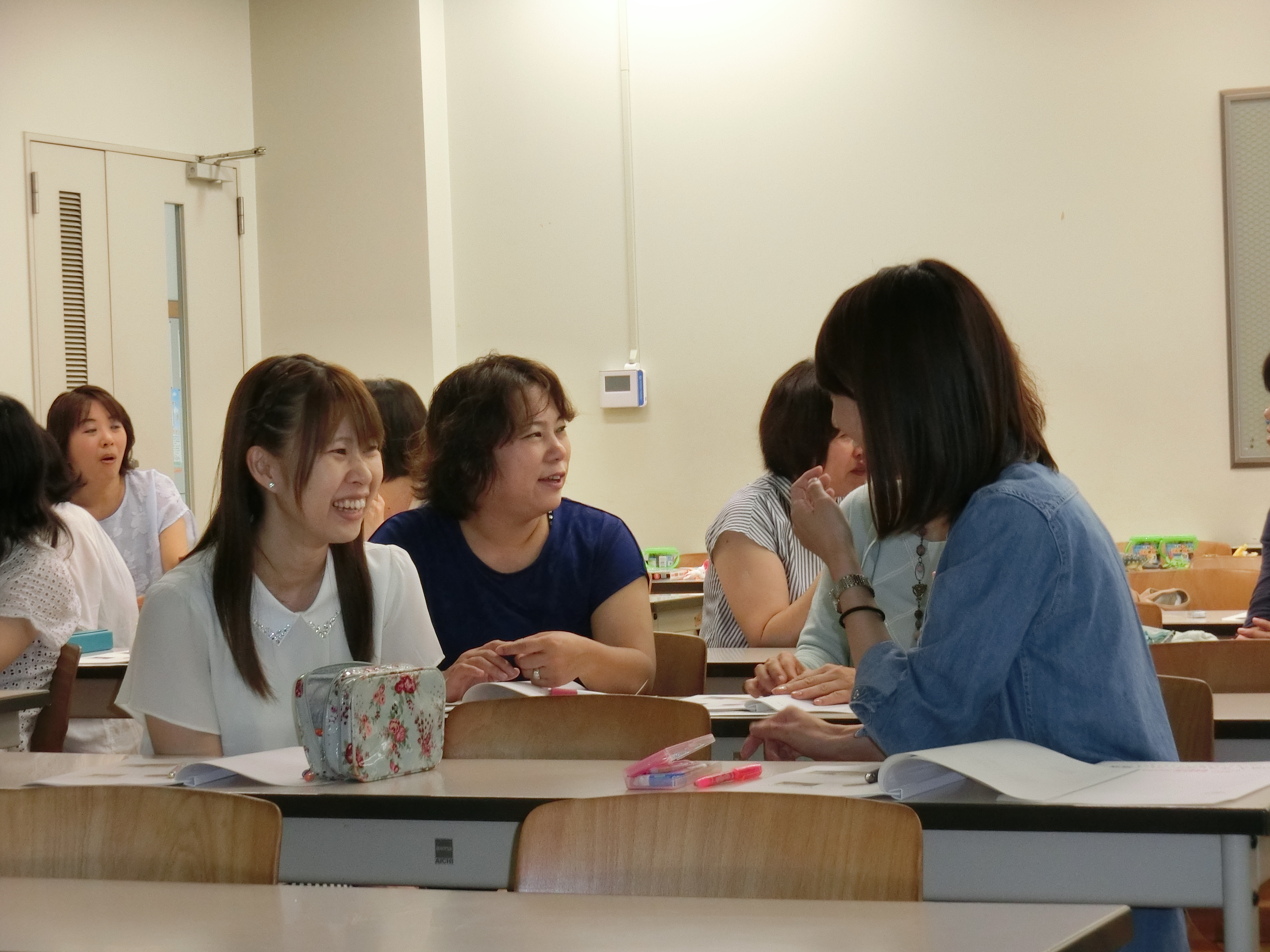
We began with my theory of a “Play Needs Continuum”. It describes 9 ways to deepen play opportunities for children in hospitals. Chika had translated my power point into Japanese.  When we spoke of raising awareness about the value of play, students paired off to share play memories from childhood.

CIMG0021 CIMG0020

When we addressed the use of self as a distraction tool to use during medical procedures, we all shared songs  and hand games from our cultures (click on bold green to see videos). Maria Busquetta from Mexico got everyone singing “Twinkle Twinkle Little Star” in Japanese, which impressed everyone very much. I taught them the invisible needle and thread trick.
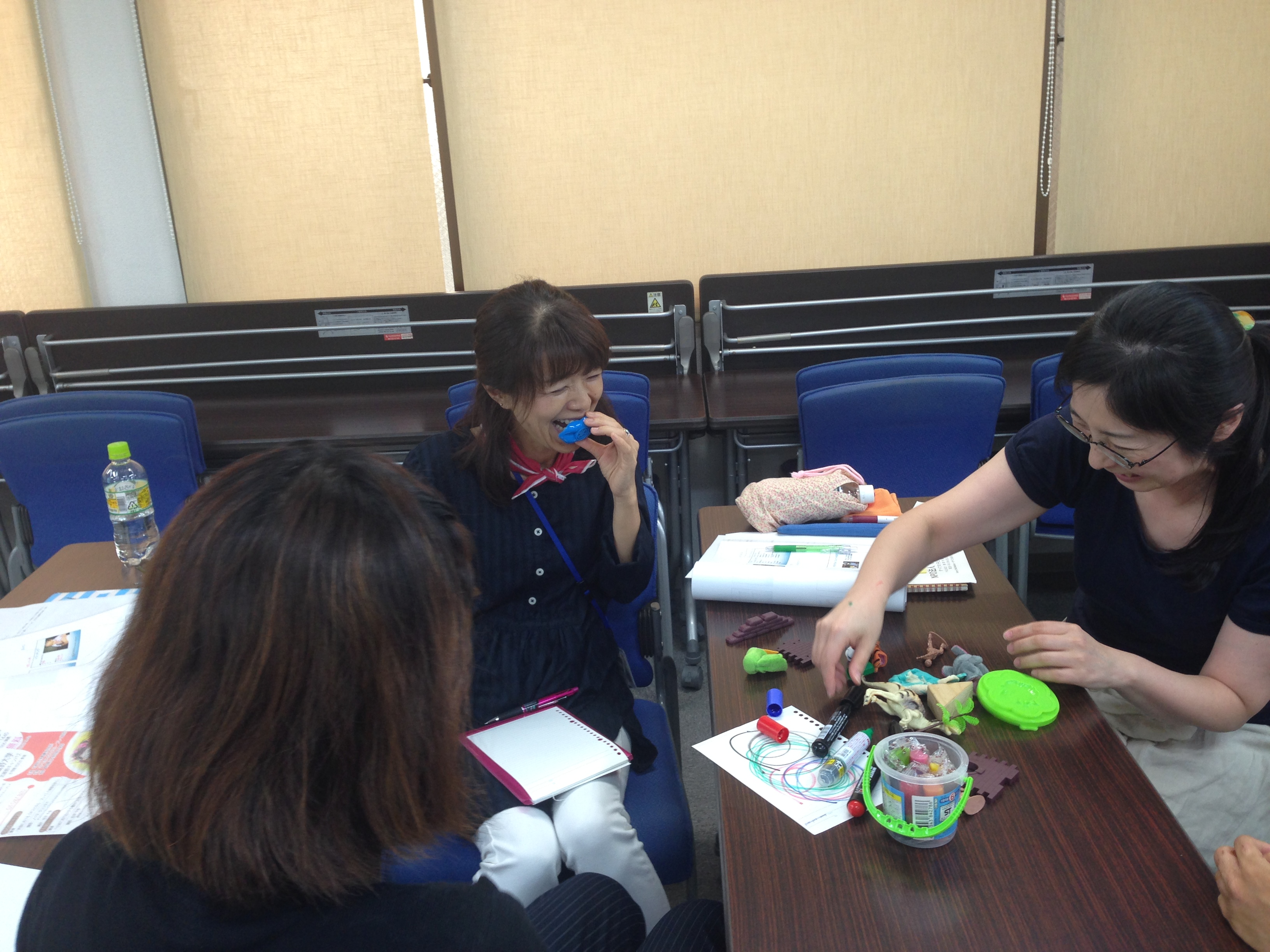
When we needed to move our bodies to keep alert, Chika demonstrated “laughter therapy”. On most days, I started the day with the game “whoosh”, where the group passes an imaginary ball around a circle making sound effects as they go along. I had never tried this with more than 15 students, but it worked well even with the large group of 40 from Tokyo. Their improv skills with action and sound effects were great.

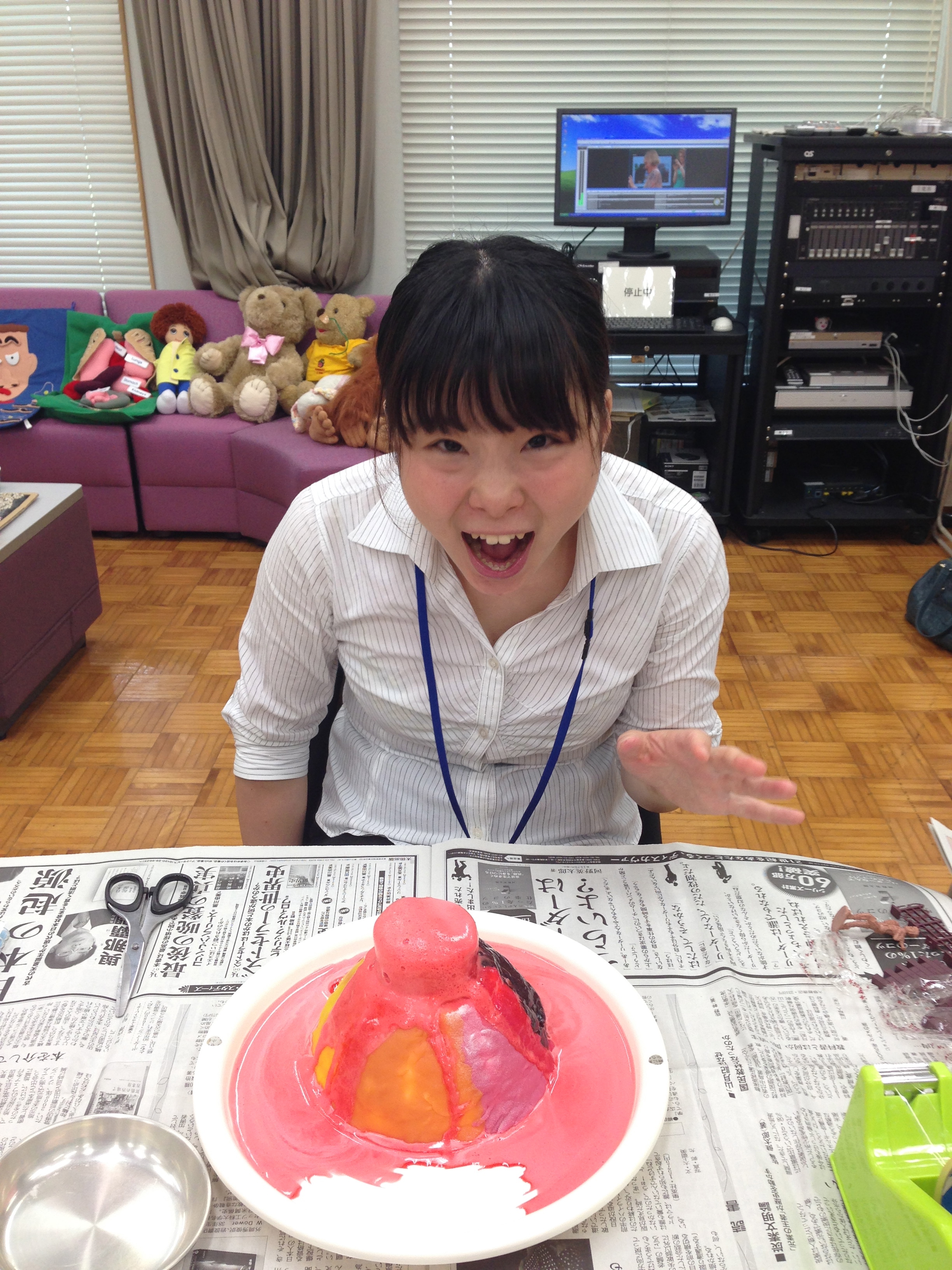
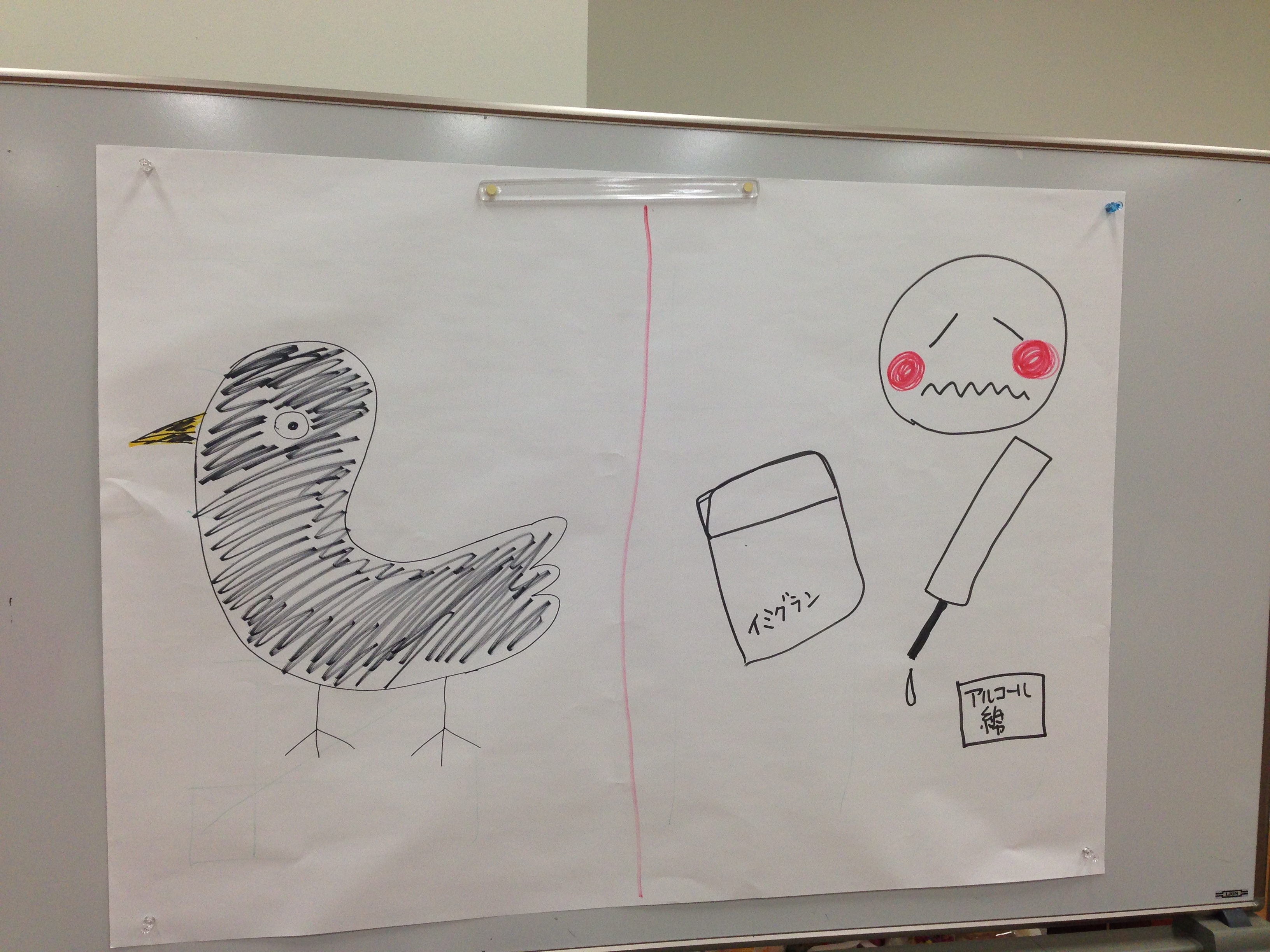
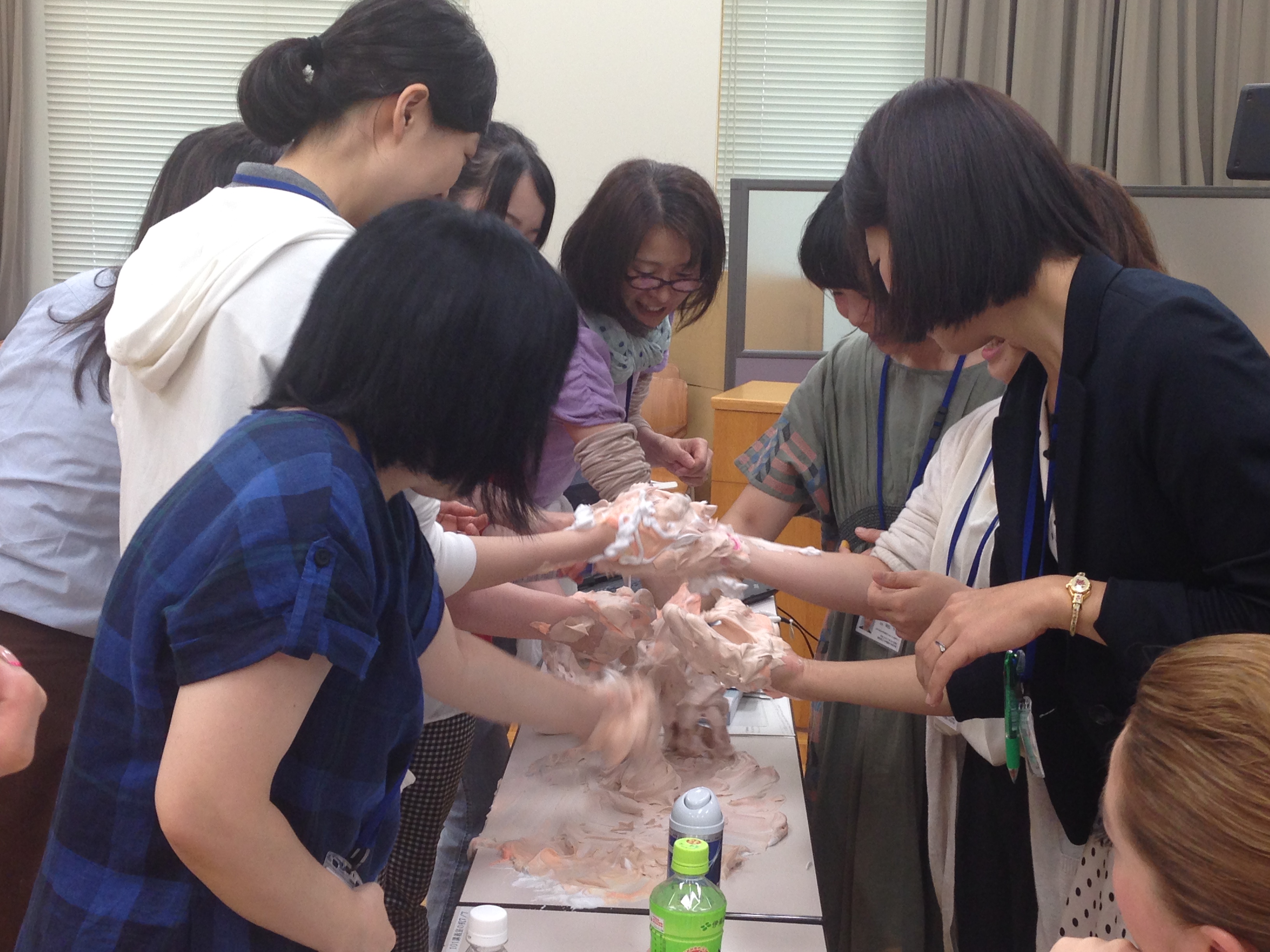
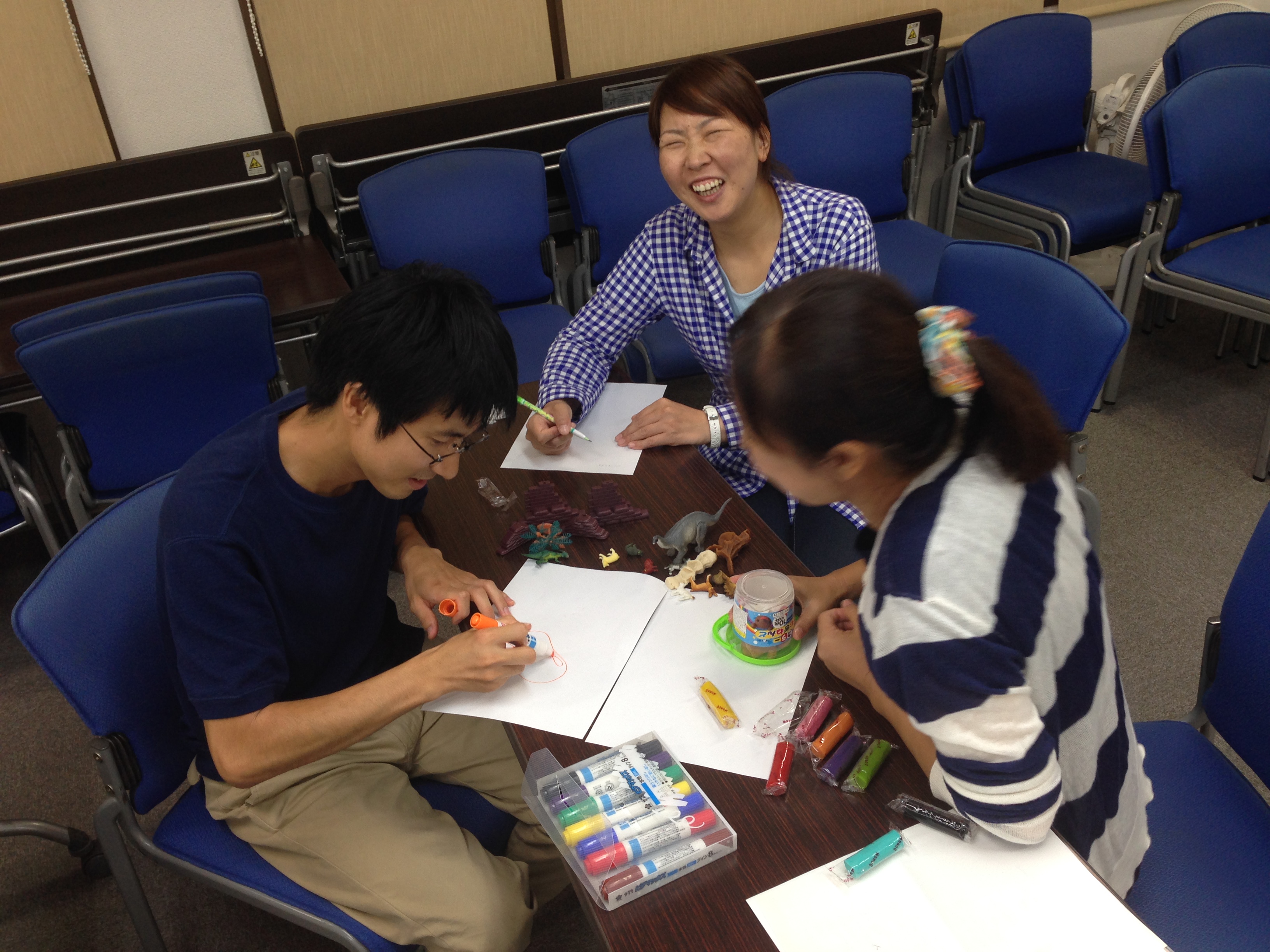
The students enjoyed making volcanoes (Kaduson, 1997), throwing wet toilet paper at a drawing of things which angered and frightened them (Kaduson, 1997), making oobleck and playing with shaving cream. Rolling up their sleeves to play helped them understand first hand the value of these techniques for hospitalized children.

IMG_4489

IMG_4495

IMG_4506

IMG_4522

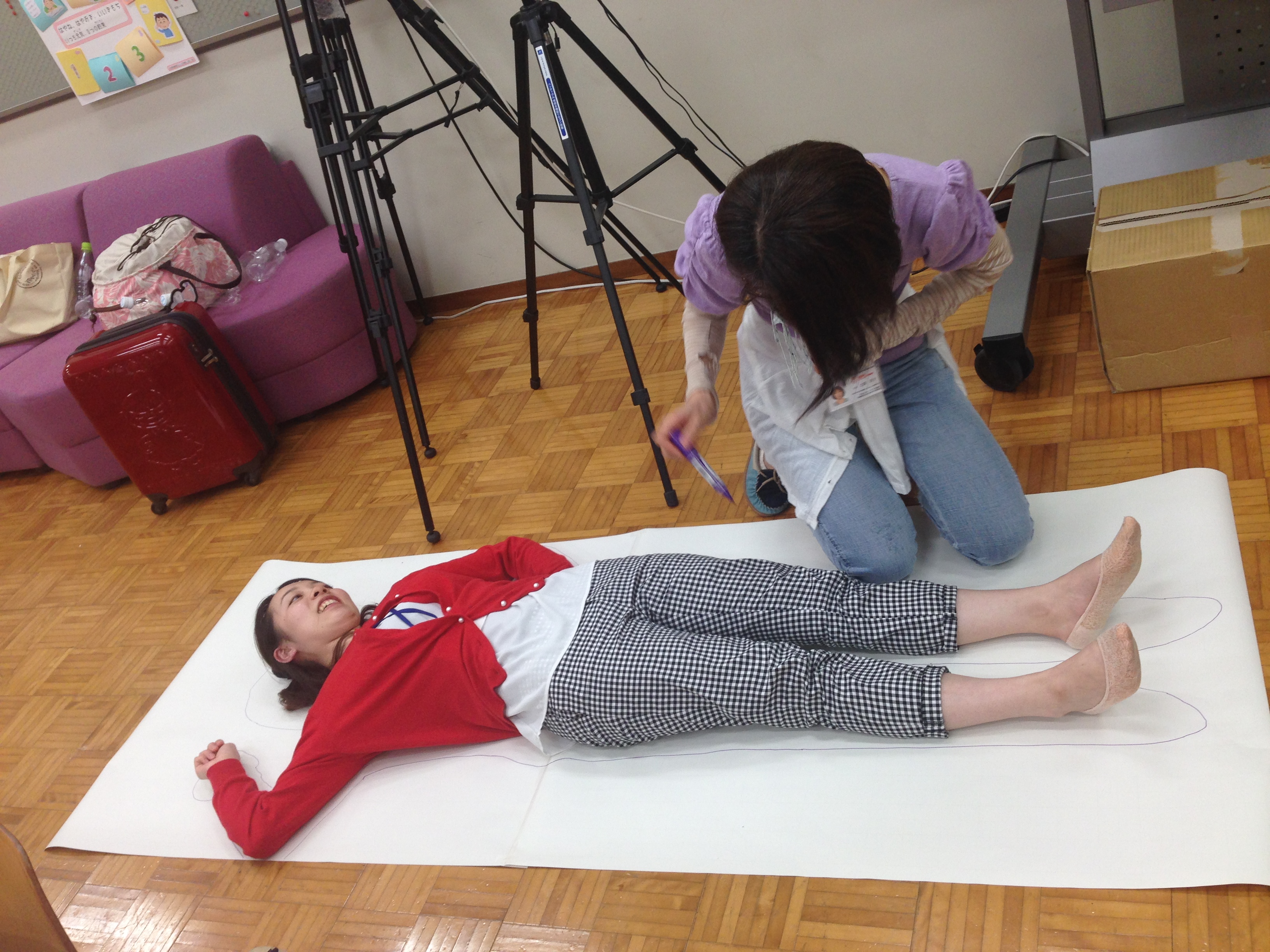
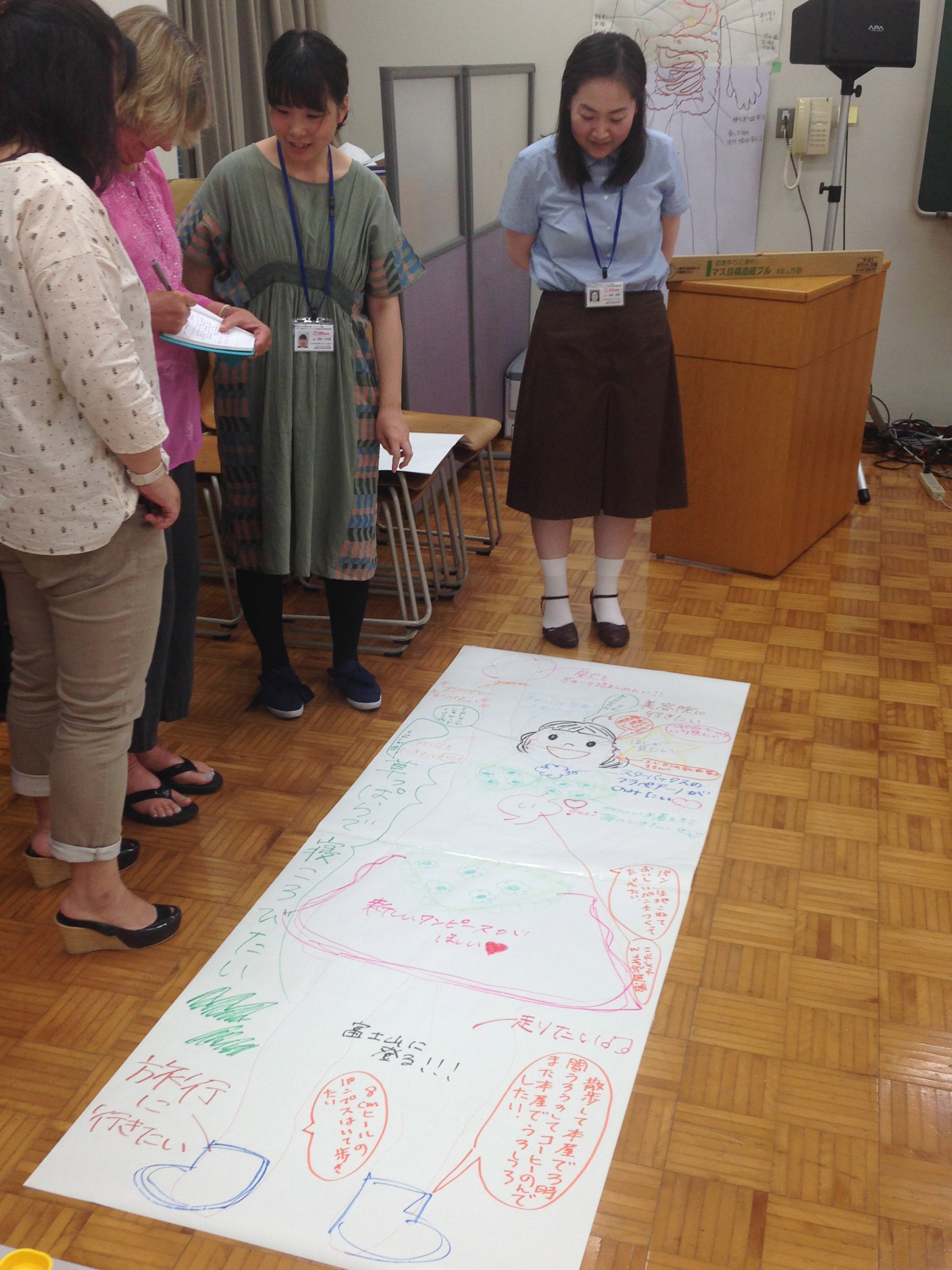
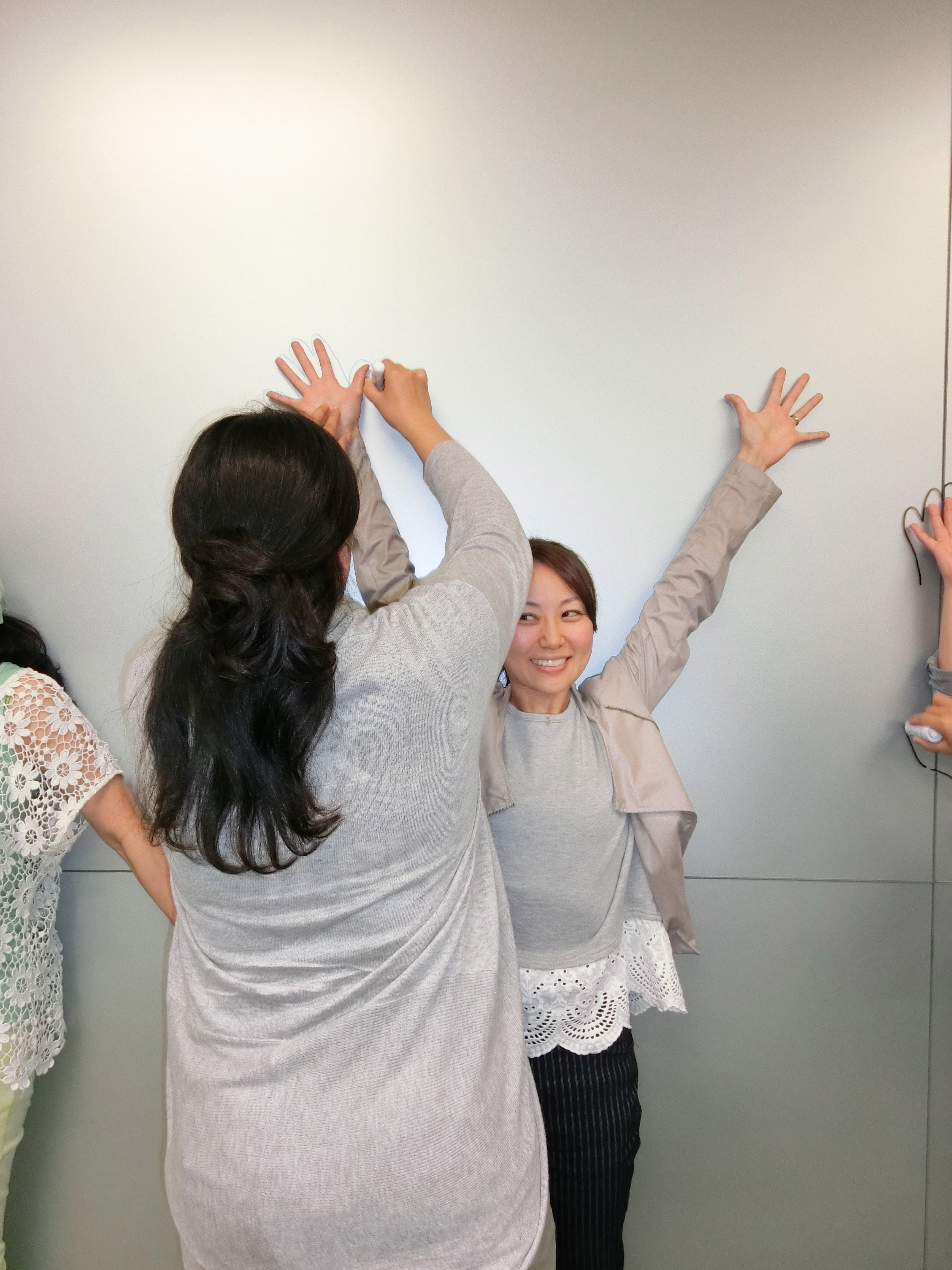
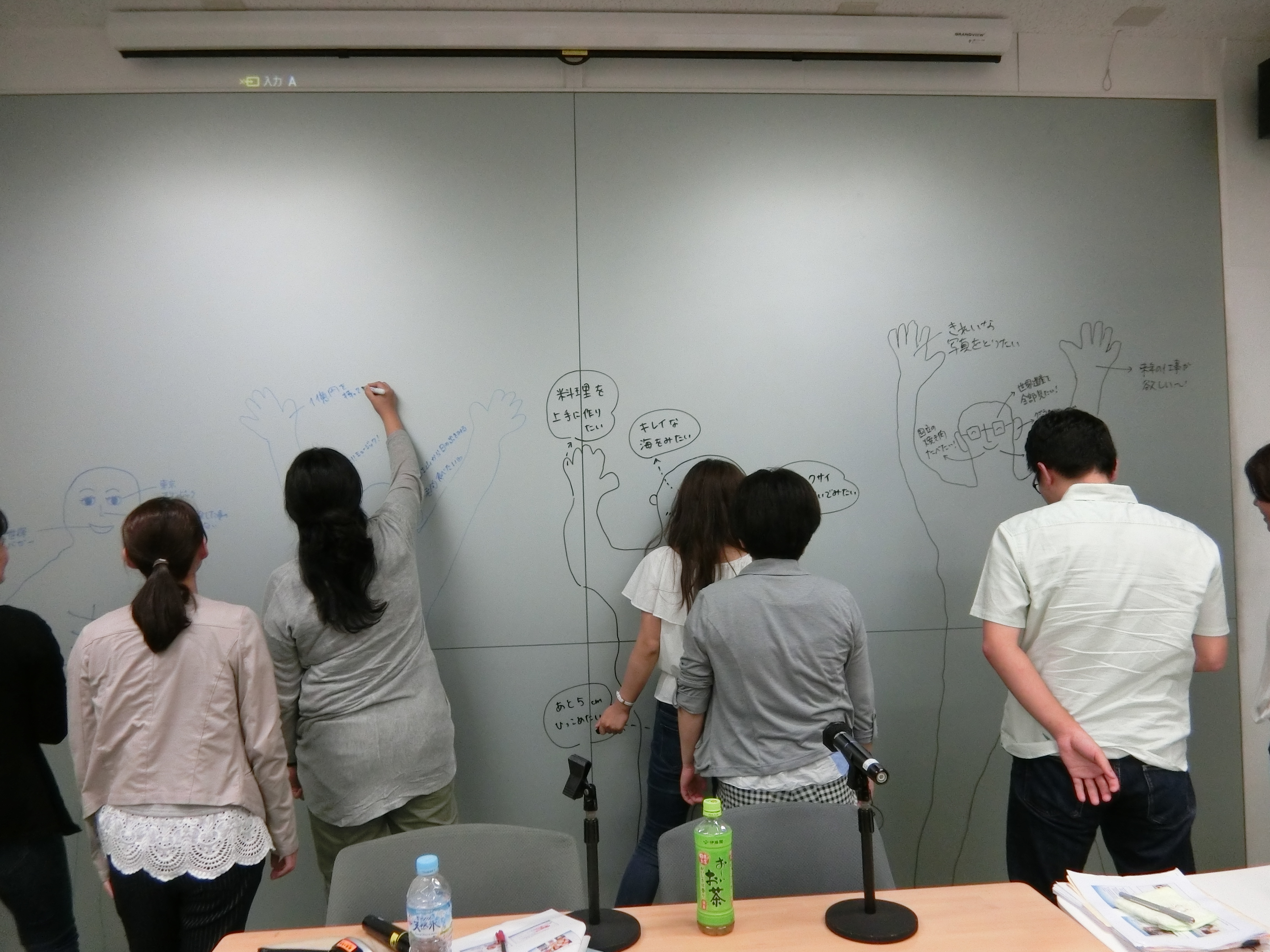
The students traced one another on paper and dry erase board for the “Wonders of the World”  activity (Carman, 2004). This activity helps traumatized kids and teens find hope and connect with a vision of the future as they draw what they would like to see with their eyes, smell, hear, taste, do/make with their hands, and where their feet will take them.

IMG_4531 IMG_4540

CIMG0064 CIMG0062

CIMG0066

And last, but not least, we  demonstrated and practiced child-centered play techniques (Landreth 2012).

CIMG0024 IMG_4742 IMG_4748

The students were so willing and playful that the eight hours flew by each day. I have no doubt that children will be playing their hearts out throughout hospitals in Japan where these folks are training and working. Playing the Japanese way is a wonderful way to go.

International Job Opportunity!

imgres-4

NEWS FLASH!!!

My colleague, Siobhan Green, is looking for an experienced child life specialist to join their team in Australia. Here is Siobhan’s contact info and the job description. https://rch.mercury.com.au/ViewPosition.aspx?id=E2AK6pAarjo=&jbc=ere

Siobhan Greene
Senior Educational Play Therapist
Educational Play Therapy
50 Flemington Road Parkville 3052 Victoria
Telephone: 9345 5571 Ascom: 52457 Fax: 9349 1546
www.rch.org.au