Get Well Maps: Road to Recovery

ChildInspired-2

Please welcome our guest blogger, Christina Connors, who I interviewed after she connected with me on Linked In and sent me samples of her incredible Get Well Maps.

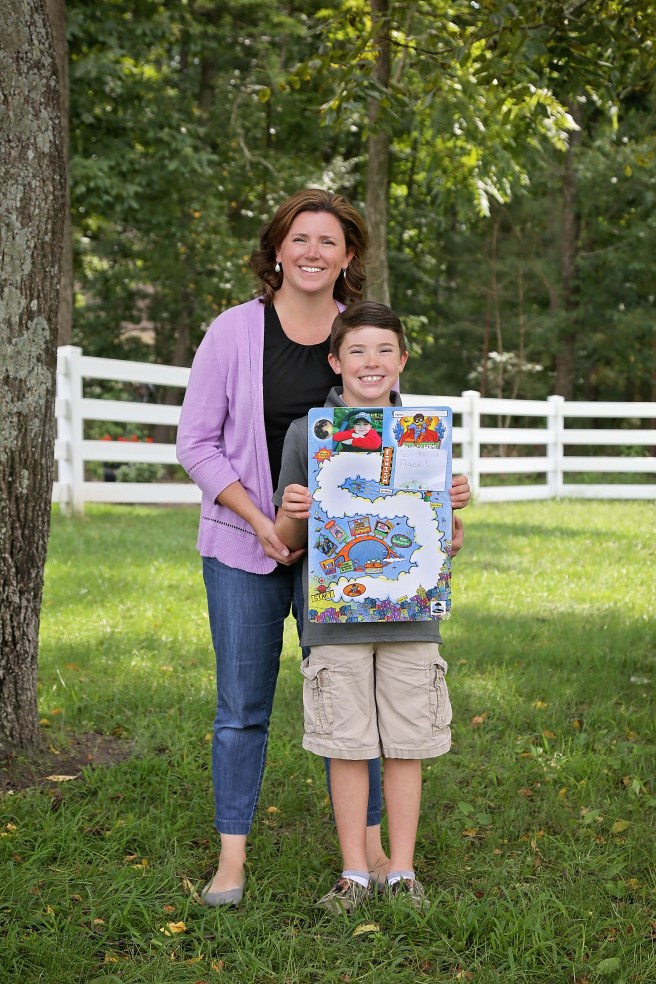
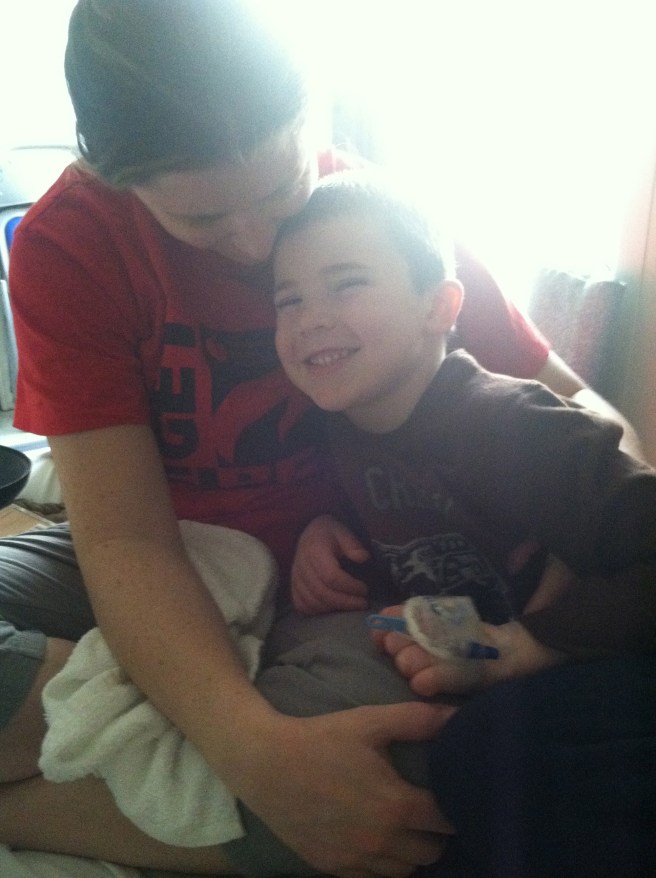
What inspired you to create these maps? My son’s medical experience in 2014, and my desire to help other children and families facing medical challenges, inspired me to create Get Well Maps. Andrew was 5 years old when he was hospitalized with bilateral pneumonia and H1N1 flu, and his condition quickly became life threatening. He was air lifted to our closest pediatric hospital (~2 hours away) and was transferred to the PICU secondary to respiratory failure. I felt completely helpless to care for him. There were so many uncertainties. My “Mama Bear” impulses were raging, and yet my background as an Occupational Therapist was underpinning every effort I made to advocate for my child.
IMG_0635

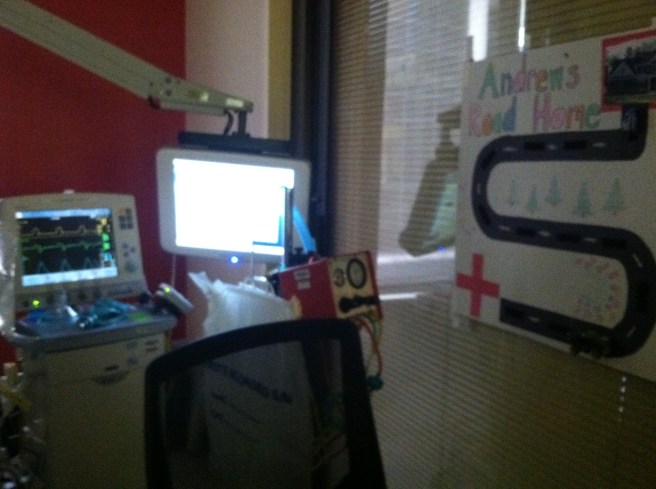
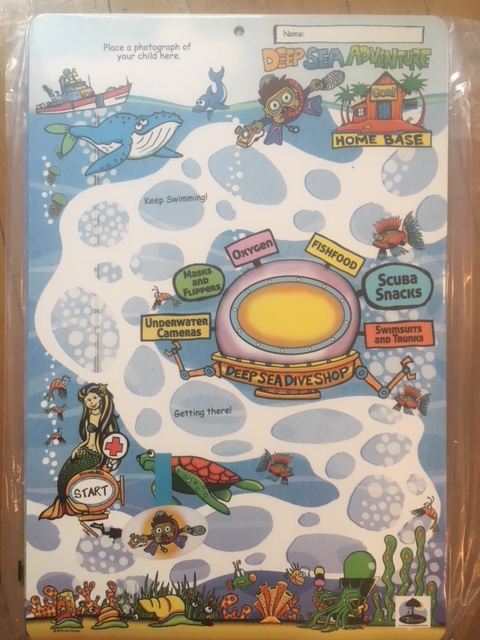
I felt compelled to have a visual that would depict his “Road Home”, because despite the uncertainty of prognosis, timeline or discharge plan, we needed to SEE our goal of getting home in the midst of adversity. I asked my childhood friend to make a map that had a road, photo of our home and matchbox car to move along as his condition progressed (My son has always loved anything with wheels). She was eager to do anything to help, but found it strange that my request of her was a “craft project” (Child Life Specialists & OTs get it). She graciously obliged, anyways. What began as a desperate mother’s attempt to provide a tool to help her child, began to draw interest from his medical team, and sparked communication that connected us throughout his care (“Is that your house?”, “Do you like to play outside?”, “Buddy, you’ve already rounded that bend”…). It was months after our experience, and after becoming involved in our pediatric hospital’s Family Advisory Committee, that another parent encouraged me to develop this idea in a way that would help other children and families throughout their medical experiences.
IMG_0618

What was the process like from your idea to creating the product and your company? I would be lying if I said I wasn’t scared! I was exposing a time in our family’s life that held much vulnerability. But I was also excited about the possibility of having a creative outlet that helped me process our experience in a way that helped others. My faith was strengthened by our experience, and I felt like I was being called into this work. I felt that this was a unique opportunity to combine my experience as a parent and healthcare professional (& my husband is an educator) to make a positive impact in the healthcare experiences of other children and families. I began slowly. Brainstorming, then drafting prototypes, researching materials, production options, searching for the right illustrator, and learning the basics of establishing a business. I use the analogy of a foggy road when I think about the process of transforming an idea into a company, and even now as I continue to navigate and evolve. I can’t always see where I am headed because the road is foggy, but when I have faith enough to move forward, the fog lifts briefly and becomes a little clearer just in front of me, which in turn gives me the confidence to keep going. (Just can’t seem to get away from the road/car analogies!)

Can you tell us a bit about your work as an OT and your experience as a mom? I graduated from the Occupational Therapy program at Towson University in 2002, and have been practicing as an Occupational Therapist for 15 years. I became interested in Occupational Therapy after my Aunt was in a car accident and sustained a C4-C5 spinal cord injury. It was the 1st time my family was truly impacted by disability and I was inspired to learn more about the professionals that were helping her. Since beginning my career as an OT, I have always had an equal love of pediatric and adult rehabilitation. I have experience in hospital, inpatient rehabilitation, home healthcare and school settings. I have always found my work as an OT very rewarding, and am very passionate about working with individuals with neurological disorders and sensory needs. My greatest loves… my hubbie, Mike, and my 2 children are at the center of my world. There was a lot we experienced emotionally as a family during and following my son’s hospitalization that changed my perspective as a mom. I don’t worry as much about small decisions and details, don’t take as much for granted, and really value the importance of finding moments of “calm” in our hectic day-to-day routines. Their love, support, and boundless energy are driving forces behind Child Inspired.

What do you want parents and medical staff to know about children in hospitals? I think many already know, but I think ALL medical professionals need to know that (many, if not most) children and families are not processing auditory information effectively during stressful medical events. Children and families want (and need) medical teams to disclose accurate and honest medical information, but it needs to be delivered with a compassionate, child-centered approach. Don’t be scared of informing children and parents of setbacks or regressions in progress. They know setbacks occur. They just need consistent, jargon-free language that helps them understand what is happening and supports them through the disappointment. Families and medical professionals also need to know that emotional healing will often take much longer than physical healing, and need to be educated on resources that the family can access if emotional or behavioral concerns arise after discharge.


What are your hopes for your company? My hope for Child Inspired is that our Get Well Maps will become a model for child-centered discharge planning, and that our tools will also help children and families visualize their progress as they re-integrate back into school and community activities after medical events. In this fast-paced, digital age where much of what our children encounter is instant gratification, many children need support and encouragement as they work towards goals that require time and perseverance. It is my hope that our Maps facilitate positive, encouraging language and communication between children and the adults providing their care.


Do you have any tips for how parents and child life specialists might use these maps? I love your profession and the amazing work that you do with children, siblings and families, as well as the work you do to model and advocate for child-centered care among your other medical colleagues. I think that Child Life Specialists can play a pivotal role in daily medical rounding and discharge planning, and that Get Well Maps provide a method for facilitating child-centered communication and visually tracking medical progress. A Get Well Map is fun, and individualized to the child’s interests and goal, therefore, it reduces anxiety by helping you relay and reinforce information discussed in medical rounding (often laden with medical jargon) in a way that is developmentally appropriate and child-centered. Contact us to learn more about how a CCLS is using Get Well Maps with children after bone marrow transplants, and how her unit now has a physician order and pathway to initiate Child Life assessment and intervention (including Get Well Maps) from diagnosis to discharge.
Anything else you want us to know? Thank you for all that you do! As always, I would love to collaborate with you and your teams to develop solutions for your patient populations and healthcare organizations.

IMG_4803

IMG_4802

IMG_4804

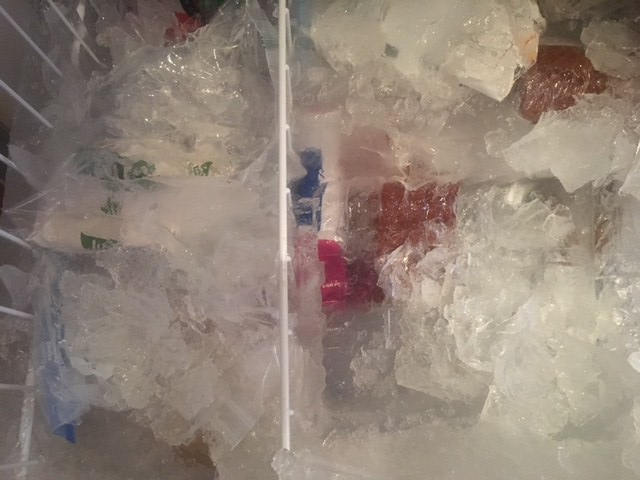
Defrosting

IMG_4722

Some wonderful people just visited us over the holidays. They came all the way from Mexico City to spend Christmas in NYC. The added bonus was that although I am close friends with Marifer, I didn’t know the other two very well. But by the time they left, I felt I had two new chosen family members that I will cherish for a lifetime. Marifer’s mother Arin and brother Toño (an amazing photographer and artist) had never visited our beautiful city before, and they arrived months after the untimely and unexpected death of Fer and Toño’s father. Little did they know that they would have a rude welcome in the form of ridiculously cold temperatures. But intrepid is their middle name and we spent 10 days exploring the many beautiful spaces and places in the five boroughs, including grocery shopping in New Jersey. To heck with the cold!

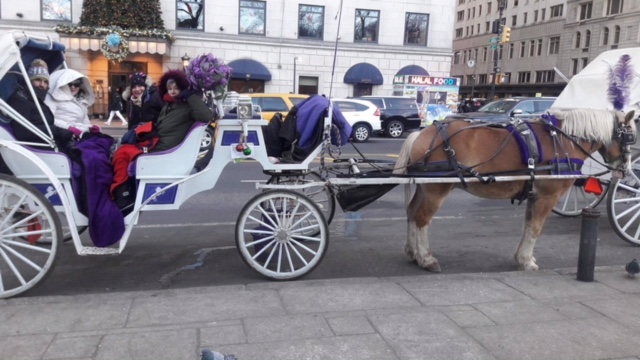
We shared our holiday ritual of attending a Christmas pageant at the Church of the Heavenly Rest on Christmas Eve, followed by a dinner with cousins at a cozy Italian Restaurant. We shopped, cooked, chatted around the kitchen table and shouldered through holiday crowds at Rockefeller Center, Herald Square, and Times Square. We tramped up and down subway steps, dove for coveted seats on the #6 train, waved at the Statue of Liberty from the ferry, ate dumpling noodle soup in Chinatown, warmed our hands and tummies with coffee stops along the way, trekked into museums, the Chrysler Building, Grand Central Station, The public library at 42nd street, the Empire State Building, Bemelman’s Bar, Trinity Church on Wall Street, and B&H Photo midtown. We took a carriage ride through Central Park, viewed the Christmas lights of Dyker Heights, and enjoyed Shake Shack burgers. They topped off the trip on their last day by treating us to scaling the Freedom Tower via the time lapsing elevator ride to the observatory.

IMG_4686

All in all, a pretty incredible week. There was one thing that we had to work around though – our freezer drawer froze shut in a solid block of ice due to a broken water hose connected to the ice maker. It took 12 full days to defrost, and we had to balance our adventures with checking in and emptying pans of runoff water to prevent flooding and mayhem. In what felt like the grip of an ice age, it was almost impossible to imagine that the freezer drawer would ever open again.

And then, before the drawer even opened, they left. They had the nerve to go back to the more moderate climes of Mexico.

A familiar rush of emotion rolled over me – I call it separation anxiety and there is a historical basis for it. I link the surging adrenaline and profound sadness to my early childhood experience of lengthy hospitalizations (2 months at birth and many more throughout my childhood). In those years, doctors did not allow parental presence overnight or for procedures, and my parents unwillingly left me alone for long periods of time. To this day, I weep and feel extraordinarily vunerable whenever I say goodbye to my parents and close friends. The separation anxiety sets in a few days before the parting, rearing its ugly head and tightening my chest against the inevitable pain.

But I have learned a lot over the years.

  • First: The pain always dissipates.  It feels crushing and paralyzing at  first. In those initial moments, it seems that it will never be okay again, that the emotions are permanently etched into every waking moment of my life. But this is not the truth, and the pain gets a bit less with each passing day, and in particularly good times with each passing hour.
  • Second: Even though I have a unique personal history, many other people suffer from this kind of agony. Talking to someone who really gets it normalizes the feeling, helps ameliorate the intensity, and lessens the shame and self flagellation that can accompany it.
  • Third: Your average person can feel down around any holiday, especially if they have suffered a loss.  Depression and/or anxiety can naturally follow even pleasant holiday experiences.
  • Fourth: Despite the intensity of my suffering, I would never choose to avoid it by giving up friendship, intimacy, and community. The gain is always worth what follows, and the sun always rises after. Like Florence and the Machine sing, “It’s always darkest before the dawn!
  • Fifth: For any clinician working with families, or anyone who knows someone suffering a horrible loss, we can reflect hope and faith in the return of joy even in the midst of pain. We can give permission for all emotions and refrain from enforcing an arbitary expiration date on the grieving process.

So, hail to all you hardy souls out there, who love in the face of loss and suffering, who choose to walk through life with an open heart. And for anyone who hesitates, but considers it, try taking a leap of faith in the ultimate defrosting process. The light and warmth will return, and the seasons of life will always sprinkle some joy amidst the sorrows.


Kindness as a De-stressor for the Holiday Season


Whether or not you are a Christian, the month of December descends upon many of us all with an overload of stress: pressing consumerism, forced merriness, and social and family expectations that can make us feel less than and despairing in so many ways. We can lose sight of the sense of hope that the season is meant to embody, the acceptance of darkness before the dawn, the preparing and waiting for the light, the igniting of that light within ourselves and others, all in the maelstrom of media messages.

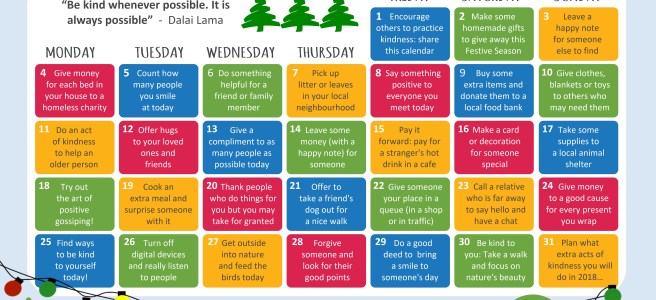
Well, today, I am thankful for this calendar that I found on social media, and I want to share it with all of you, I see it as a template. It might be a wonderful activity for you to do alone, with children, or with family members. If you make your own kindness calendar, you can add to it acts of kindness that hold specific meaning for you and are within your reach to accomplish. You can place a piece of oaktag or cardboard over it and cut out little doors and windows to open each day.

Just contemplating this activity makes me think of kindnesses I have witnessed in the recent and not so recent past.

A fellow teacher had a particularly bad day when a troubled student lost control, trashed the classroom and scratched the teacher’s face. My assistant teacher, Elizabeth, entered her colleague’s classroom during her lunch break to find her fellow teacher crying. Elizabeth quietly went about the room, righting chairs, picking up toys, and straightening up the chaos. Then she went to the nearby market and brought back some chocolate. These gestures spoke so much louder than words of consolation might have.

At a family gathering in the basement of a local Baptist church, where parents and children worked on arts and crafts, a family struggled with finding positive ways to respond to their preschooler. I watched as each parental admonition ratcheted up the child’s resistance and anger. For a few moments, my friend, Edna, joined the child in play, and gave him some gentle, corralling, positive feedback, helping him to self regulate and giving the parents a break.

On the city bus, a loud and hostile argument broke out between two passengers, fueled by both, but with one person definitely being more aggressive. As his voice grew louder and louder, an elderly lady finally stood up, and approached the yeller. “You need to stop,” she said. “It’s not okay to use that kind of language.” Once she spoke up, others did as well, and the situation calmed down.

A nurse responds to my tears of fear facing chemotherapy by putting down her medical implements, drawing her chair up to mine, taking my hands in hers and telling me that God will help me bear whatever I must face.

A yoga teacher guided our class in breathing with intention and awareness yesterday. He said that when we breathe for ourselves, we are breathing for all of our loved ones, and for all humanity. When we feel so overwhelmed that even breathing feels like a colossal task, it does help to know that it is enough, and that breathing can be more than a self sustaining act. Breathing can sustain others. So whether your acts of kindnesses are as simple as breathing, or a single word, a glance, a gesture, it is all within your grasp to ignite the light of loving kindness in yourself and others, one act and one day at a time.


Whose Woods These Are

AD36954E-D81B-4CEB-A4C4-934F848C3E73

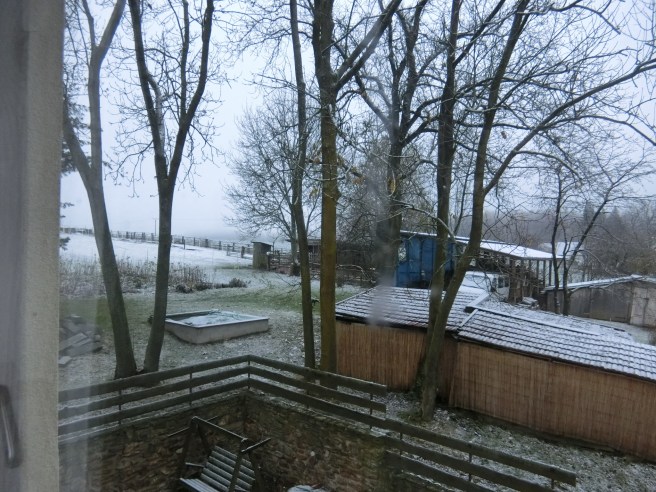
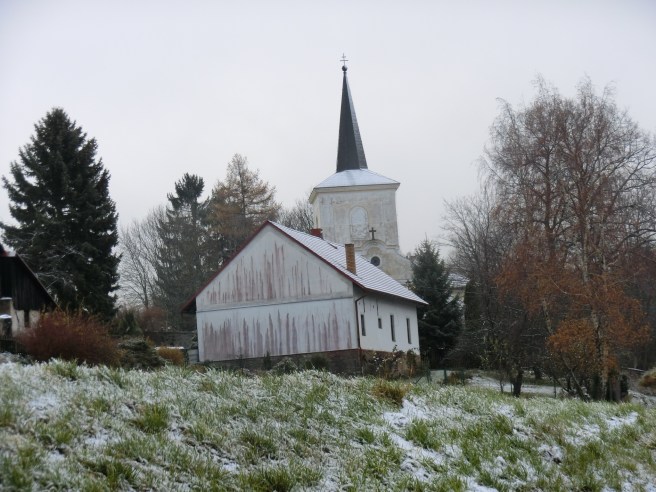
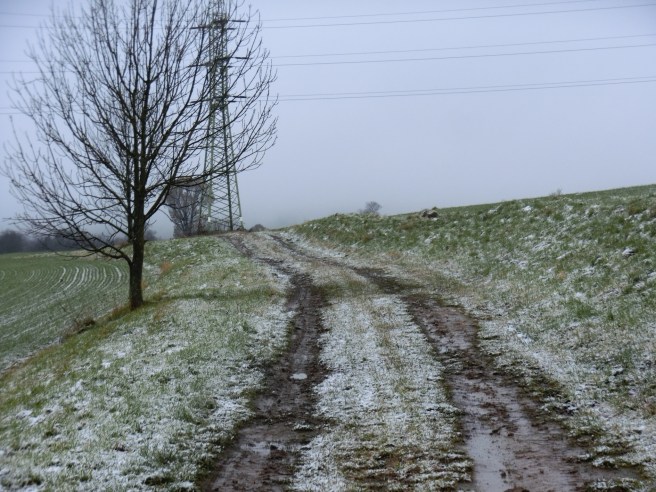
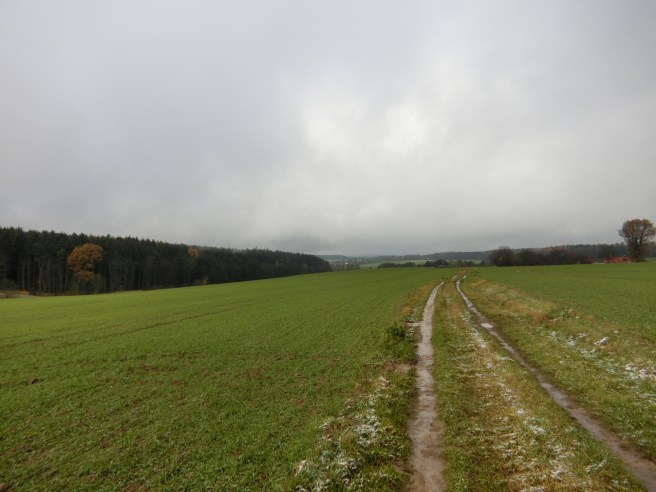
I awoke to my first snow of the season dusting the rooftops, fence posts and trees of Malejovice. The woods called to me and so I donned hiking boots and set out over the fields to the forest. The snow sifted quietly, the mud of the unpaved road sucked at my feet and the utter silence filled my heart.

FC3F2BB3-FA5A-4191-952B-7752F9A2ED19

7E8404E9-B8CD-4944-A3B5-4FDDD8E5E7AB.jpeg

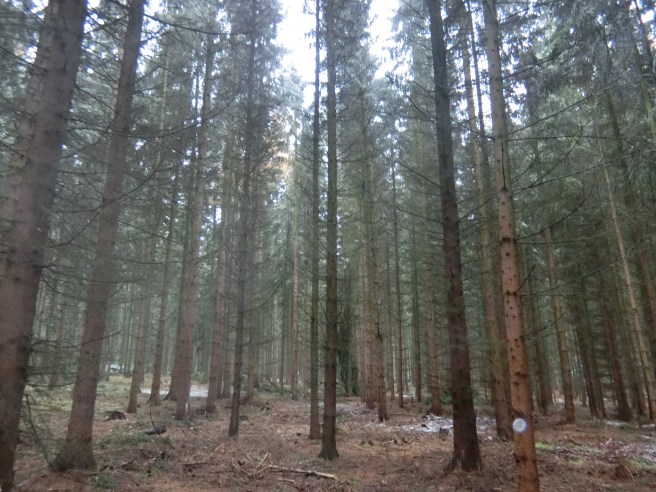
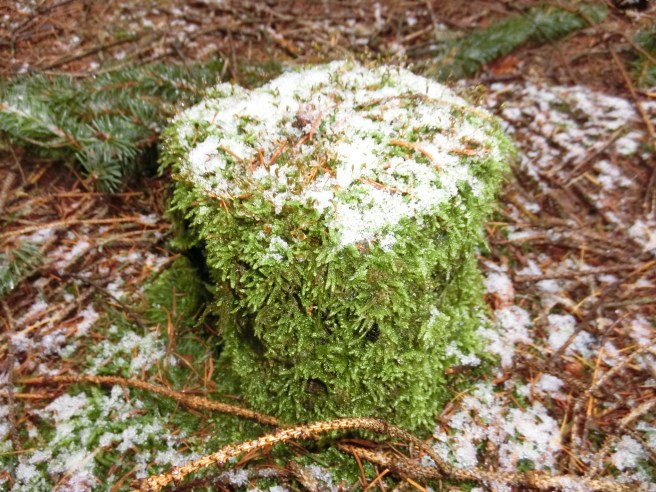
Arriving in the forest felt like entering the haunts of Hansel and Gretel.  I stepped past the trickling brook and into the peace of the sheltering pine trees. The pine needles cushioned my steps and the trilling of birds and patter of melting snow the only sounds. I passed a fallen tree, it’s root system an earthy sculpture.  Pine cones and balsam branches decorated the forest floor.  Mossy tree stumps stirred memories of nature walks with my dad when I was very young. He used to point them out to me and tell me that they were fairy castles.

DC3241B1-C669-4A32-962C-E6ACE2F5EE6B

2CA472CA-9393-4E30-B70B-1AF13100B61C

87D267D5-28DD-4379-929E-396B075FA3B0

I stood still and closed my eyes and listened. The first poem that I learned and memorized at age seven welled up from within.
“Whose Woods these are
I think I know.
His house is in the village though.
He will not mind me stopping here
To watch his woods fill up with snow.
My little horse must think it queer
To stop without a farmhouse near.
He gives his harness bells a shake
To ask if there is some mistake.
The only other sounds the sweep
Of easy wind and downy flake.
The woods are lovely dark and deep.
But I have promised to keep
And mikes to go before I sleep
And miles to go before I sleep.”
Robert Frost

Indeed I knew that friends and breakfast awaited. I reluctantly left the silence of the woods and headed back to the warmth of Malejovice over fields glistening in the melting snow.

55E5ABF0-2469-4555-89CF-4E2FD38556D0

Over the River And through the Woods to the Czech Republic I Go

579E8A0D-E8CC-4D5E-9481-2BD8BB1C6631

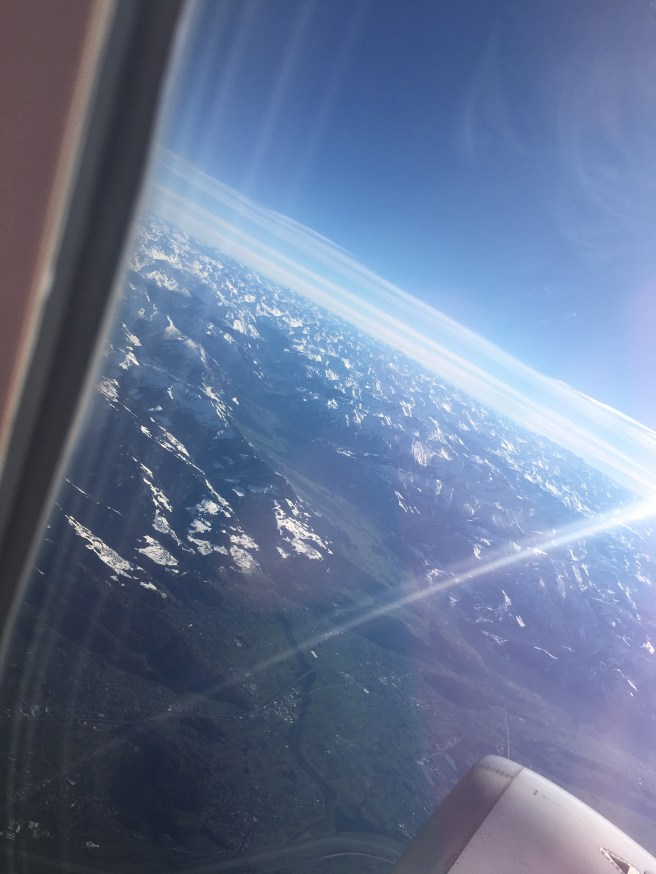
I greatly anticipated my fourth visit to collaborate with the Klicek Foundation in the Czech Republic. The cold weather brings to mind the song from my childhood of traveling via horse and sleigh through the woods to grandmother’s house. For me, it meant taking a new route flying to Prague via a stop over in Zurich, which provided me with my first glimpse ever of the majestic Swiss Alps. I had no idea they covered such an expanse.

CDF40A0D-488F-4108-8E01-D14B2DF58BFD

Our adventures began immediately, as Jiri and Marketa Kralovec included me in some important errands along the way from Prague to their home in the small village of Malejovice.  The Klicek Foundation has secured a plot of land close to the Motol Hospital, on which they will build a new hostel for parents of sick children visiting Prague for specialized medical care. Our assignment for the day was to measure the distance between several trees and a wall, so that an engineer could design the parking lot to meet the requirements of the environmental council.

FFC80548-4A0B-4039-8B44-303EBADBC8A5

And so, armed with measuring tape and a clipboard, we gathered the necessary measurements. We then wound through the city, making stops at two publishing companies and an electronics store, where we gained sustenance in a lovely cafe to tide us over before the hour long trip home to the village.

Molly the dog and the many cats greeted us, and there was hot homemade soup waiting on the stove and a crackling fire in the green ceramic fireplace. Having missed a night’s sleep on the plane, I was happy to fall into bed in the dark country night, and I slept deeply without remembering my dreams until rising early for a full day’s work the next morning.

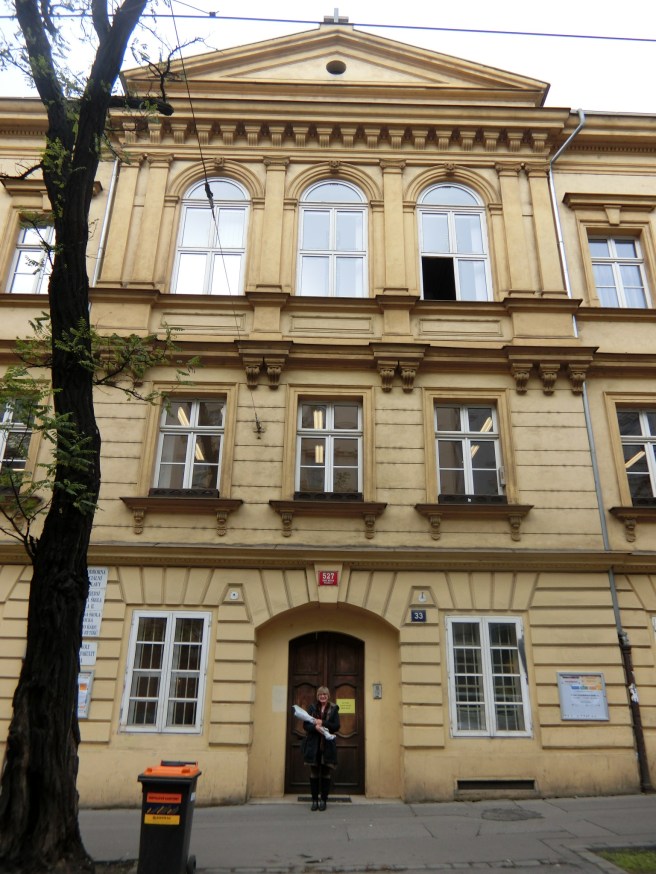
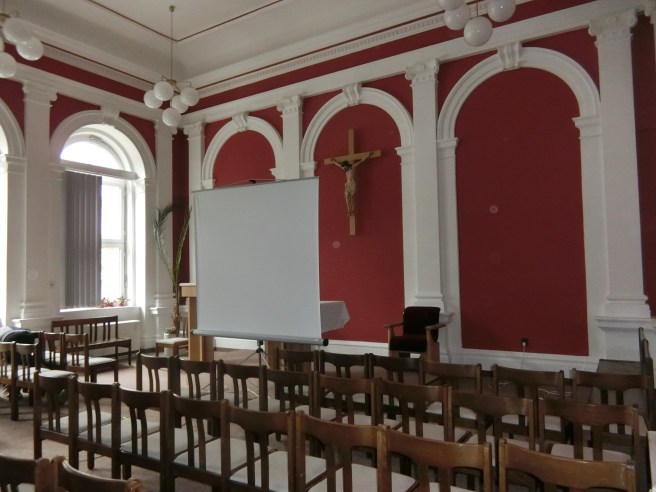
The first scheduled event was a gathering of three schools that are housed in one building in Prague. There are two secondary schools, one for nursing and one for social work, and a college of nursing. The students came together in a chapel at the school of nursing Jana Paula 11, and we presented a workshop on the value of play and the psychosocial needs of children in hospitals. The room was jam packed with young people, and the more interactive we got, the more engaged they became.

575A7739-1AE8-4F8E-9855-EF702C3AB20DC4F5A927-08A1-4171-93FA-0DE401A317DD1538D3CA-1211-4828-A325-536E85E5D194

Following this seminar, I accompanied Jiri and Marketa to a city council meeting where they advocated for permission to build upon the plot. There are many steps to take before they can announce the council’s approval and begin fundraising for their project. A well known actor, David Vavra,  who also happens to be an architect, is designing the building.

Following a challenging meeting, we headed over to the famous Old Town Square, to the medieval building that houses the Skautsky Institute. There we hosted a gathering of hospital play specialists that also included the medical director of a hospital on the northern border, a book publisher, and a British law student studying abroad at the Charles University. We discussed the challenges facing the profession, many of which involved issues of racism regarding the care of Roma families. The thorough marginalization of the Roma leads to trust issues between the families and the staff. The play specialists often feel overwhelmed by the intersectionality of the many societal factors that impact the lives of Roma families.  They feel helpless in the face of such poverty and hopelessness.

The law student, of Roma heritage, adopted by a British family, is researching the educational inequities and racism that Roma children face in Europe. He hopes to champion their cause as he progresses in his profession. He had connected with me after reading my blog about the children of Chanov — such a small world after all

BBFFA6B8-DD9C-46A8-A858-148E3C8569CD8523667D-1E56-4E59-926F-77B0F6237816

Spotlight: Child Life Intern in Community-Based Practice

IMG_6892

This week, I will spotlight a Canadian career changer as a guest blogger.  Kim Zink is  currently completing her child life internship in a community-based practice with mentor, Morgan Livingstone, a CCLS based out of Toronto, Ontario. Kim left her position in the school board to focus and refine her scope of practice to assisting children and families facing challenging life events.   She sensed the need for more psychosocial supports and greater visibility of child life services in the Ottawa region. So, with the support of her husband, two children, and extended family, she is chasing her dream!


This internship has been the perfect fit for me.  My mentor has been working in her own practice for many years, so she has a broad network of community resources and wealth of knowledge in many areas including global health, retinoblastoma, and traumatic brain injuries. She also wrote an incredible parent guide for families affected by breast cancer (including metastatic disease).


My internship has been full and rich. My first rotation took place at the Shoe4Africa Children’s Hospital and the Sally Test Pediatric Centre in Eldoret, Kenya. Morgan has been developing a self-sustained child life program there for many years. It was invaluable to see the robust program which now includes a number of child life specialists, teachers, playroom monitors and child life assistants. The team endearingly refer to Morgan as  ‘ our mwalimu,’ which means teacher in Swahili. Morgan served as an example of how to be patient-centered and culturally sensitive in global healthcare, no easy task.

IMG_6886

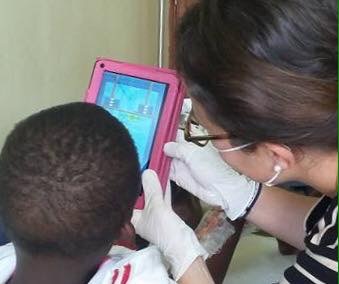
While we were there, I was invited to sit in on an oncology meeting. It was deeply moving and inspiring to hear the doctors speak so highly of the child life staff to the families. The doctors spoke of being a team and that families should refer to child life with any questions about their child’s developmental, social and emotional needs. The child life team has built an advanced practice and a great interdisciplinary approach. Unfortunately, in some areas, the pain medications and ideal supplies are not available, so I had the opportunity to offer distractions through games on a tablet and meteor storm toy to bring the child’s  attention away from the burned areas and bandage changes during procedures. It was a proud moment for me when the doctor told me that the best bandage change a particular boy had ever had and that I was welcome back anytime.

IMG_6890

The hospital sees over 300 children every day, and sadly many of the children are not brought to the hospital until their illness has progressed to the palliative state. So we turned our focus to legacy building and adding quality to end of life.  One simple and inexpensive legacy activity that worked well was making a salt dough handprint for each family.

IMG_6889

During my second rotation, I relocated to Toronto to intern in Morgan’s local private practice. She sees a number of teen patients, which was a demographic I knew I needed more experience with. I discovered it’s key to listen carefully to their interests and then go home and study up on these interests to gain common ground for future conversation and show teens that you listen and care about what they have to say. So now I  know  more about the ins and outs of  making slime and the youtube channel, Simply Nailogical, than I ever thought possible. This research paved the way to building rapport and trust with one teen in particular. Showing interest in her interests was a great connector.

tenor


My future work in child life has also be enhanced by working with my mentor on traumatic brain injury cases. I had the opportunity to see treatment plans, do home visits, sit in on team meetings, and understand the billing process through insurance providers. During a recent conference call, a teen’s mother said, “Things started to finally turn around when Morgan was added to the rehab team and started her sessions. She [the teen] found the tools and started to cope, she really improved with Morgan’s help.”

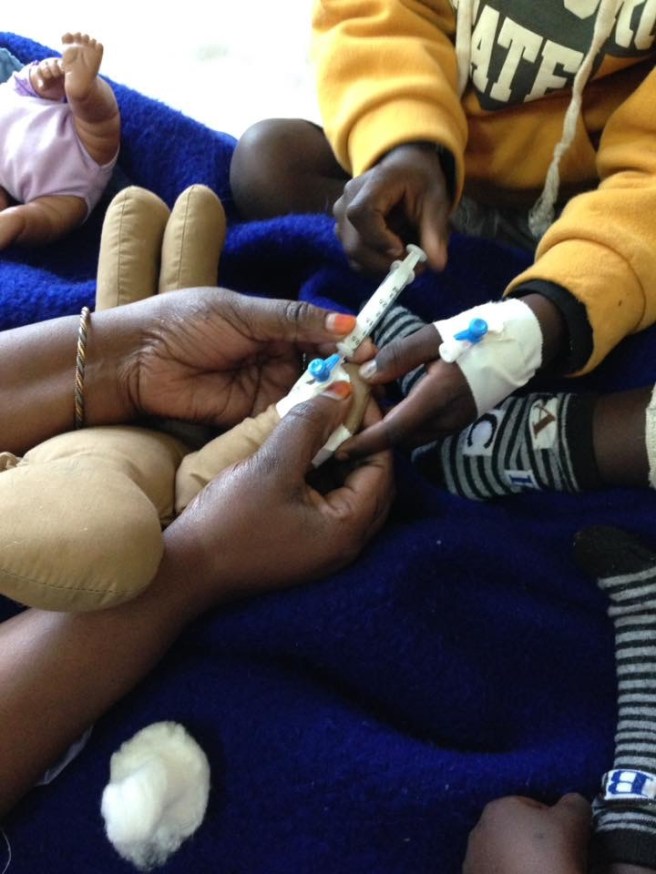
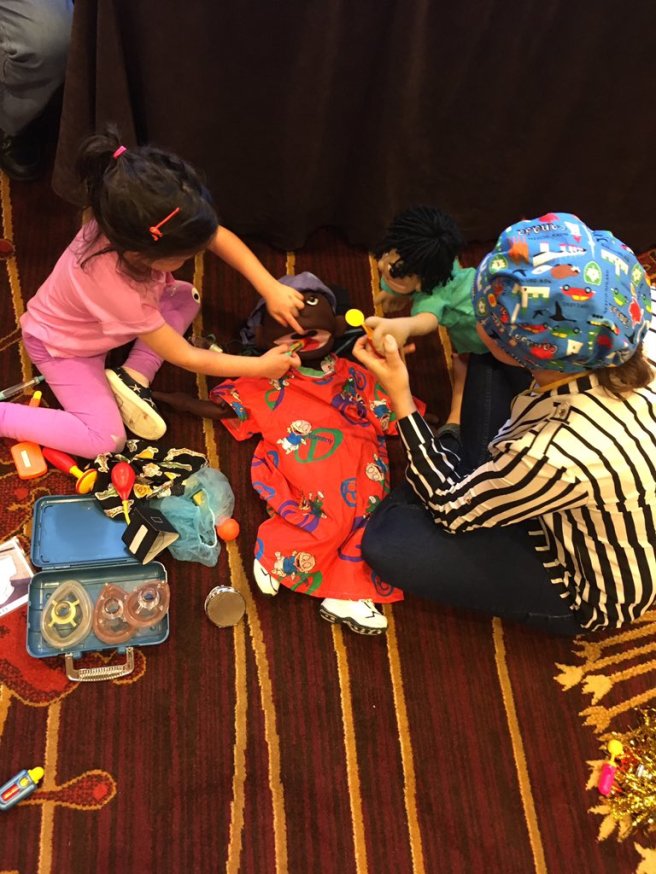
My latest adventure in my internship included a trip to Washington, DC for the One Retinoblastoma World Conference. I had the privilege of assisting Morgan with the child life programming, which included transformative literacy, medical play, and lots of activities with special eyes. It was great to see one child move from fear to familiarization with the sedation mask. Another child displayed new skills of mastery by using the medical doll to practice cleaning and adjusting an ocular prosthesis. Still another young child spoke openly about having a special eye, as he called it, for the first time. One of the teens overheard and said: “Me too, and I like to take mine out with a suction cup.” There is nothing like these spontaneous conversations to bring about that reassurance of ‘sameness” and soothe constant feelings of being different from everyone else.

IMG_6891

Above all, I will finish my internship with ample understanding of what it means to be an advocate for children. Morgan is a tireless champion for her patients, working to be sure they have everything, from a great relationship with their general physician to the correct supports from their school. She moves mountains to make sure the children and teens in her care have everything they need to be happy, healthy children. We need more child life specialists doing this work in the broader community.

IMG_6888

PS: Navigating independent and Canadian internship possibilities has its challenges. I highly recommend the Facebook group for ‘Child Life for Canadian Students’ and http://www.cacll.org/

Continue reading

Child Life in Private Practice: Supporting Parents and Children through Medical Encounters

IMG_3254

Studies show that children who are prepared for medical procedures recover faster with less emotional stress. Even routine procedures such as vaccinations can cause children undue stress and lead to treatment noncompliance and avoidance of medical care. Children require developmentally appropriate information about what they will see, feel, hear, taste and smell that will prepare them without overwhelming them. Through hands on demonstration and guided play, I can prepare you and your child for medical encounters, and coach you both in coping strategies. Calm, informed parents are the best support for their children when facing routine and unexpected medical visits and hospitalizations.
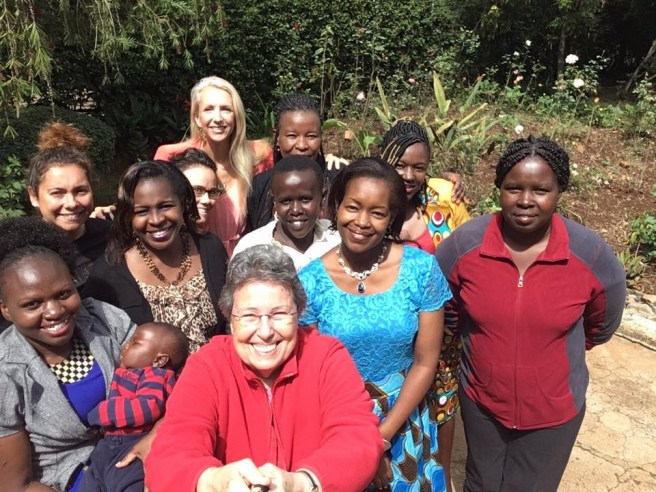
I am pleased to announce the expansion of my private practice as a Child Life Coach on the upper east side in Manhattan. Child life specialists are trained in child development, education, anatomy, health care systems, family systems, ethnocultural issues, advocacy, and bereavement. In and out of hospitals, we help children and families prepare for and adjust to medical encounters by providing education, medical play, support,  coaching and advocacy.

Here are several of the services I offer to parents & schools:

  • Coaching and Support for Parents in::
    • how to prepare their cildren for medical events, from routine wellness appointments to surgery or long term treatment.

    • how to support siblings when a child is ill

    • how to support children through a parent’s serious illness.
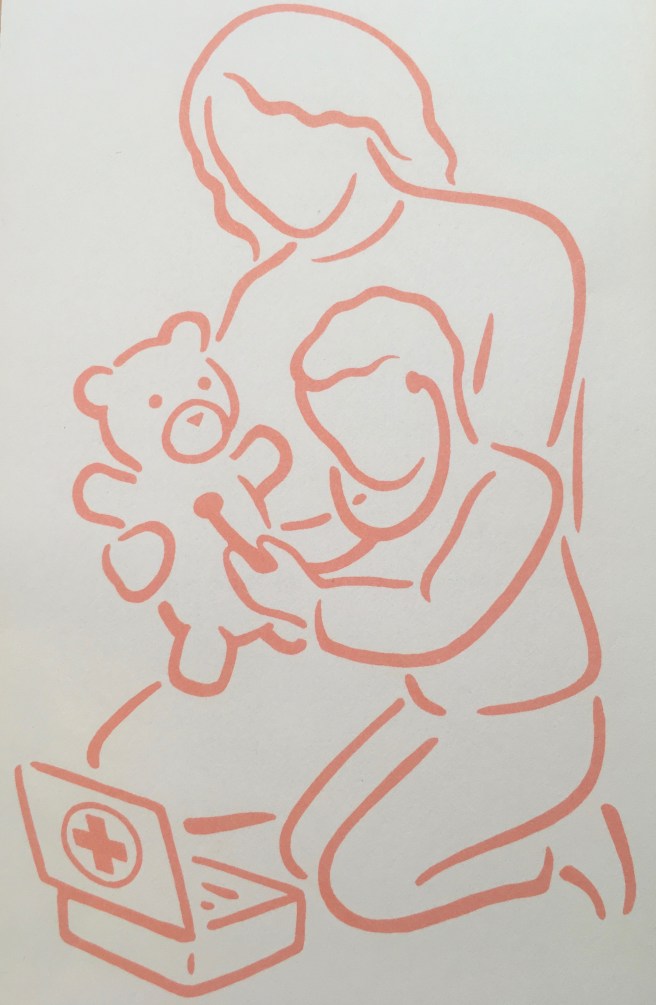
    • Child centered play skills to caregivers who wish to connect more with children in this digital age.

    • In home preparation for elective medical, diagnostic, and surgical procedures.

    • Workshops: Please see my listing on Cottage Class Parents As Heroes: Supporting Children Through Medical Encounters
  • Professional Development: Training and Support for Teachers
    • How to support your class (school) when a student faces illness and loss

    • Child-centered play techniques

    • Emotionally responsive teaching

    • State mandated child abuse detection and reporting

  • Video Conference Consultation and Support
    • If traveling is an issue, I am available through video chat to support parents at a distance

More information about my practice can be found on my website at  debvilas.com, and please take the time to like my FaceBook page at Pediaplay

I greatly appreciate any referrals to parents and caregivers who need this kind of support. I can be reached at debvilasconsult@gmail.com

IMG_3260

All the best,

Deb

Deborah Vilas, MS, CCLS, LMSW

Follow me on Twitter:  @DeborahVilas at Twitter

CLC Video with Deb Vilas Appearance: That’s Child Life!

Child Life & Art Therapy in Disaster Shelters: The Humanity Factor

DSCF2017

During these recent days of hurricanes, tornados, fires and violence, it is hard to know in which direction to turn – what to focus on – where to put our energies. Fred Rogers taught us all to “look for the helpers”, and I always find that calming and inspiring, so I have decided to republish a piece that I cowrote with Tara Lynch Horan after we coordinated services at a shelter in NYC following Hurricane Sandy in 2012. It gives a taste of what child life specialists and art therapists can do to ease the suffering of children in times of upheaval.

In addition, tapping into our ability to BE the helpers can also assist us in making sense of tragedy. In this vain, I attended a training this past weekend given by  Children’s Disaster Services  in coordination with the Child Life Disaster Relief organization. It was empowering, and I highly recommend the training to anyone who wishes to volunteer to provide safe play opportunities for children following disasters. You can do this locally or be deployed to other states in the USA. And if you can’t lend a hand, donations to organizations like these can still make a difference and impact quality of life for children.

Here is the article reprinted from Vilas, D. & Lynch Horan, T. (2013). Trees, Houses and Sidewalk Cities: Child Life and Creative Arts Interventions at a Post-Sandy Shelter.  New York Association for Play Therapy Newsletter, January 2013, 16 (2).

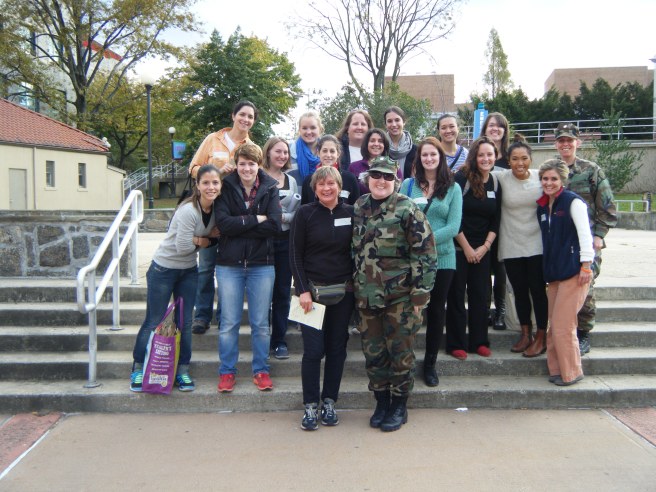
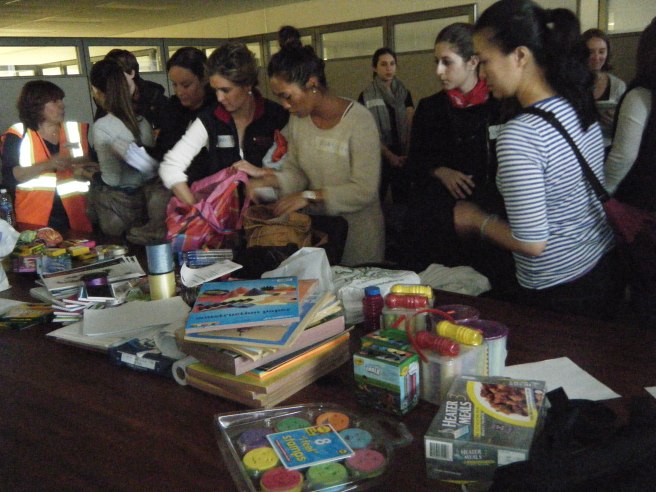
“A phone call from a Naval Commander stationed at a shelter in  NYC sparked the —-  Shelter Creative Arts Therapy / Child Life Initiative Mission. Commander Moira McGuire headed up a mental health team at the shelter serving many families. As a behavioral health nurse, she saw the need for therapeutic activities for the approximately 50 children facing displacement and uncertainty. In response to her outreach, a consortium of Creative Arts Therapists and Child Life Specialists quickly assembled. Our goal was to provide therapeutic creative arts opportunities to children and families post Hurricane Sandy. We hoped to facilitate psychosocial coping and adjustment to the stress and potential trauma of the Hurricane experience and to the stressors of the shelter environment. The first team of volunteers that responded within 24 hours numbered 14 and included 11 child life specialists who were colleagues, alumni or current students from the Bank Street College of Education, along with two art therapists and one dance and movement therapist.

We would like to share some of the techniques that we employed successfully during the two weeks that the shelter was in operation. Leyla Akca, an art therapist, brought paper shopping bags in on that first day. She led children in an activity that explored the “stuff “we carry with us daily, and the invisible stuff we carry on the inside no matter where we are. It was a powerful metaphor, and the children took to it eagerly, decorating their bags with many open-ended materials. Leyla had previously participated in disaster relief in Turkey following earthquakes there. She had a lot of wisdom to share with us all, and her activity gave us focus and purpose.

DSCF2016

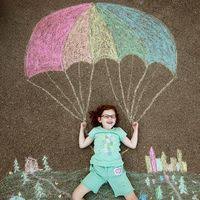
Maryanne Verzosa, a child life specialist from St. Lukes Roosevelt Hospital, supplied found objects from nature, which included sticks and twigs. As she gathered children in a circle sitting on the floor of the shelter, the children spontaneously created three-dimensional houses out of the materials. One child presented his stick house to his uncle, saying, “This is for you because you lost your house.” Commander McGuire had asked us to bring sidewalk chalk with us, as the children had access to an outdoor patio. Her instincts were perfect. A six year-old boy spent all afternoon creating a chalk city of roads, “for the children”, and buildings. We provided the child with miniature buildings and figures for his chalk city, and the play continued and drew other children into its circle.

images-2

One of the final activities took place during the last day when families were moving out of the shelter, many of them to hotels. Tara Lynch Horan, a child life specialist, worked with several art therapists on a community project of building a mural tree and decorating it with leaves representing what families leaned on during Sandy‟s aftermath. The art therapists worked with the children creating the tree, while Tara went from cot to cot, engaging parents in depicting their resiliency factors on precut leaves made from construction paper.

The collaboration of Child Life and Creative Arts Therapists brought about many therapeutic moments for these children and families. The activities employed a variety of directive and open-ended techniques. As we would expect, the children and parents created their own meaning and healing. All they needed was the time, space, materials and gentle encouragement from trained therapeutic agents. Humanity at its best.”

Why Aren’t We Preparing Kids for Disaster

Print

Beal_Photo_sm Guest Blogger Heather Beal is a military veteran with 23 years of crisis management and operational planning experience that she draws upon daily in her battle to raise two well-prepared, happy, curious, and intelligent children. As a trained emergency manager and parent, she saw the need to provide age-appropriate disaster preparedness information to young children in a way that empowered rather than frightened them. She is currently writing additional books to cover a greater spectrum of potential disasters children may face.
“Generally speaking, we do not prepare our children for disaster. We make them hold our hand in the parking lot and talk about the dangers of getting burned by the stove, but we stop short of this really big “disaster” word. When I think about it, I can come up with a few excuses we call reasons as to why we don’t give this topic the attention that we should.

First, like our children, (but usually without donning the superhero capes and masks), we believe that we are invincible. It (the disaster) can’t happen to ‘us,’ it only happens to ‘others.’ Folks – look at Hurricane Harvey, Superstorm Sandy, Hurricane Katrina, the Indian Ocean Tsunami, and any other number of disasters. With that many people affected – the ‘us’ and the ‘others’ are the same people. We need to look at disaster as a probability, not a possibility.

Second, we think talking about disaster will be too scary. I get it. No one wants to tell children anything bad could happen. We all know our children could get terribly hurt running if hit by a car in the parking lot, but we don’t get into explicit details about injury and death. We do however, talk to them about being safe, making good choices, and not doing things that could more likely result in their getting hurt.

We should approach talking about disaster in the same way we approach other learning topics or the consequences of actions or inaction. We don’t need to focus on the destruction a tornado can cause, how their lives could be uprooted, or what other things could dramatically change. We can however, talk about what children need to do to stay as safe as possible.

There are no guarantees in life for anything. We can’t guarantee that a car in the parking lot won’t do something stupid, just as we can’t guarantee the tornado will miss a child’s house, school, or childcare. But we, as parents, as childcare providers, as educators, as caregivers, as emergency managers, and as community members, can arm our children with the tools to succeed. We owe them that.

Sounds good – but how would I know, right? Fair question. A few years ago I tried to explain to my then 4-year old daughter that she and her brother might be woken up in the middle of the night to go into the basement if there was a tornado warning. Of course, it was already dark and stormy (thunder and lightning and everything). Needless to say, I did a very poor job, ultimately scaring her and beating myself up about my failed attempt to mitigate later fear through a botched explanation. Never again I vowed.

That was when I discovered that almost no one was having the conversation with young kids (toddler, preschool, or kindergarten) about disaster. At the same time, I realized that disaster was not going to sit by patiently and wait until my children could calmly and rationally discuss everything at a grown up level. I decided I could develop a way to talk with them in a way that didn’t scare them, but instead empowered them by teaching them what to do and giving them back a little control in a typically uncontrollable situation. They might not be able to stop the disaster, but they could do something to increase their safety within it.

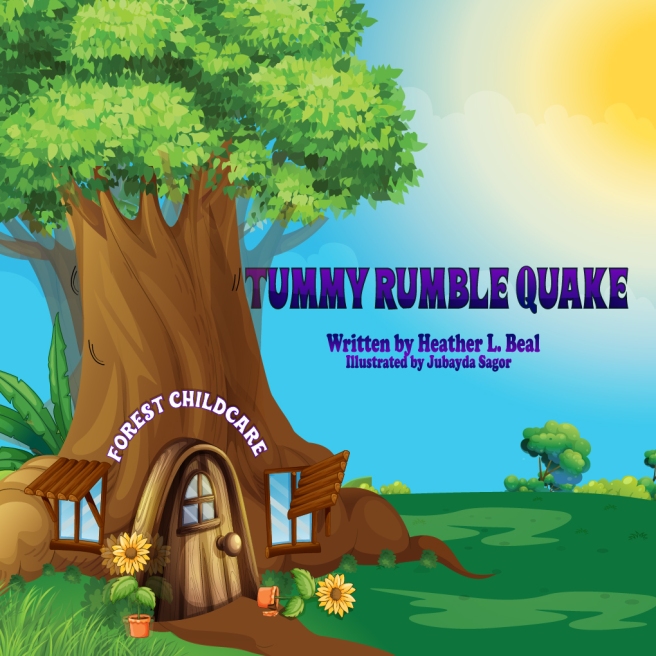
I started Train 4 Safety Press to develop picture books that would teach children what to do “if.” As I conducted research, I discovered a few books out there on the science of disaster, but almost none that taught young children what to do when the disaster was happening. Our first book Elephant Wind tackles what to do during a tornado. Tummy Rumble Quake teaches children about the Great ShakeOut™ and earthquake safety.

Children have a great capacity for building their own resilience. Teaching them how to protect themselves can have an exponential effect. Children could not only help themselves, they could help their classmates, their teachers, their family and their community. Isn’t anything that increases the odds we bring our children home after a disaster worth it? Can we afford not to talk about it?”

And here is a great resource: National Child Traumatic Stress Network

9780998791227


Child Life & Nursing: Practicing pediatric psychosocial support in Novy Jicin


IMG_2754

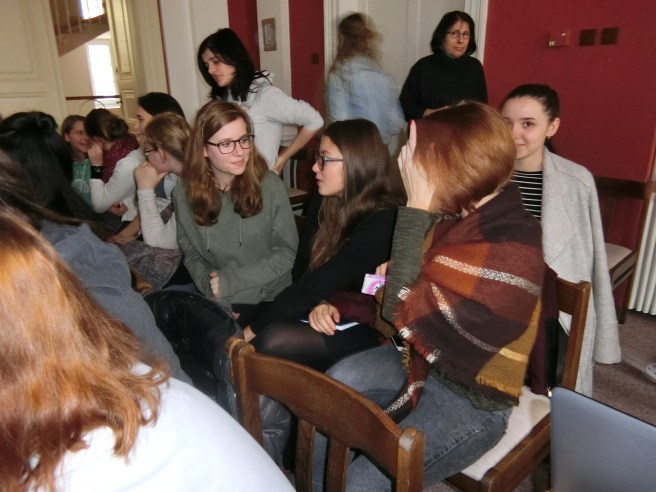
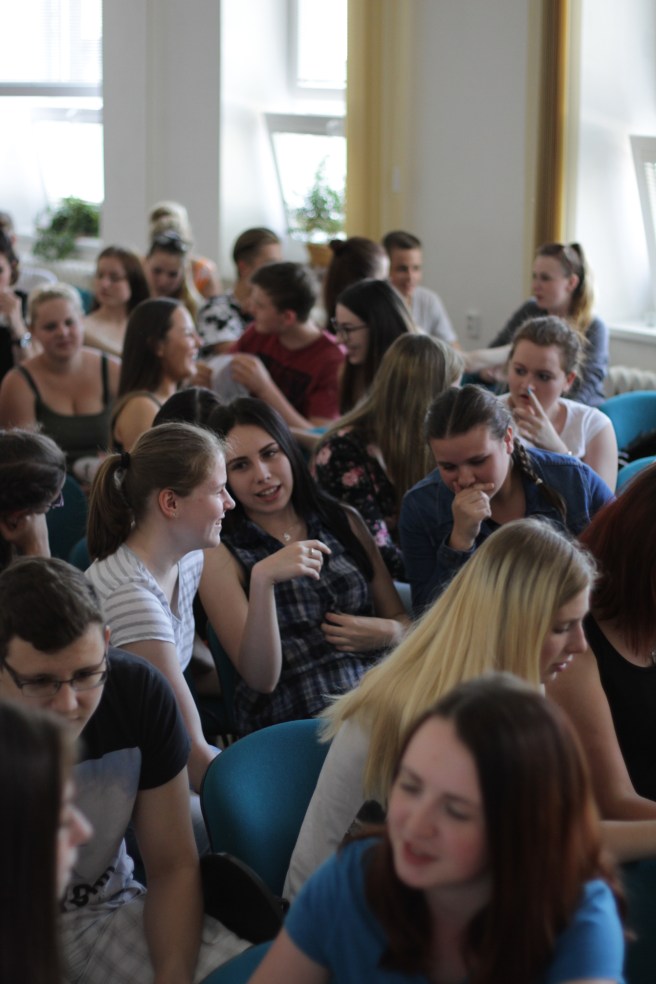
My recent visit to the Czech Republic, sponsored by the Klicek Foundation, included a return to the Mendelova Nursing School in Novy Jicin. This time, Maria Fernanda Busqueta Mendoza joined us from Mexico, and 50 students participated in our seminar, making it a great opportunity for global learning and a multicultural exchange of ideas. As you can see from the first photograph, the students were a lively bunch, and they eagerly participated in the highly interactive time we spent together. Jiri Kralovec served as our interpreter and his son, Jiri, touted  by Foto Video Magazine as this year’s hottest photographer on Instagram, documented our learning. Most of the photos below are his work.

Jiri and his wife, Marketa, started us off by sharing information about  the importance of play for hospitalized children and the history of their efforts to bring hospital play to the Czech Republic.  It has been a slow, uphill battle to change the hierarchal and disempowering bureaucracy of their medical system.  I followed with an introduction to the field of Child Life, the role of child life specialists in hospitals, and the possibilities for collaboration with nurses. I spoke about the role of play and community in the healing process, before moving on to some illustrative activities.

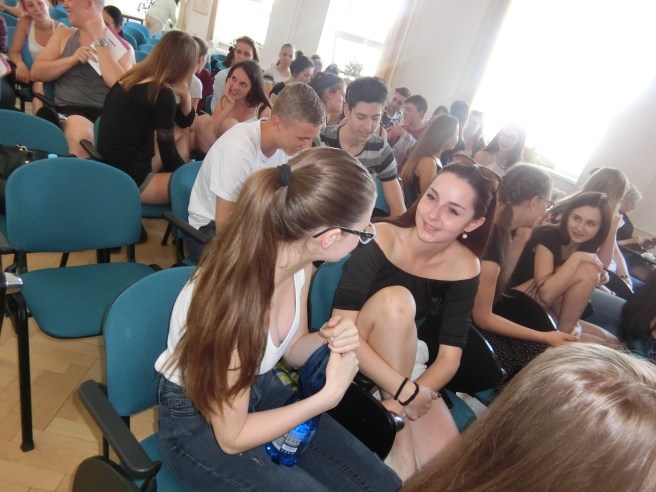
Sharing our own memories of play is one way to deepen our appreciation for the role of play in our lives and in the lives of children. I asked the class to think about their own childhood memories, using their five senses — what do they remember about their play environment? Did play occur inside or outdoors, or both? Were they playing alone, or with others? Did they play with toys, loose parts, or their imaginations? Are there sounds, smells, tastes or textures associated with their memories? What feelings are evoked in sharing them? The students paired up and took turns both sharing and listening to one another.

img_0161_34278312173_o                                                                                                                         (photo by Jiri Kralovec)

IMG_2757

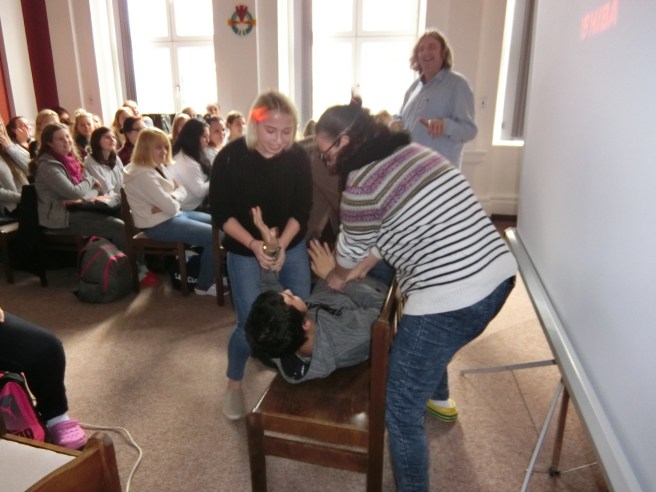
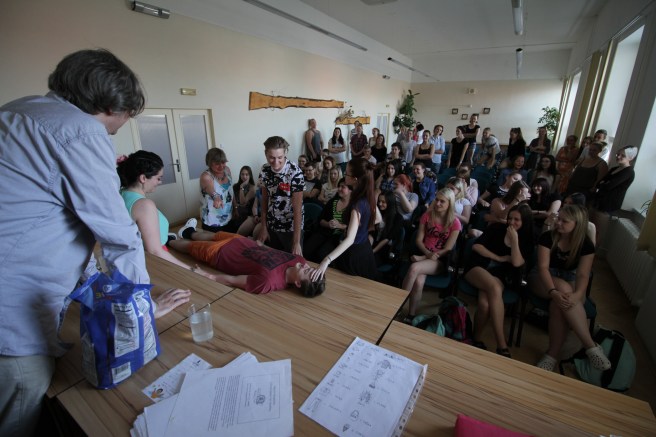
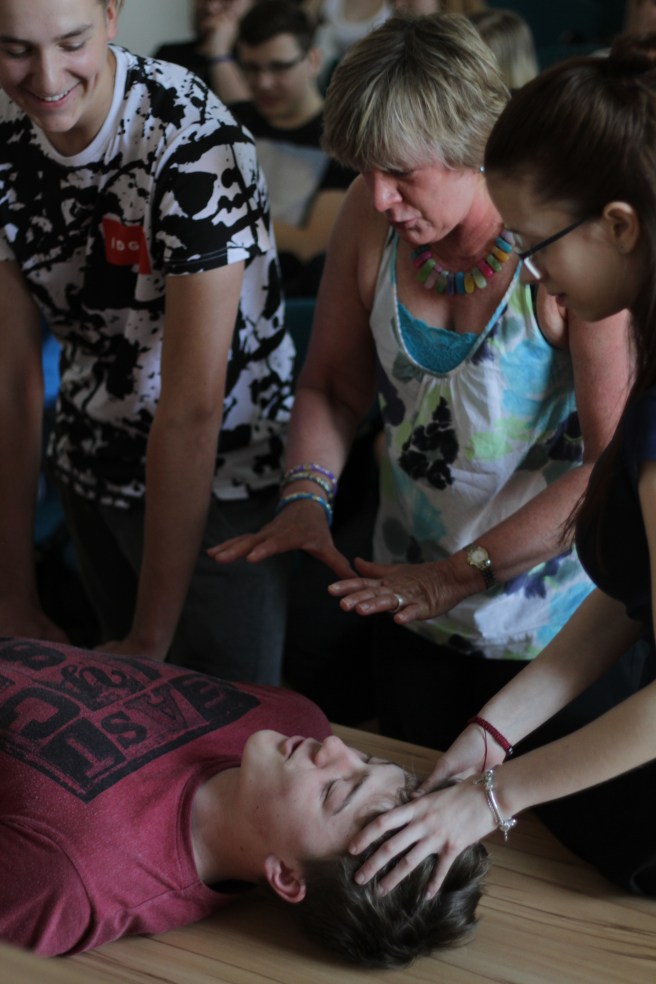
Armed wth a deeper awareness of the value of play, the students were now ready to learn a bit about how to make procedures less frightening for children. I have always wanted to use role play as a way to demonstrate all the things that can go wrong during a procedure, and how minor changes can make things easier for medical staff, children, and caregivers. I took this opportunity and asked for volunteers. One young man played the patient. We instructed him to lie down and asked three others to pin him down to the table, much like medical personnel are likely to do when a child receives an IV. We demonstrated how the very act of being forced into a prone position increases one’s sense of vulnerability and loss of control.

img_0068_34278362593_o                                                                                                                        (photo by Jiri Kralovec)

Add to that several adults talking at once, loudly over any protests you might make, telling you to stay still, not to cry, to be a big boy, not to look…. and you get the picture. Chaos, stress and shame accumulate to make for a disastrous experience for all.

img_0086_34958080191_o                                                                                                                      (photo by Jiri Kralovec)

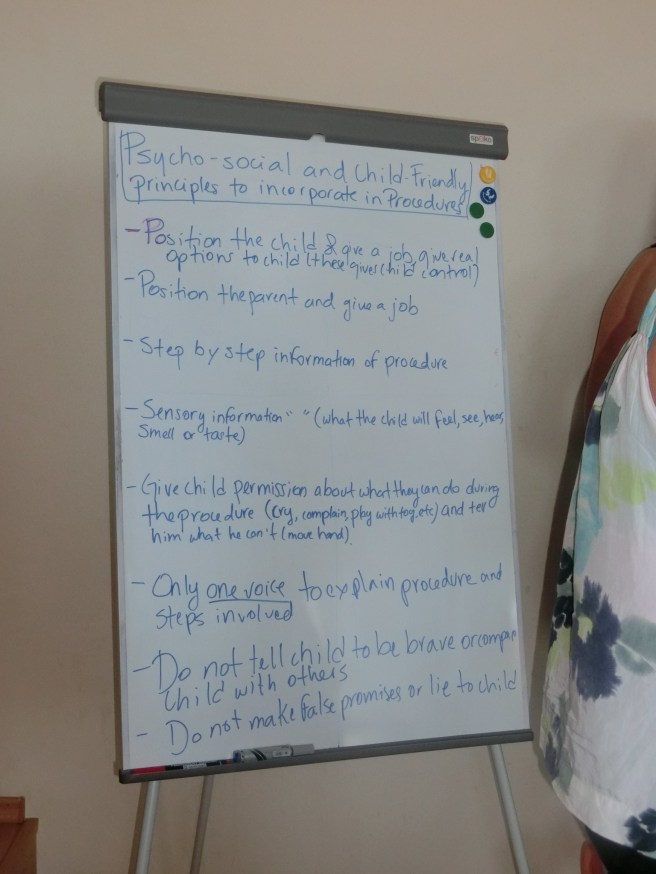
But there are some simple things that nurses can do, either alone or in partnership with play specialists, to change the outcomes of such procedures. It doesn’t mean that the child won’t cry, but it is more likely that the child won’t suffer emotional trauma, will return to baseline quicker, and the nurses can feel more successful and less like they are causing the child undue suffering.

IMG_2762

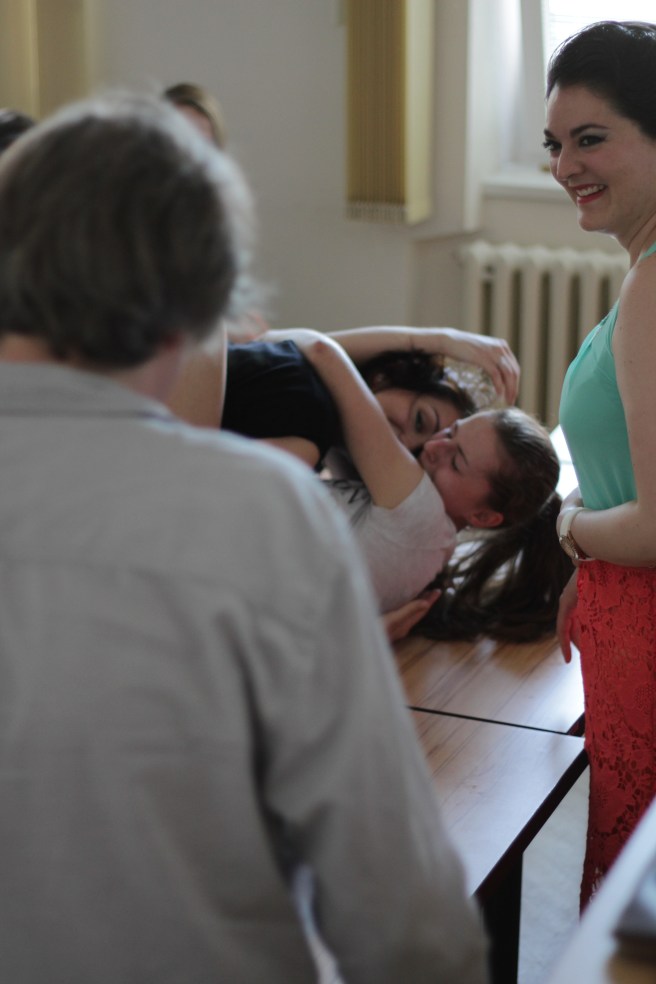
With these tips in mind, the students enacted a better case scenario, where the parent has a supportive role in positioning the child for comfort. The child is upright and held in a calming hug, rather than being restrained on the table. The child is given some choices, such as which hand to try first for the IV (the non dominant hand is preferable), and whether to watch the procedure or use a toy or book for distraction.

  • Electing one person to be the voice in the room,
  • encouraging the child to breathe deeply and slowly,
  • narrating each step of what the child will feel,
  • explaining how a tiny plastic catheter, not the IV needle, remains in the child’s hand to deliver medicine,
  • staying away from comparative or shaming statements,
  • and showing empathy

are all ways to provide psychosocial support, making the experience less traumatizing and painful for the child.  Accumulated painful and traumatic medical experiences can make children phobic and avoidant of medical care.

img_0106_34278333913_o                                                                                                                    (photo by Jiri Kralovec)


img_0112_34924601682_o                                                                                                                        (photo by Jiri Kralovec)

We also spoke about non-pharmacological pain prevention and reduction. The interactive component of our lecture surely made our important information memorable. The action and laughter surely made more of an impression than a power point! We all reflected together about  how even adult patients can benefit from choices, information and empathy.

Back to the topic of play, we explored ways for the nurses to instill playful interactions into their communication with pediatric patients. Rapport building and distraction through the use of hand games is one way that they can put a child at ease. I demonstrated several hand games, and asked them to show me some of theirs as well.

img_0194_34924549252_o                                                                                                                        (photo by Jiri Kralovec)

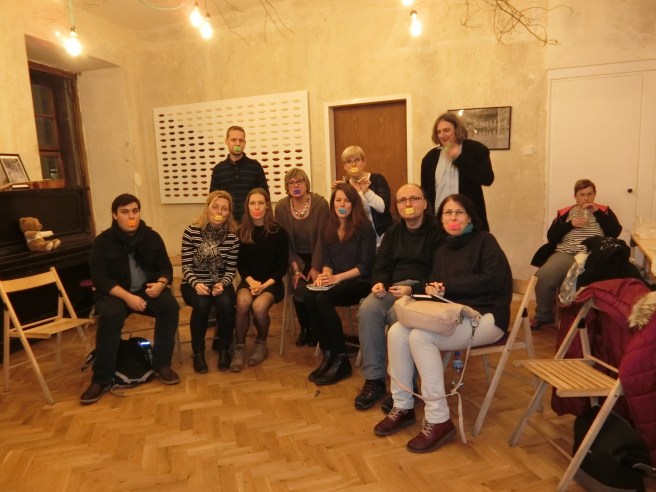
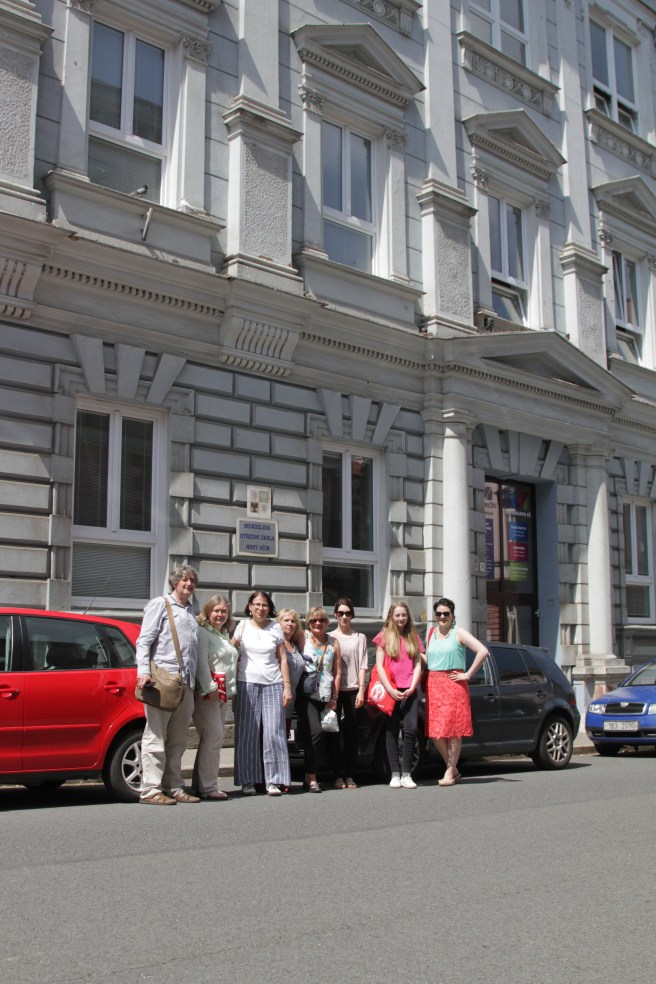
Our time with these wonderful students ended all too soon. We posed outside of the school for a photo with some of the Klicek Foundation hospital play specialists before heading to the historic square down the street. Around every corner of this country is a beautiful scene, no matter where you are!

img_0208_34701662250_o                                                                                                                       (photo by Jiri Kralovec)


img_0009_34245201294_o                                                                                                                         (photo by Jiri Kralovec)