Doll Ambassadors: Providing Comfort to Kids with Cancer

20160716-151336-bee-hdr_1_orig

Guest Blogger: Rosanna Bernstein – Founder of Bee Brave Buddies

When I had cancer and was going through chemotherapy, a white, curly haired stuffed poodle that one of my daughters gave me sat right on the pillow next to me at all times. I named her Gigi. Just looking at the quirky turned-up smile on this puppy`s face always gave me a feeling of comfort and made me smile.

I was diagnosed with Chronic Myelogenous Leukemia in 1998. I was in treatment for 3 years and was becoming sicker. A trial in its second phase for a new chemotherapy medication, specific for CML, now called Gleevec, was in its early stages at that time.  I was eventually accepted into this trial, and within several months I went into a remission. This chemotherapy was one of the first magic bullets, a medication targeted to treat the specific genetic mutation.  Although I still take a chemotherapy pill each evening, I have been so fortunate to be healthy and in remission to this day.

I was so grateful, that I decided I wanted to help others.

Through the years I have had several businesses: Yummy Gram, a gourmet basket company, Rosanna Hope Designs, a millinery and hand bag design company and Baby Bonbons, an online shop with vintage lace children`s clothing designs and accessories. During this time, I designed many original designs for baby blankets and matching pillows for the Baby Bonbons shop. I have always had a passion for art, beautiful laces and fabrics.

But, puppy Gigi always lurked in the back of my mind. I could still see that funny little face, and I got a warm feeling each time I thought about Gigi. I remember the soothing, inner peace I felt snuggling her. This feeling gave me the idea to combine my love of art and design with my desire to give back.

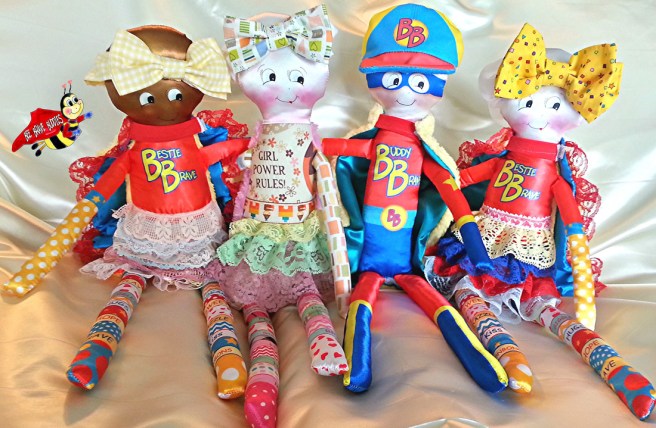
I combined my love for fabric and my whimsical children’s digital art drawings to design my original three Bee Brave Buddies dolls: Buddy Brave, a superhero doll for boys with magical powers, his twin sister, Bestie Brave, a superhero doll for girls, who is a true new best friend, and Catie Cuddles, a doll dressed in fancy lace who loves to cuddle and snuggle. I hope to use this same art process to design a line of Bee Brave Buddies Adventure books and other gifts for children.

My dolls were designed to become a new best friend to children who are in treatment for cancer or other childhood illnesses and who need a big snuggle and some magical secret powers to be brave. The three dolls are designed with beautiful bald heads. The girl dolls have special words printed on their long leggings: giggle, snuggle, love, dream, brave, cuddle, smile, laugh, hugs, play, dream, hope.

The dolls are also educational. An adult with cancer can use the dolls to explain hair loss and other treatments that children will face. Each doll comes with a matching hat or headband and the superheroes come with silky minky capes. The dolls have very soft plush pillow bodies to hug and love. Each doll comes in Caucasian or African American descent. Our dolls are printed and made in the USA. They are completely washable.

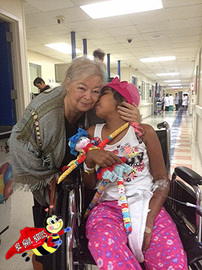
I have personally been giving my dolls to children with cancer since February of 2015. Bee Brave Buddies have been shipped to children across the USA and to several countries. We are excited to announce that we have now received our determination letter from the IRS and we are a 501(c)3 nonprofit. This will allow us to make and deliver dolls to children battling cancer across the country and beyond with your help and support.


What can you do to help? 

We are looking for doll ambassadors, an integral part of our team. They are like the generals in our army, helping us make big decisions: They locate hospitals in their area, make child life connections for delivery of dolls, are available for the doll presentations, help secure local press and manage social media regarding their particular hospital. Doll ambassadors also reach out to help us find local contacts to sponsor these boxes of dolls delivered to their local hospitals, either on a one-time basis gift or an ongoing monthly program.

Our new initiative, The Bee Brave Buddies of the Month Club allows a sponsor to send a box of ten dolls per month to a designated hospital. Our Christmas Holiday program encourages families or businesses to celebrate a holiday they will fondly remember, one in which they gave back to others. Our creative doll ambassadors put together teams from family, friends, businesses, corporations, church groups, school groups or sports teams that would like to rally for our cause. These are just a few examples of groups that can help us touch the lives of these children in a very profound way. Our dolls give the children comfort, courage and confidence. These seriously ill children only want to be normal and play! When the child smiles, the caregivers smile, and all of the medical staff smile. It is infectious! Our dolls provide these smiles when the children are hugging and loving them, much like my Gigi puppy provided to me.
9344858
Our mission is to put a Bee Brave Buddy doll in the arms of all children around the world in treatment or recuperation from cancer who need a hug to help these children feel brave and to provide emotional support to children and young adults with cancer and other serious illnesses. Any child battling cancer can receive a free Bee Brave Buddies doll to love.

If you would like to make a difference in the lives of these sweet children, drop by our web site www.beebravebuddies.com to learn more about our nonprofit and please join us today.

Warmly,

Rosanna Hope Bernstein
bbbbanner-960x270-for-weebly_2_orig

Driving the Camel: Installment #15

img_1856

Heading South

We arrived at the beach house, where Marianne and her family had returned for the weekend. We gathered around the kitchen table telling stories of our adventures, but I already felt removed from the day’s events.  My thoughts turned inward as I anticipated saying goodbye to Garth. I knew that when the iced tea was gone, that Garth would be driving back to Clair and his farm, and that I may never see him again.

When the time came, I dragged my feet as I walked him out to his car.

“You know I wouldn’t have taken just anyone caving,” Garth said.

“Yeah, you said you hadn’t done it in a long time, What made you say yes to me?”

“It was just something about your voice,” he answered. “I liked your voice and your spirit.”

He surprised me with a hug so hard that I thought I might break in two.

As he drove off down the beach road, I thought about the many types of love we experience, if we are lucky, throughout our lives. The depth of feelings generated by  the unexpected connection forged with Garth was not unlike some of the strong emotional currents I have often felt with children passing through my care in hospitals. I’ve often wondered if it’s just me. Do I fall in love a thousand times too easily? Or do others feel the pangs and elation that I do when my spirit resonates with someone else’s, stranger or friend, child or adult?

One thing for sure, it was not easy to part with such a wonderful new friend and to leave the beauty and peace of Lang’s Beach.  But leave I did. Matt and his family awaited me in Christchurch and Naomi waited in Kaikoura. Naomi had been another guide on our kayaking trip. She’d since visited us in New York, and now it was time to check out her stomping grounds on the South Island. Then, hard to imagine now, I would be heading home.

The plot twist for this leg of my  journey was all my bad. I managed to miss my plane by misreading my itinerary. As Marianne and her husband drove me to the airport, I figured out the mistake. My heart sped up as I realized that there was no way in hell I was going to make my plane. Marianne pulled up across the street from the terminal and popped the trunk. Our goodbye was hasty as I grabbed my suitcase and futilely ran across the street and through the glass doors, trying to breathe deeply and slowly to calm myself down.

The ticket agent smiled at me as I struggled with my suitcases and my passport.

“Don’t worry, you can just hop on the next plane in an hour.”

“How much will that cost?” I asked warily.

“Nothing. This isn’t a problem,” she answered.

And much to my amazement and relief,  it wasn’t. Catching the next departure, I settled into a window seat on the small commuter plane. It was a short flight through bright afternoon skies,  the South Island rising up to greet me as the plane touched down in Christchurch. A shuttle bus gave me a glimpse of the city as it made multiple stops on the way to  the hotel, a sleek, modern box not too far from the airport. I splurged on room service for dinner and then sank gratefully into the clean sheets, setting my phone alarm for early the next morning.  

The ringtone of Natalie Merchant’s Wonder wafted into my consciousness at 7am. I was so excited to see Matt, and I also wanted to make sure that I had time to eat breakfast and write in my journal. A few hours later, as I waited for  in the lobby, I wondered what it would be like to hang out with him and Helen. Would we click the way we had out on the Strait? Would it be awkward? How much time could they spend with me and how much time would I be alone? I assumed they were busy people between work and having two kids. That relentless anxiety of being on my own crept in, smudging over the recent accomplishments of  my alone time at Lang’s Beach.

But all worries evaporated when I saw Matt. I hugged him unabashedly and our friendship commenced right where it had left off six years ago.

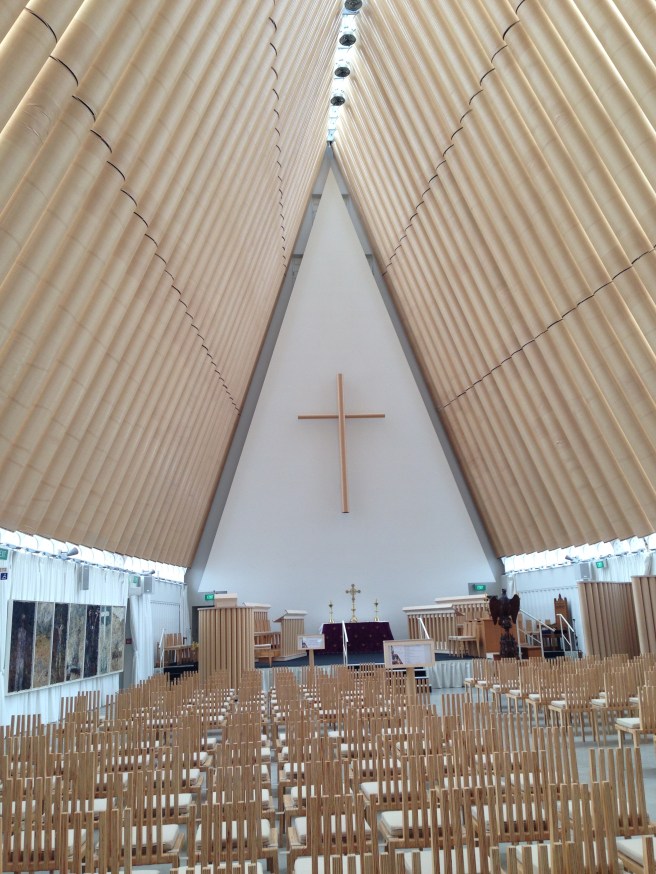
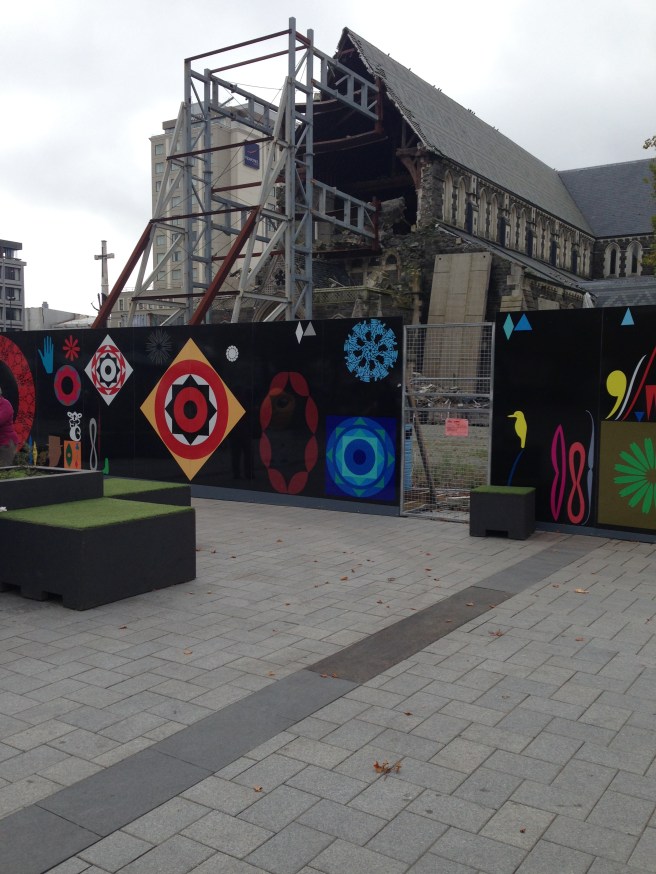
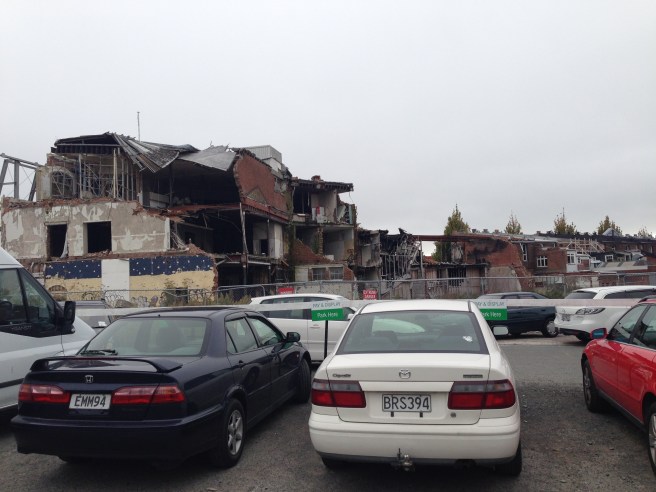
Matt’s mother-in-law and his twin eleven month-old daughters awaited us in the car. We toured Christchurch, stopping at the makeshift temporary church that the diocese erected when the 2011 earthquake rendered the original Christ Church uninhabitable. 185 People died in the second deadliest earthquake in the country’s history, and the city had far from recovered. The devastation of the city was heartbreaking. Two years following the earthquake of 2011 and there were still many empty lots filled with rubble and ruined buildings gaping in despair. Matt said it will take twenty years to rebuild.

img_1778

img_1781

img_1774

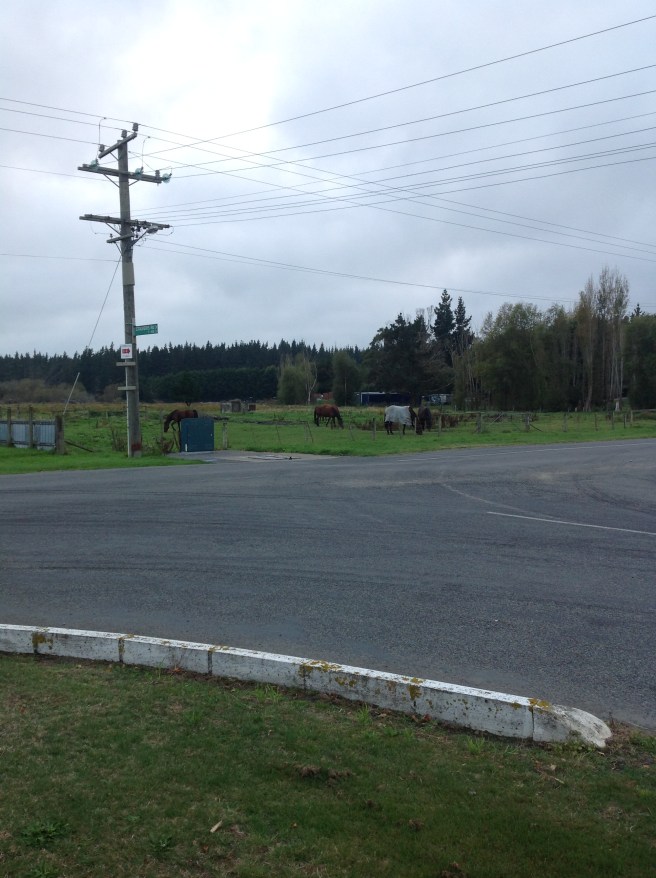
We ate lunch in Lyttelton before we followed the winding road to a sweet, small town on the coast. The neighbor’s cottage abutted  Matt and Helen’s property on a quiet country road flanked by horse meadows and a dune- fringed beach. The cottage overlooked an enchanting garden, fully equipped with a tub and a fire pit underneath for outdoor bathing.

img_0080

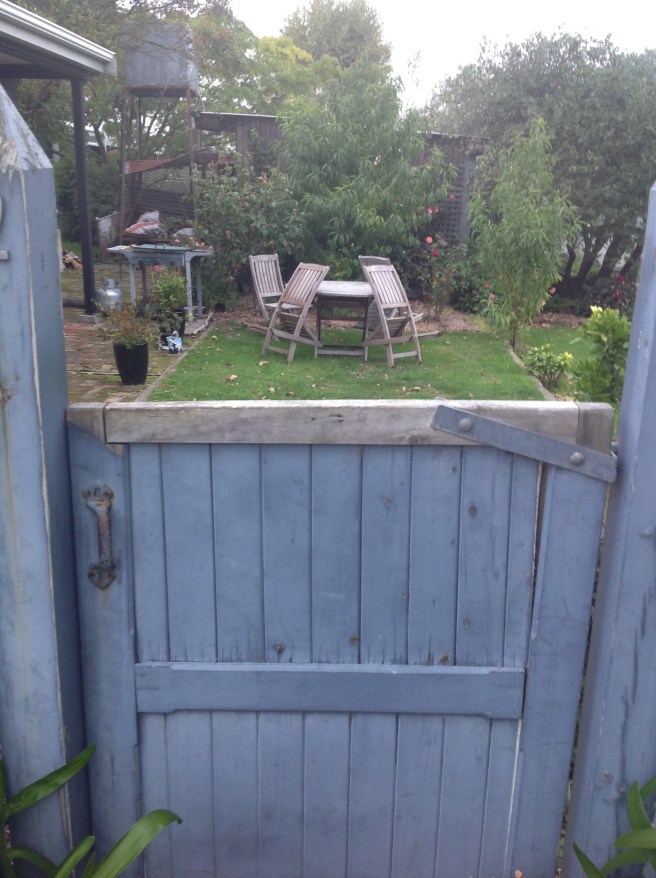
Worries about being lonely were unfounded and quickly soothed. The cottage provided the perfect balance of privacy and proximity to Matt and Helen’s cozy home.  A routine quickly formed – tea and cereal in the garden, accompanied by birdsong, and the occasional squawk from the neighboring rooster. I meditated and journaled before skyping in with Mark. Then, I would close up the cabin and trot around the corner to Matt and Helen’s house, hitching open the quaint latched gate to their yard, and ruffling their dog’s ears as I passed her on the porch.  

img_0082

Over the week, I enjoyed witnessing the rhythm of their family life. They had a brilliant schedule for the twins, with Matt taking on the lion’s share of parenting while Helen worked as an administrator at the airport. The presence of Helen’s mom made it possible for Matt to spirit me away for some outdoors sightseeing, which was such an unexpected treat for me.. Matt had some adventures lined up  for us and we discussed the possibilities over dinner that first night. We settled on plans for more cave exploration and a day trip to Arthur’s Pass in the South Andes Mountains.

Our drive out to the mountains gave us plenty of time to catch up on each other’s lives and get to know one another better. Much like this New Zealand adventure, my camping trip on the Johnstone Strait in British Columbia with Matt had been an amalgamation of firsts for me: first attempt at ocean kayaking, first camping trip, first vacation with a friend without Mark along. Like a younger version of Garth, Matt was a skilled guide accustomed to amateurs. He knew how to meet me at my skill level and scaffold me to higher performance and more endurance. His patience, kindness, and sense of humor boosted me out of my comfort zone, and I was able to withstand eight-hour paddles in rough water. In a few short days, I went from tentative paddling in a double kayak to coasting solo on the wake of a giant cruise ship, yelling “Yeehah!”


During my cancer treatment, I’d recalled my initial fears of that adventure and how I had faced them with Matt’s support. The memory of how far I had come, the confidence in my body, and the strength that I developed on that kayaking trip, all became a reminder for me as I faced scary firsts in treatment. I told myself repeatedly that I could face the unknown and do scary things with the right support. Meeting up with Matt on the other side of the world now, after surviving cancer, felt like coming  full circle. Our conversations on the mountain drive gave me the opportunity to thank him for all he’d done for me back on the Strait and explain how it reverberated throughout my medical experience.

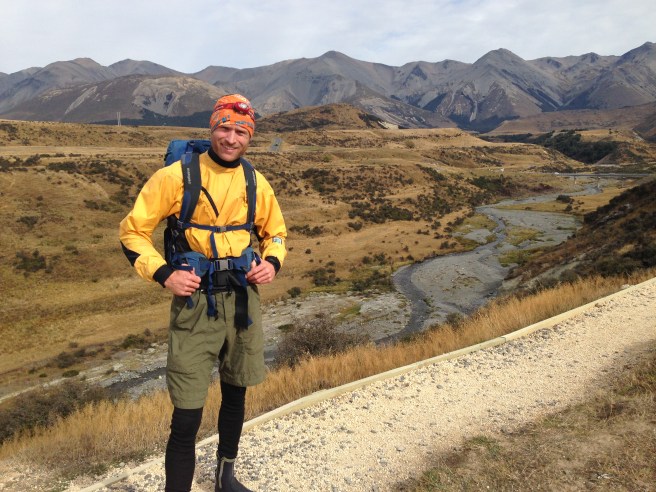
A panoramic view of mountains, foothills, and clouds surrounded us, as we pulled into the parking lot adjacent to the cave trailhead.  I grabbed my gear and headed to the public bathroom to change into appropriate caving apparel. Matt had supplied headlamps, neoprene gloves and booties, fleece leggings, long underwear and “jumpers,” waterproof outer gear, and woolen hats. As I pulled on my layers, I thought about the trust I placed in him to keep me safe, first on the Strait, and now entering into an underground cavern. I had trusted the doctors at the hospital as well, as I followed the dark pathway of their many-layered regimens for ridding my body of cancer. Garth came to mind too, and how he’d met my trust with so much appreciation, respect and humor.  A synergy between vulnerability, trust and risk taking unfolded before me in all of these experiences. The Universe was asking me to do my part, while supplying all the necessary support in order to make all things possible. I strapped on my headlamp and headed out to meet my next adventure.

img_1806

Dear newcomers to my blog,

Driving the Camel is a memoir that I am publishing as a serial on this blog. It follows my adventures as a child life specialist during a transformative year of my life when I battled breast cancer and travelled the world. It includes reflections on my past work as a child life specialist, my personal life and stories of the wonderful people I met on my travels. You can find previous chapters in the side menu categories (or scroll down on mobile devices) under “Driving the Camel: Adventures of a Child Life Specialist.

Driving the Camel: Installment #13 Abseil


IMG_1755

Dear newcomers to my blog,

Driving the Camel is a memoir that I am publishing as a serial on this blog. It follows my adventures as a child life specialist during a transformative year of my life when I battled breast cancer and travelled the world. It includes reflections on my past work as a child life specialist, my personal life and stories of the wonderful people I met on my travels. You can find previous chapters in the side menu categories (or scroll down on mobile devices) under “Driving the Camel: Adventures of a Child Life Specialist.

Abseil

I lay in bed that night, feeling unready to let this day be the last chapter of the Deb and Garth adventures. I thought about love, and how strange it was to feel my heart so full for people I’d just met that day. I was hard to put understand the connection and affection I felt for Garth. It was like I’d known him for years, or maybe even in another life.

I phoned him the next morning.

“I know I am not ready to abseil into a cave and swim out,” I said. “But would you be willing to give me a ropes lesson, so that I can try some abseiling in the light of day?”

Garth readily agreed and we set our sights on Saturday. That would be my last full day on the Island before I would head to the South Island for the last leg of my journey. That morning he picked me up and we drove back to the cave, both of us in high spirits and joking. He entertained me with a story of an intruder who’d awoken him the previous night.

“I heard this noise and I figured one of the chooks had gotten into the house again. So, I followed the sounds and opened the bathroom door, and there was a damned possum in there, hissing like it was going to eat me alive.”

“What did you do?” I asked.

“Well, I just sat myself down on the floor and started to sing it a lullabye. Then once it calmed down a bit, I got myself a blanket and tossed it over it and carried it outside.”

“So what you’re telling me is that you’re a kind of possum whisperer,” I laughed.

As we neared the turnoff for the cave, I decided it was important to be honest with Garth.

“I just want to tell you something. I am terrified of heights. I get vertigo, my knees turn to jelly, and I feel like throwing up.  But it is something I really want to face it today. I want to abseil.”

“Everyone is scared when they do this for the first time,” he said. “The difference between boys and girls is that girls are more likely to admit they’re scared.”

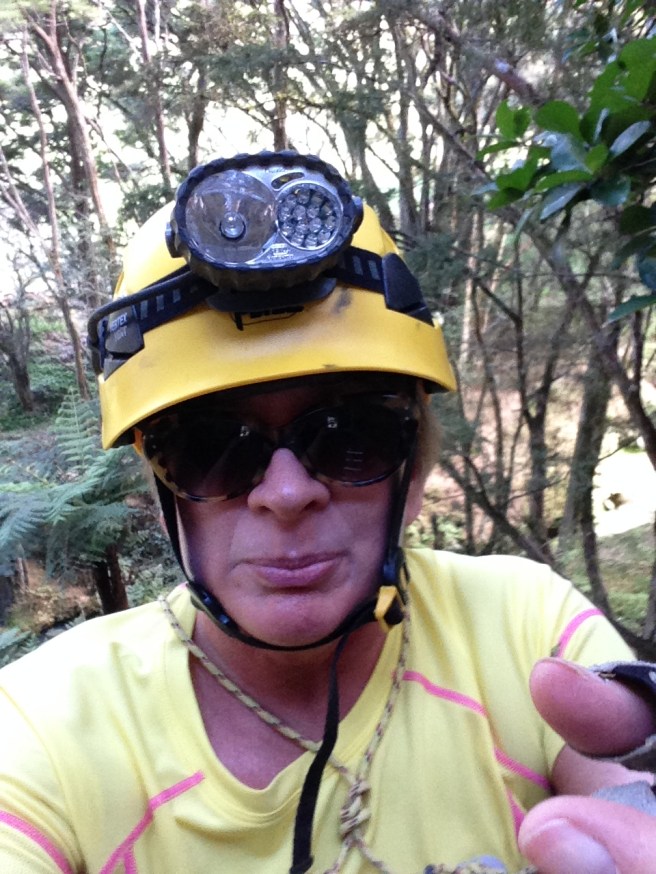
I hopped out of the car to get the gate, and then followed the car into the pasture. It was another perfect day, not a cloud to be seen and a warm breeze tickling the grass. Garth popped the boot and hauled out a tangled mass of ropes and gear.  I grabbed a helmet and secured the strap under my chin.

“So first, I’m gonna teach you a bit about tying knots. When it comes to abseiling, you’re only as safe as your knots.” He nimbly worked a small rope into the shape of a harness, telling me a story as he went about rabbits and holes and foxes. As quickly as he had fashioned the harness, he undid the knots and handed it to me.

“Your turn.”

I fumbled with the rope, trying to recall the story and moves. He watched patiently and guided me with a few hints now and then. It took more than a couple of tries, but he seemed in no hurry. When he deemed me ready, Garth helped me step into the homemade harness. We practiced on flat ground first, tying the ropes around a sturdy tree. Garth’s big  hands moved efficiently, as he hooked my harness to the rope and showed me where to hold on, and the art of leaning back and playing out the rope in my right hand.  

“Keep your feet shoulder width apart to maintain your center of gravity. Never let go of this rope without securing it. Here is how you hitch it if you need to free up your hands.”

His instructions were clearly demonstrated, but the tasks were unfamiliar to me, as I struggled clumsily with the equipment. He patiently guided me through each step until he felt comfortable with my technique.

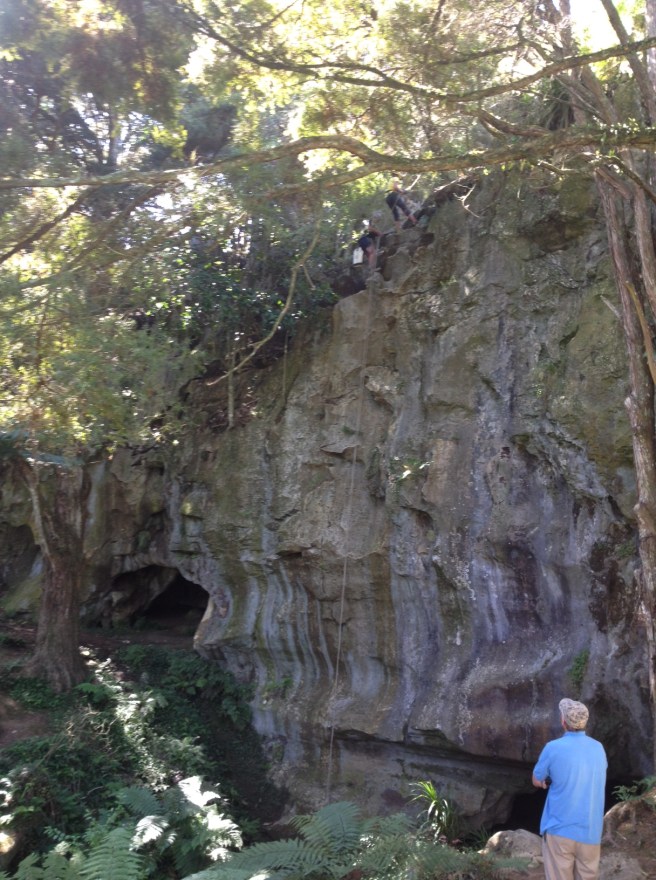
Only then did we make our way up the wooded slope slanting back over the mouth of the cave. He hauled the heavy ropes and I did my best to keep up with him. We reached a plateau and Garth led us to the precipice of the cliff. We stood directly over the entrance to the cave, about 80 feet above. I looked down at the vertical rock wall, which we would traverse with the ropes. About 10 feet back from the edge, there were several stakes buried deep in the ground, remnants of previous forays over the cliff. Garth securely fastened two lengths of rope to the stakes.

IMG_1751

“How do you know these are secure,” I asked, not fully able to trust.

“Because they go down about six feet into the ground” he said. Good answer.

I stepped into my harness and prepared for my descent. 

“Don’t look down.” I told myself. “You can do this if you look straight ahead.”

Garth lowered himself backwards first. From there, he coached me as I made my first tentative steps in his wake.

The harness felt like a flimsy string cutting into me, rather than a secure perch. I gripped the rope with all my might, terrified that my weight would make it yank from my grasp.

“Easy does it,” came Garth’s voice from below. “Widen your stance. Lean back until your heels make contact with the wall.”

I did as I was told.

“Now take a step down,” he instructed.

Somehow, I thought he meant for me to look for a purchase in the wall. I looked down and spotted a passable crevice. I took a deep breath and jumped towards it, letting out the rope as I scrabbled for a foothold.

“That’s not what I meant,” he said, laughing. “Just walk down the wall one step at a time.

The jump had shot adrenaline through my veins, and my heart began to pound. My excitement was evaporating quickly as I scanned the lip of the cliff that was now about two feet over my head. Just like the plane ride, there was no going back. The only way was down and I was frozen, unable to go any further.

“I am panicking,” I told Garth. “I don’t think I can move.”

“Just hold on a minute. I’ll be right there.”  

He quickly navigated his way up the face of the rock to where I clung to my rope in a death grip. He steadied himself beside me and smiled.

“Let me tell you a story. The Dali Lama had this doctor. They were discussing health and the doc said to him, ‘You know what is wrong with people today? People today forget one very important thing. They forget how to breathe. And he took a deep breath in and out with the Dali Lama. And then he took another one.’”

As Garth spoke, I followed  the emotional stepping- stones of his story.  I breathed deeply and after a few moments I felt my panic begin to subside.

“I think I’m okay now.”

“All right, then. Let’s do it.”

abseiling

Garth returned to his spot below me. I took one more long, deep breath, set my feet shoulder width apart and began my descent. From there on, the exhilaration returned. I only had one moment when I lost contact with the wall. I spun in a circle, my feet kicking out for contact.

“I don’t like this! I don’t like this!” I squealed.

“You’re all right!” Garth called up, laughing at my distress.

His humor made me relax. He wouldn’t be laughing if I were in any real danger. I let the rope out until my feet felt the wall again, and then I walked backwards down the wall with ease.

When my feet finally touched the ground, I shouted “I did it!”

“Yes you did!” said Garth.

abseiled

Medical Staff Gotta Play!

636040149932713433-pokemon

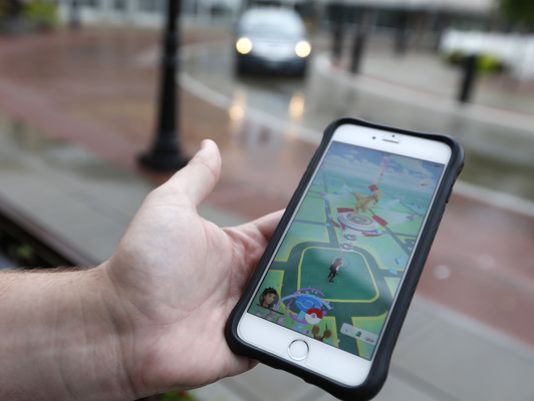
The recent Pokemon Go craze has hospital administrators  flummoxed by their employees’ behavior. Several hospitals have called for a ban on medical staff playing the digital game while at work, claiming that they are ignoring patient needs in pursuit of the free-to-play location-based augmented reality mobile game. There is no question that social media should never come before a patient’s medical needs, but the administrators may be missing an important point.

Adults need to play.

Yup, that’s what I said. Adults need to play.

Articles about burnout in the medical field appear every day on my news feed. Caring professionals exposed to repeated trauma working long hours in tough conditions with impossible patient to staff ratios face compassion fatigue and burnout on a regular basis. There are no easy answers, probably not one thing that can turn this phenomenon around. But if we look at the current Pokemon seeking behavior, it gives us a clue.

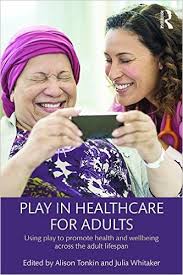
Think about recess at school and all the studies that show how increased physical movement and play greatly improve children’s ability to learn, function and lead healthier lives. Why should it be any different for adults? In fact, Alison Tonkin and Julia Whitaker have just published a terrific book Play in Healthcare for Adults: Using Play to Promote Health and Wellbeing Across the Adult Lifespan, that explores the role of play in adults’ health and coping. 

imgres-1

They show how central play is to our biological makeup and evolutionary history. Play is a crucial ingredient of survival for all mammalian species (Tonkin & Whitaker, 2016). In the forward to the book, Suzanne Zeedyk, a research scientist and founder of connected baby states

We know these truths instinctively. However we relegate them to our private lives and personal relationships. Contemporary culture does not reserve an official role for play in our public, professional lives. Work is serious. Play is not.

That’s why this book is radical. Its editors have been willing to shout loudly about the importance of play in professional contexts.They have been willing to bring theory, empirical evidence, and practical examples to their claim.

Jon Loungo, a child life specialist at Maimonides Hospital Center in Brooklyn, NY, coined the term Tongue Depressor Challenge. It refers to providing medical staff (and often patients) with loose parts , and telling them, “Create something that shows how the hospital experience could be improved, in real or imaginary ways, and include at least one tongue depressor in your project.”  With this 3-D challenge in mind, I allow my imagination free reign in envisioning what the presence of play might contribute to excellent healthcare in hospitals. I picture doctors, nurses, administrators and technicians taking scheduled breaks throughout the work day. I picture play rooms set aside for staff that include expressive art corners, rock climbing walls, trampolines and ping pong tables.  Hey, and what about pet therapy?

Call me crazy.


IMG_4489

Rabbit Ray – Helping Kids with Needle Fears

IMG_0971

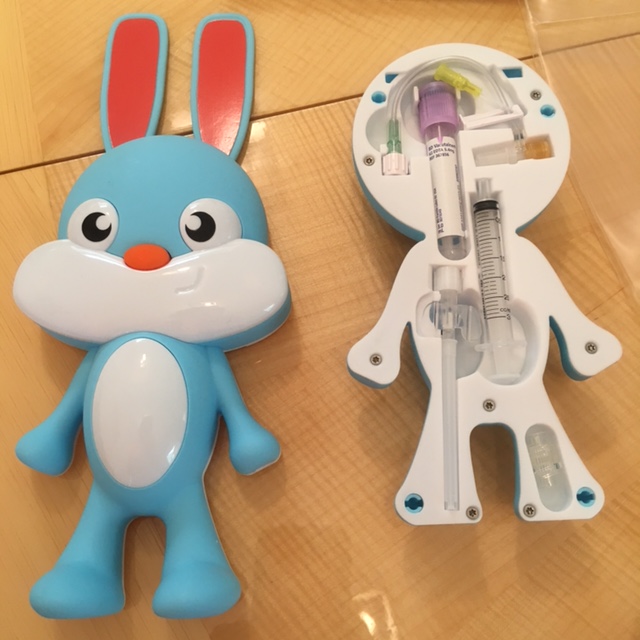
Esther Wang has a vision. As an entrepreneur, designer and inventor, she has learned first hand what it means to use creative skills to make the world a better place. Esther took up the challenge of “How can we help kids be less afraid of needles?” in Singapore, her native country.  She designed Rabbit Ray, an interactive, virtually unbreakable, washable patient interactive device that empowers even more than it teaches. Continue reading

Less anesthesia – More play for MRIs

ilovemri
Erik Ranschaert and Ben Taragin

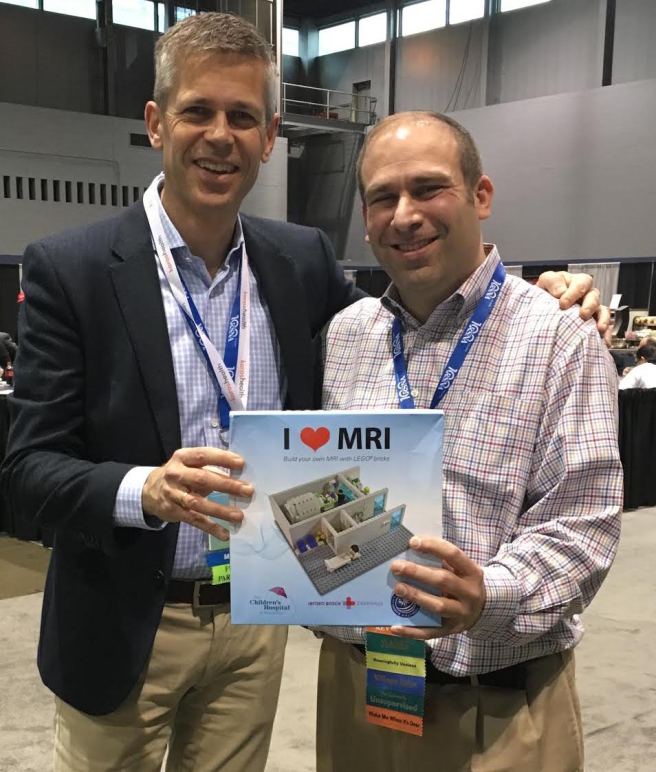
Dr. Benjamin Taragin knows a lot about what kids need when facing radiology scans. He has spearheaded the production of a miniature MRI model using toy building blocks, so that children can play about their experiences before and after scans. When I asked Dr. Ben about how this all came about, he shared the following narrative. We hope you will be inspired by his story and jump on board to help make his I Love MRI kits available to any child in need of an MRI.  Continue reading

Get Ready to Play!

IMG_0062 (1)

Okay, so call me a nerd. Few things bring me more joy than teaching a subject that I love with a colleague who has even more passion and enthusiasm for the subject than I do. I have had the pleasure over the years of co-teaching with many wonderful and talented colleagues – Betsy Wilford, Elizabeth Laureano, Edna Garces, Karen Marschke-Tobier, Caitlin Koch and Jon Luongo, to name a few. In each of those situations, whether it was Sunday school, a therapeutic nursery school, graduate school, in another country, or at a conference, I became a better teacher within the partnership than I ever would have been alone.

And now, as I prepare for my upcoming gig at the Child Life Council’s 34th Annual Conference in Orlando, Florida next week, I celebrate the colleagues that I will be teaming up with.  Continue reading

Driving the Camel: Installment #7


IMG_1586

Chapter 6: 17 Time Zones

Three planes and over 24 hours later, the North Island of New Zealand came into view as the plane made its way down through the clouds and circled for a landing. Excitement began to tilt the scales of anxiety as I disembarked and made my way through customs. Robyn, a member of the conference planning committee, had planned to meet me and escort me to the hotel. I scanned the group of people awaiting loved ones. I assumed that Robyn would be holding a placard with my name on it. No such luck. I milled around for about five minutes, before I heard a woman’s voice calling me.

“Dib?” her New Zealand accent changing e’s into i’s. Her cheerful smile and mom-like warmth were exactly what I needed to see,

I hugged her like a long lost friend.

“I can’t believe you came all this way to speak at our little conference!” she exclaimed, brushing her hand through her pageboy light brown hair.

“How could I turn down such a wonderful invitation?” I answered.

Robyn’s generosity along with that of the other conference planners was pleasantly overwhelming. The initial invitation to speak at the conference came from Marianne, the founder of the Hospital Play Association in New Zealand. Via e-mail, without ever having met me, she made an astounding offer. Not only were they going to pay my way to come to New Zealand, but she had heard that I was writing a book. She owned a house at Lang’s Beach on the North Island and asked if I would like to stay on for a month to do some writing. The dream of this house had been a rallying point for me during medical treatment. I would lie on the linear accelerator table receiving daily doses of radiation and picture my toes in the sand and a journal in my lap.

IMG_1604

My hotel room on the upper floor overlooked the city harbor, where fleets of sailing boats graced the waters. A gift basket of New Zealand teas welcomed me as I entered the room. I unpacked and fell happily into the king-sized bed and slept.

Marianne was a wonderful host in Auckland. She supplied me with a list of places to go and things to do. She picked me up at the hotel the morning after my arrival and we toured some volcanoes, along with Robyn’s Hospital Play department at the local hospital.

The volcanoes were lovely and afforded great views, but nerd that I am, I loved seeing the lay of the land in Robyn’s hospital even more.  In New Zealand, hospital play specialists have different training than American child life specialists. For the most part, they have backgrounds in early childhood education, and certification through the Hospital Play Specialist Association. Their departments are funded by both the Department of Health and the Department of Education, and their programs must meet the curricular requirements of early childhood education.  This allows for an approach steeped in a thorough grasp of child development and how children learn.

IMG_1577

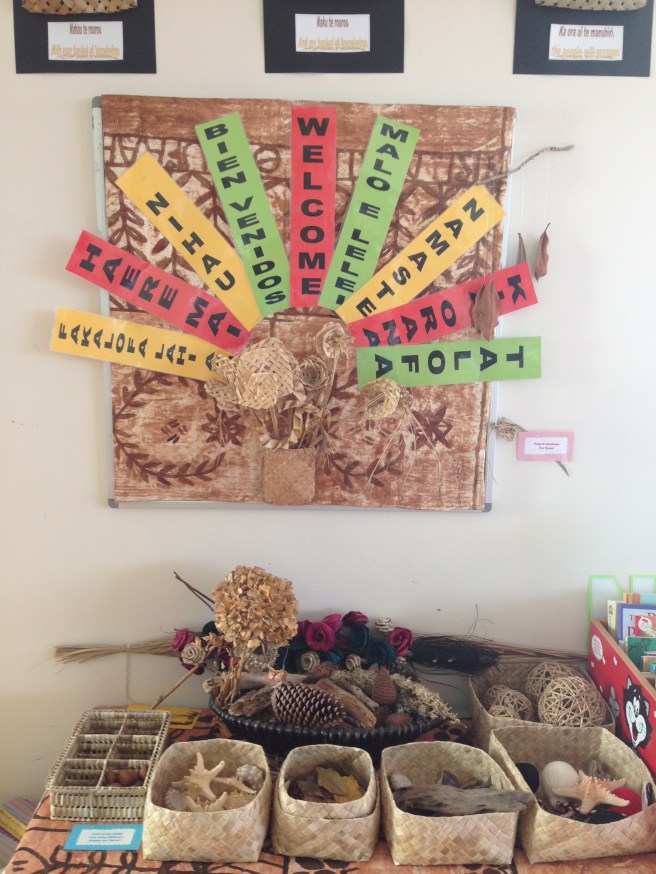
I was pleased to see that every one of the hospital playrooms mirrored best practice in early childhood education.  Each playroom recognized the bicultural nature of the country, embracing literacy and cultural objects from both the tangata whenua (people of the land – Māori) and the tangata tiriti (the people there by virtue of the Treaty of Waitangi – non-Māori). A huge handmade sign welcomed visitors in several languages, including  English, Maori, Samoan, Hindi, and French. Beneath it stood a table laden with baskets. Each basket held items from nature, shells, rocks, pinecones,  inviting exploration and touch. Continue reading

Driving the Camel: Installment #4

IMG_1221


Chapter 3: Secret Weapons

Not only did I have a year to focus on my treatment and recovery. I also had a secret weapon: Child Life. I learned from the chemo snafu never to go to a doctor’s appointment alone. When Mark or a close friend or family member couldn’t go with me, child life colleagues and past students took turns accompanying me to appointments and treatments, making a mini party out of each and every chemo session. They brought treats, read aloud to me from trashy magazines and made me laugh so loud once that the nurse came to close our door so we wouldn’t disturb the other patients. And that was just the beginning of a landslide of help and cheer.

Each person performed a simple task or favor that woven together, formed an army of support. From walking to my dog, to teaching my course, offering to design a tattoo to beautify my scars and performing Reiki on me, their generosity knew no bounds. The regional group of child life directors organized the drop off of a slew of coping and comfort items, queasy pops, distraction toys to use during IV’s and blood draws, journals, chocolate, gag gifts, warm socks, and cute hats.  

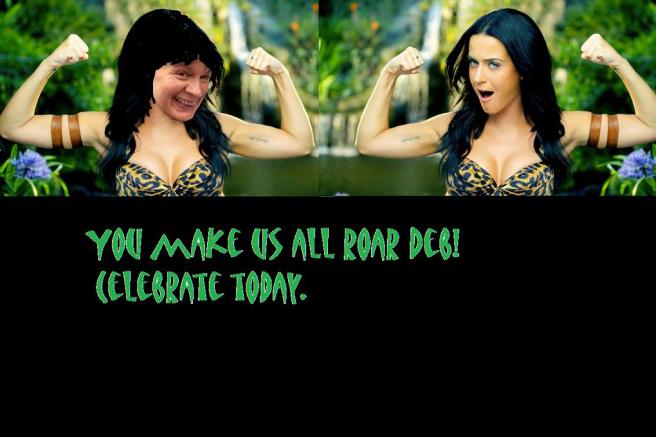
One friend’s actions were perhaps the most far reaching of all.  Sydney, with her non-stop energy and raucous laugh.  She blew me away when she organized Team Deb to walk in the American Cancer Society’s Breast Cancer Awareness walk, raising over $4,000 in my name. She sent every supporter a t-shirt that read “Team Deb”. Along with the shirt, everyone received a ridiculous Deb head on a tongue depressor, a disembodied photo of my smiling face. Those who couldn’t make the walk posted photos of themselves on Facebook wearing the shirt and holding the Deb head. Sydney showed up on the day of the walk with her whole family in tow. She jumped atop a park bench waving Deb head’s to help gather Team Deb amidst the throng of thousands. That sight is one I will cherish for years to come.

IMG_1031

I wasn’t the only one in my circle to face the cancer battle. My colleague, Annie, experienced a double whammy. Two weeks after I shared my bad news, her sister was diagnosed with stage III breast cancer and had to endure a double mastectomy and heavy-duty chemo. Annie brought us together and we became chemo buddies, cheering one another on throughout the process. When Annie showed her sisterly support by shaving her head, they invited me to the shaving ceremony via video chat. I was moved to tears watching their husbands reverently shaving the heads of their wives. I had to turn away from my computer camera for a moment so they wouldn’t see me cry.

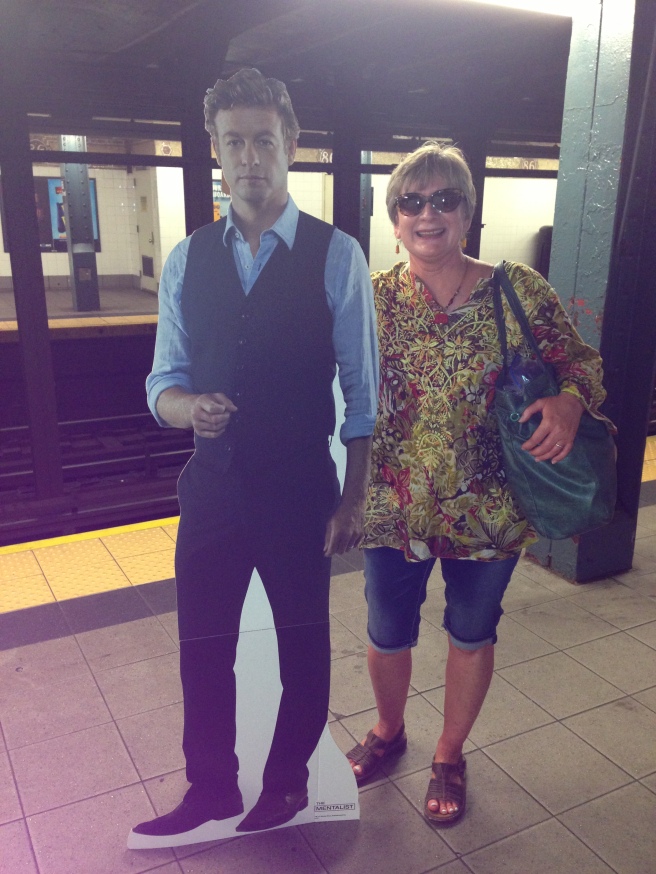
On my first day of chemo, I received a package in the mail: a life-sized cardboard replica of my favorite actor from Lori, a child life specialist and young mother in Colorado.  I piggybacked on that idea and sent Annie’s sister a life-sized replica of  Dwayne Johnson, or “The Rock”, his ring name as a professional wrestler and her favorite actor of all time. 

IMG_0905

Continue reading

Learning from Hospital Play Specialist Hideko Konagaya in Japan

IMG_4587

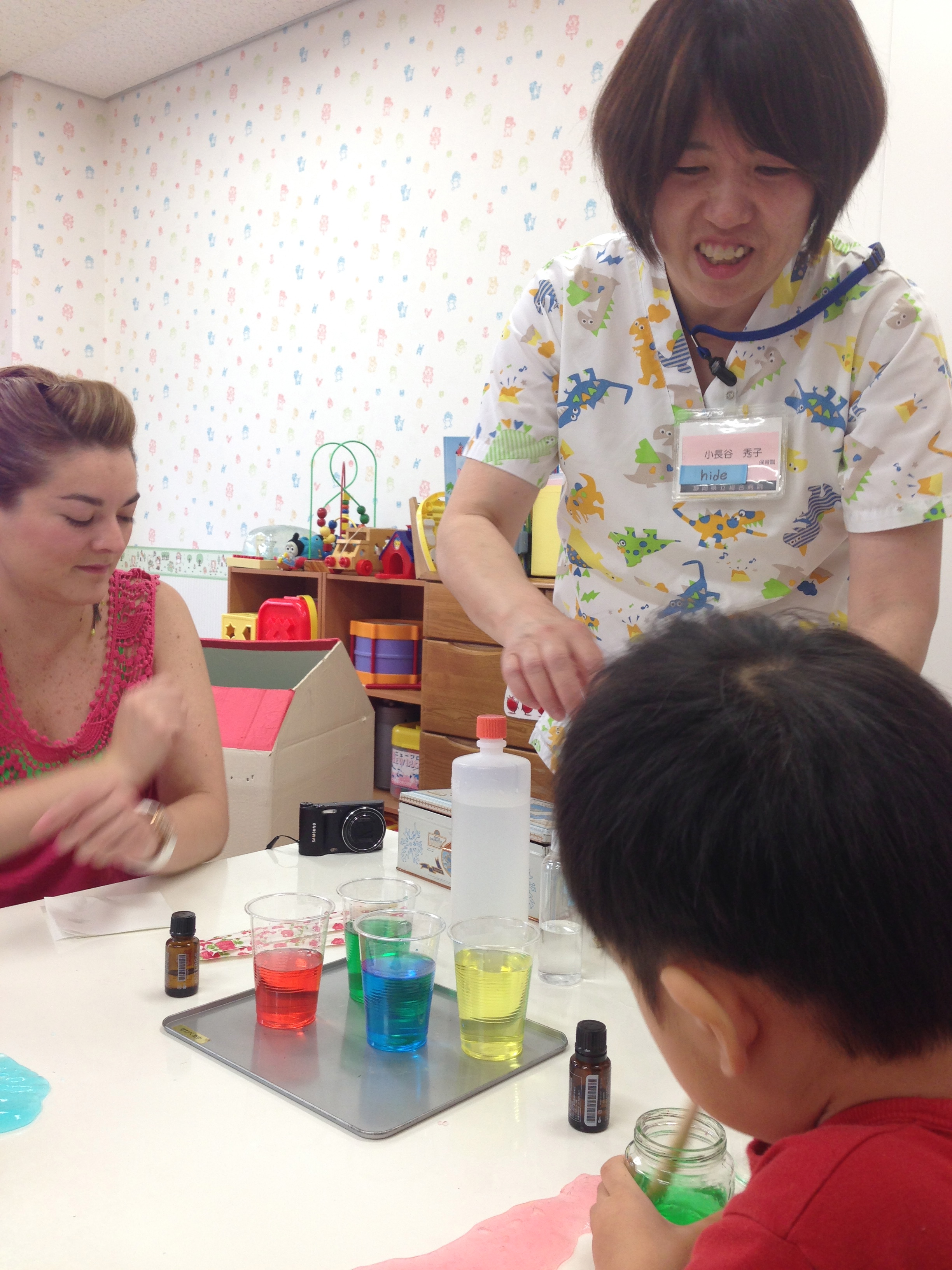
While teaching in Shizuoka, Japan, I had the pleasure of spending a morning with Hideko Konagaya, a hospital play specialist, at Shizuoka General Hospital.

Hideko hosted Maria Busqueta  (a child life specialist and psychologist from Mexico City) and me in her bright and cheery playroom. Professor Chika Matsudaira of Shizuoka University assisted us by translating so that we could all communicate.

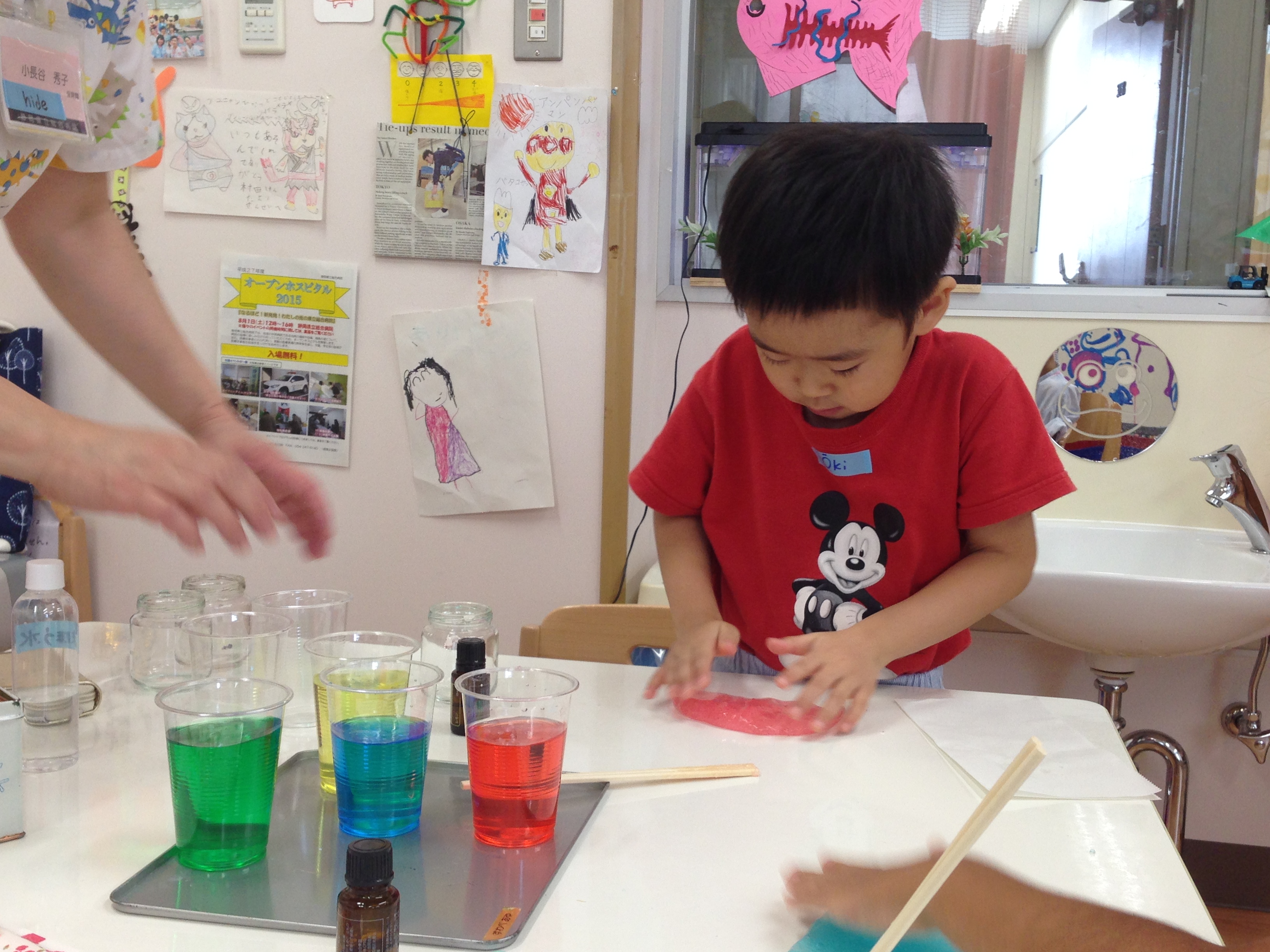
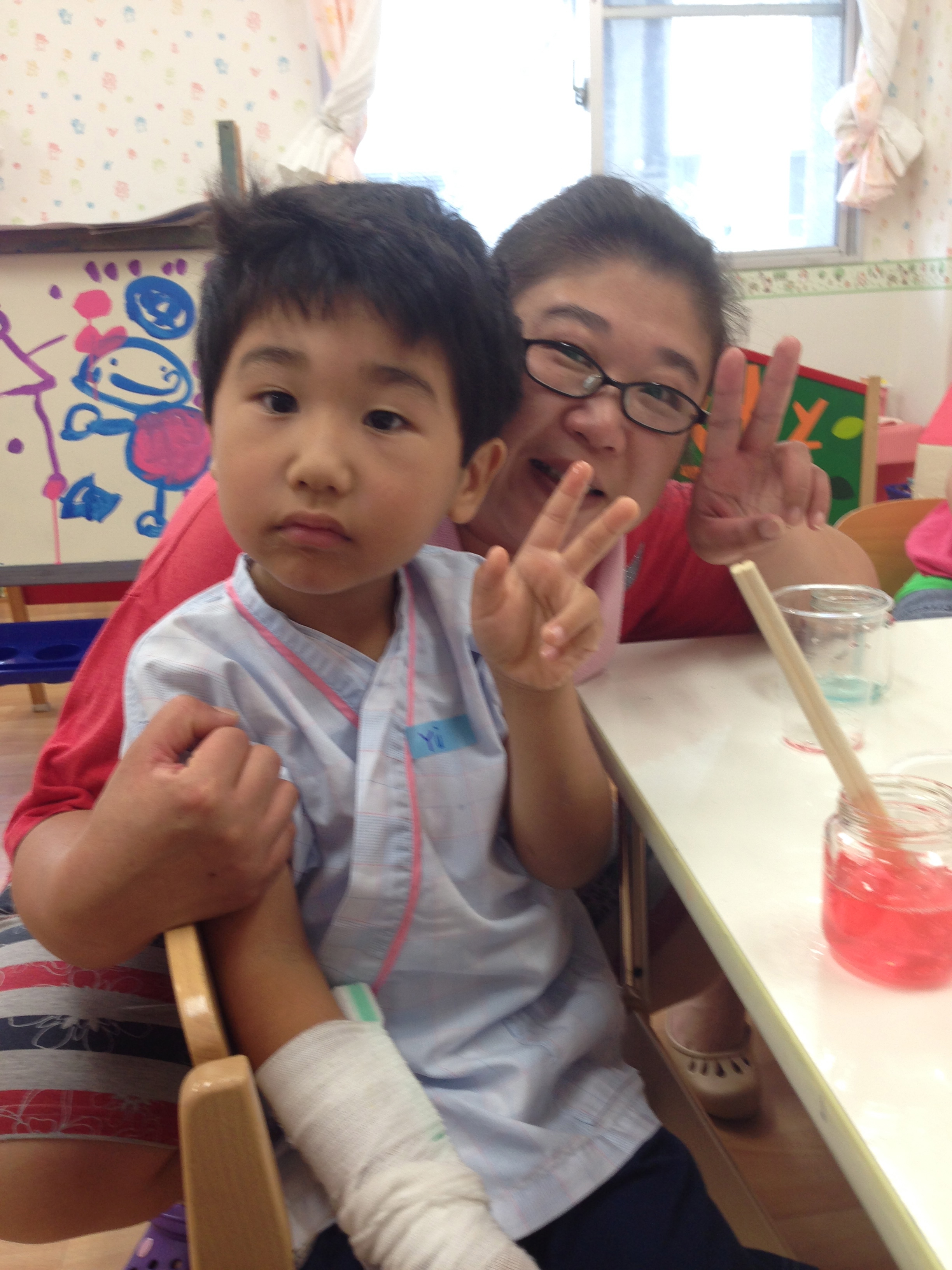
When we entered the playroom, two preschoolers already sat at a small table busily making slime. The children and their mothers gave us permission to photograph them.

IMG_4584 IMG_4588

Now I have made slime in my play course, but never slime as lovely as this! Hideko had set out brightly colored water in several plastic cups. She provided the boys with small glass jars (recycled baby food jars) and chopsticks for stirring. One at a time, Hideko and the children added rice glue, orange or lime essential oil for fragrance, sodium borate, and  a magical touch of glitter. The mixture came together to create a wonderful substance that smelled amazing and was positively addictive – no one could put it down or stop playing. The boys stirred like mad, and then ran the slime through their fingers until it hardened enough to hold shape. They used cookie cutters and plastic tools to manipulate it. I broke a cardinal rule of mine and touched one of the boy’s slime without asking. I just couldn’t help myself! He was a very good sport. Continue reading